Interviews
Max Podkidkin, Co-Founder and CEO at BisectHosting – Interview Series

 Add Gaming.net to your preferred sources on Google
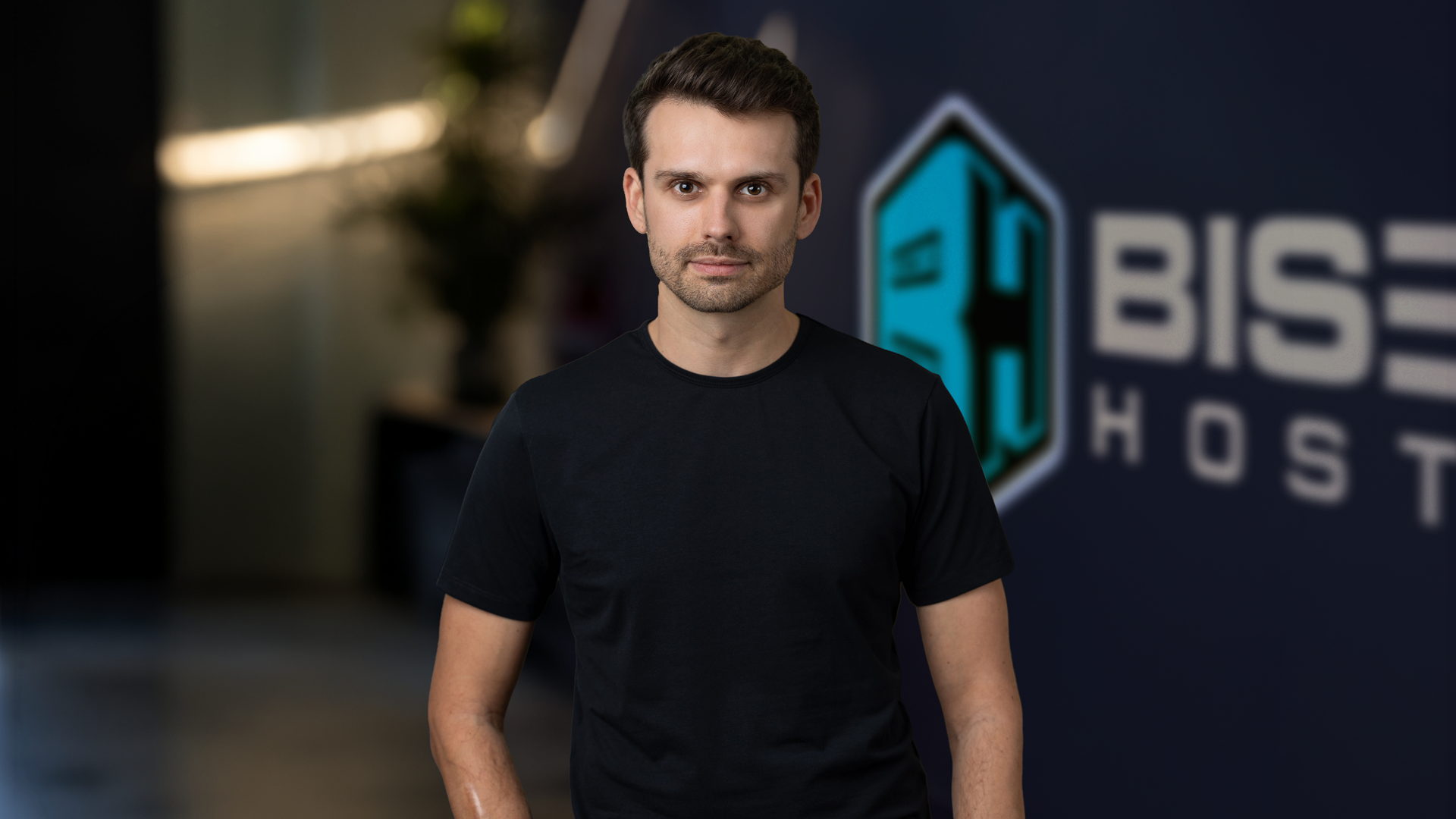
Max Podkidkin, Co-Founder and CEO at BisectHosting, has led the company since co-founding it in 2011, turning his experience as a Minecraft player and server operator into a business focused on improving multiplayer game hosting. After experiencing firsthand the challenges of unreliable servers, broken mods, and limited technical support, Podkidkin and co-founder Andrew built BisectHosting around the idea that hosting infrastructure should remain largely invisible to players. Over more than a decade, he has overseen the company’s growth alongside the evolution of online gaming, from relatively simple private Minecraft servers to sophisticated player-run communities with custom content, economies, events, and large audiences.
BisectHosting is a game server hosting provider that has supported tens of millions of players and millions of game servers, with a particular focus on community-driven multiplayer experiences, modding, and user-generated content. The company operates its own infrastructure and has developed orchestration technology designed to combine the performance and economics of bare-metal servers with the deployment flexibility associated with the cloud. BisectHosting is also incorporating AI into technical support through Biko, an optional AI system that can examine a customer’s actual server logs, configurations, installed mods, and crash reports to diagnose problems based on the server’s specific context. This combination of infrastructure, human support, and AI reflects many of the themes shaping modern multiplayer gaming, including increasingly complex community servers, crossplay, creator-led ecosystems, and the growing expectation that technical infrastructure simply works in the background.
You and Andrew started BisectHosting as Minecraft gamers frustrated with unreliable hosting and poor support. Looking back, what did running your own servers teach you about what players actually need?
Running those early servers was the best education I could have gotten. I wasn’t thinking about building a business. I was just a guy who wanted to play Minecraft with friends, and when the server went down, I figured out how to host one myself.
What I learned quickly was that getting a server running was the easy part. The hard part was actually everything after that like the mods breaking, players getting frustrated, troubleshooting at two in the morning with nowhere to turn. My co-founder Andrew and I went through every level of infrastructure ourselves, from shared hosting and VPSs to dedicated servers and eventually buying our own hardware.
When we started BisectHosting, we built the company around what we would have wanted as players. That means someone who actually understood what was running on the server and could help when things broke. That’s why support has always been central to us, with around a 15-minute average response time around the clock since the beginning. Players don’t want to understand hosting infrastructure. They want to play with their friends. Our job is to make the infrastructure invisible and flawless.
BisectHosting has now supported tens of millions of players and millions of game servers. What are the biggest changes you’ve seen?
The biggest change for me is how much more sophisticated both the games and the communities around them have become.
When we started BisectHosting 15 years ago, a game server was usually a relatively simple thing. You had a group of friends, you picked a game or Minecraft modpack, rented a server and played together. Today, some of the communities we host are essentially running their own businesses. They have staff, Discord communities, custom content, economies, events and thousands of players moving through their servers.
The technical expectations have also changed with that. Players expect things to work immediately. They expect great performance regardless of where they live, they expect mods to work, and when something breaks they don’t want to spend three hours figuring out why.
The other major change is that studios are beginning to understand how valuable these communities are. Community servers used to almost be an afterthought. Now we’re having conversations with game studios before games launch about dedicated servers, modding, infrastructure and how they can give players more ownership over the experience.
This is a positive change. The closer developers, hosting providers, modders and communities work together, the better the multiplayer experience becomes.
What explains Minecraft’s extraordinary staying power, and how important has modding been?
Minecraft is probably the clearest example of a game that built an almost indestructible ecosystem around itself. At this point, the core game is almost beside the point. Mojang created a platform that players and developers could build on top of, and the modding and plugin communities have created entirely new experiences, fundamentally changing what the game is. Modpacks have turned Minecraft into zombie apocalypses, RPGs, and even blends of Minecraft and Pokémon.
What’s changed in recent years is the scale of this. It’s not just one person building a modpack in their bedroom anymore. There are now basically little studios responsible for making these modpacks with teams, release cycles, and communities waiting for drops. Some of these modpack releases generate more excitement than actual game launches. And most of the time it’s completely free. These creators are putting in a massive investment of time and people and not charging a dollar for it.
Modding isn’t just a fun add-on to make gameplay a little more exciting, it’s the engine of long-term retention. When you give players the tools to build the game they actually want, they’ll keep coming back, extending the longevity of your game.
When a new multiplayer game launches, what signals tell you it could develop a lasting server community?
One of the biggest things we look for is whether players have a reason to make the server their own.
If everyone is having essentially the same experience and every session is disposable, there’s usually less reason for a persistent community to form. But when players can set their own rules, install mods, build something persistent, create their own communities or fundamentally change how the game is played, that’s when things get interesting and more fun the player.
We also pay very close attention to what players are asking for. Sometimes the best signal isn’t something the developer planned at all. You’ll see players asking for dedicated servers, mod support, larger player counts or ways to play privately with friends. When thousands of players independently start asking for the same thing, that’s telling you there is demand for an experience the game doesn’t currently provide.
Minecraft is obviously the ultimate example, but we’re seeing versions of this across survival games, sandbox games and even games that weren’t originally designed around community hosting.
The games with the longest lives tend to stop being entirely controlled by the developer at some point. The community starts creating its own reasons to keep playing.
What do community-run servers offer that centralized matchmaking can’t?
Matchmaking is good at filling a lobby quickly. What it can’t replicate is the persistent social context of a community-run server.
When you play with the same people for months or years, you know the regulars, remember what happened last time and build a shared history. You’re not just playing a game but participating in a community.
\People have nostalgia for the server they ran with their friends for three years. That emotional investment is something matchmaking can’t manufacture.
How has the rise of crossplay changed multiplayer gaming?
Crossplay has removed a huge barrier multiplayer games had for years.
Players don’t care what hardware their friends own. They just want to play together. For a long time, the industry forced communities into separate boxes based on whether somebody owned a PC, Xbox or PlayStation.
Removing those walls not only makes communities larger and healthier, but also creates new technical expectations. A server isn’t just supporting one version of a game anymore. You’re dealing with different platforms, updates, authentication systems, while the player expects the whole thing to feel seamless.
From our perspective, that’s the important part. The infrastructure should disappear into the background. Nobody should have to understand why their friend is on a different platform. They should send them an invite and start playing.
I think we’ll eventually look back at platform-separated multiplayer the same way we look at a lot of old technology limitations. It made sense technically at the time, but it never made much sense from the player’s perspective.
How important are creators, streamers, modders and community administrators to the longevity of multiplayer games?
These builders are the reason multiplayer games have long shelf life. Without them, communities tend to peak and decline with the content cycle. With them, the game keeps evolving long after the studio has moved on.
The developers who understand this treat modders and creators as real partners. They build tools for them and give them ways to actually extend the game. The ones who treat them as secondary eventually lose those communities to games that support them better.
We’ve tried to reflect that at BisectHosting by supporting creators directly, including paying creators for work that has helped keep games and communities alive. If you believe player-run communities make multiplayer sustainable, the people building those communities deserve real support too.
What are the biggest technical challenges behind keeping modern multiplayer servers running smoothly?
Scale is obviously a challenge, but unpredictable scale is much harder.
A game can go from relatively quiet to having tens of thousands of players trying to play within hours because a creator streamed it, an update dropped or the game suddenly went viral. You can’t tell those players to come back tomorrow because you need time to install more hardware.
We’ve had games where seemingly small infrastructure decisions can be the difference between a server performing perfectly and players having a terrible experience.
That’s why we’ve invested so much into operating our own infrastructure and building orchestration around it. You need the performance and economics of bare metal, but increasingly you also need the ability to deploy and scale it with the flexibility people associate with cloud infrastructure.
The difficult part isn’t getting one server running well. It’s making thousands of them run well, across different games and regions, while making all of that invisible to the player.
Where does AI genuinely improve the gaming experience, and where is human support still essential?
We built Biko around a frustration I’ve had for a long time. When someone says a mod is crashing their server, a good support agent doesn’t just send them a generic article. They look at the logs, configuration and what’s actually running on that specific server.
Biko makes that investigative step available immediately. It can look at the customer’s actual server context (the logs, configuration, installed mods and crash reports) and form a diagnosis based on evidence. It’s investigating what’s actually happening on the server and not just a chatbot there to point players at documents. A good example is we had a customer come to us after someone had covered their entire Minecraft world in lava. Biko went into the server, reviewed the logs and permissions activity, identified how the attack happened and what vulnerability had been exploited, found a backup from before the incident, and walked the customer through a full recovery and security plan.
Human support is still essential when the situation is complex, someone needs a judgment call or a customer simply wants to talk to a person. Biko has always been optional. We’re not interested in putting AI between our team and customers. We’re interested in giving our team more room to do the work that actually requires people.
What gaming trends are you most excited about?
UGC is probably the thing I’m most excited about because I’ve already seen what happens when you give a community enough freedom.
Minecraft is the obvious example. Some of the experiences people have built inside Minecraft barely resemble the game we started hosting 15 years ago. That creativity is a huge part of why we’re still talking about Minecraft today.
I think we’re going to see more studios recognize that they don’t have to create every piece of content themselves. If you give players, modders and creators the right tools, they’ll build things you never would have predicted.
We’re already seeing small teams create multiplayer experiences that would have required significantly larger studios not that long ago. We’re also seeing modders take games that weren’t originally designed around multiplayer and prove that there is demand for entirely new ways to play them.
For me, the exciting part is the shift from games being finished products to games becoming platforms for communities to build on.
The companies that figure out how to support those creators, rather than fight against them, are going to build some incredibly durable gaming ecosystems.