Interviews
Ema Verruno, Founder and Director of Gizmo Animation – Interview Series

 Add Gaming.net to your preferred sources on Google

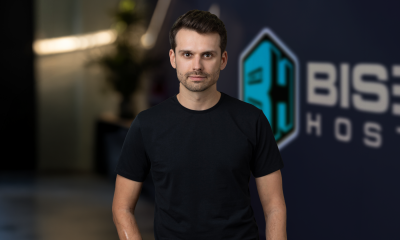
Ema Verruno, Founder and Director of Gizmo Animation, is an award-winning animation director, executive creative leader, and former architect who transitioned into animation to pursue his lifelong passion for visual storytelling. After graduating as an Animation Director in 2002, In 2004, he founded Gizmo Animation, a studio initially focused on producing animated content for advertising. Over time, however, the company increasingly gravitated toward the video game industry, broadening its expertise across the full spectrum of content production, including live-action projects and, more specifically, refining Ema’s skills in directing talent performances.
Throughout his professional career, Ema has directed short films for renowned brands while dividing his time between producing animated cutscenes and trailers, doing the MoCap suit to personally embody characters in cinematics for major video game industry leaders such as Blizzard, Activision, Ubisoft, Gameloft, Supercell, Warner Bros, 2K, to name a few. Throughout his career, Verruno’s work has earned numerous international accolades, including Cannes Lions, Clio Awards, PromaxBDA, and New York Festivals honors, reflecting his reputation for blending artistic vision with technical innovation.
Gizmo Animation is an international animation and visual effects studio founded by Ema Verruno , specializing in cinematic storytelling for advertising, entertainment, gaming, and original intellectual property. With capabilities spanning 2D and 3D animation, visual effects, motion capture, real-time production, AI-assisted workflows, and Unreal Engine development, the studio has produced projects for leading global brands while becoming particularly recognized for its AAA video game trailers. Over more than two decades, Gizmo has expanded its expertise beyond traditional animation into co-development, immersive content, and proprietary productions, earning industry recognition for its technical excellence, creative direction, and ability to deliver visually ambitious projects across film, television, advertising, and interactive entertainment
You founded Gizmo Animation Studio and have spent years building it into a studio trusted by major gaming brands. Looking back, what were the biggest challenges in founding the company, and how did your creative vision evolve from those early days into producing AAA cinematic trailers today?
I started 23 years ago with a clear goal: to build a studio that could compete with the best internationally. I began on the advertising side, and over time I discovered the gaming world, where I eventually focused completely. It’s a market that allowed me to grow a lot personally — bringing creative vision beyond just direction, proposing narratives, building worlds. I’m drawn equally to stylized keyframe animation projects and realistic motion capture productions. In fact, on the MoCap projects I direct, I’m usually on the floor acting in the suit myself.
The biggest challenge was building the brand from Argentina, 23 years ago, when international outsourcing was nowhere near as normalized as it is today — and even less so than after the pandemic accelerated everything. Competing against studios that already had established names, track records, and reels was extremely difficult. We scaled gradually, client by client, always backed by the quality of the work. Investment in pipeline, infrastructure, and team grew alongside the studio — but the brand was built on the product, not the other way around. Today we work with Warner, Supercell, NetherRealm, Activision Blizzard , Amazon (AMZN ), Paramount, and Netflix (NFLX ), and that’s the best proof that the path was worth it.
Many gamers see a two-minute cinematic trailer, but they rarely understand the planning and expertise behind it. What does the full pipeline look like from the initial creative concept to the final rendered frame?
The key from a directing standpoint is being able to visualize the entire film from day one. Not just the environments or the cinematography — every detail: character mechanics and movement, facial expressions, music, sound effects, special effects. Everything needs to be resolved in your head before production begins.
Pre-production is the fundamental foundation of a successful piece. A solid directorial treatment — which today we can also visualize using AI tools before rendering a single frame — determines whether the project will work or not. Anything resolved late in production always costs more, in time and budget.
Then comes execution: concept art, storyboard, animatic, character modeling and rigging, camera layout, animation, lighting, VFX, compositing, and final delivery. Each stage has dedicated specialists. The pipeline is designed so every area knows exactly what they receive and what they deliver, with no friction.
What the viewer sees in two minutes is the result of weeks — sometimes months — of very precise decisions made by a large team of specialized artists. The magic is that the process doesn’t show. Only the result does.
The Clash Royale “Furnace” project blended humor, music, choreography, and character evolution into a highly stylized cinematic experience. How do you balance creative storytelling with the need to remain faithful to an established gaming IP?
When an IP has years of consistent work behind it — like Clash Royale — and its community already knows the universe, the characters, and the lore deeply, something very valuable is earned: the creative freedom to step away from the standards without losing identity. That solidity is what allows you to mix a Disney-style animation aesthetic with the Stockholm Symphony Orchestra, shift from an abandoned kitchen to a cardboard theater set, and have it all work within the same universe.
In the case of Furnace, that confidence in the brand enabled us to propose something that in another context might have seemed risky. But much of the credit belongs to Uncommon, the creative agency behind Clash Royale — they generated the original creative concept, brought in the Stockholm Symphony Orchestra, and the singer who recorded in Spain. We contributed the direction, the animation, and worked with a specialized choreographer as reference for the character’s movements. The result is what happens when an agency with that vision and a studio with that execution work as a team.
The lesson is clear: faithfulness to an IP doesn’t always mean reproducing it. Sometimes, when the brand is solid enough, the best way to honor it is to expand it.
Preproduction is often overlooked by audiences. How important are storyboarding, animatics, and previs in determining whether a cinematic trailer ultimately succeeds?
Pre-production is everything. What determines the success of a piece isn’t the quality of the final render — it’s how completely the director has resolved the film in their head before production begins. Cinematography, each character’s performance, camera movement, narrative rhythm — all of it needs to be defined from day one.
Today, AI plays an important role in this stage: it gives the director the ability to visualize concepts and build consistent briefs for every department. It’s a powerful tool for communicating vision to the team.
But there’s one thing I will never outsource to an algorithm: the storyboard. Every director has a trusted storyboard artist they work with — someone they can interact with, correct, push until they find the exact framing, the right weight of each character in every frame. That process is where the film truly takes shape. It’s the most intimate moment in directing — where what exists in your head starts to exist on paper — and I believe that moment needs to stay human.
When creating cinematics for globally recognized franchises, how closely do game publishers collaborate with your team throughout production, and how much creative freedom do you typically receive?
Collaboration with development teams is essential and works really well. They know the IP better than anyone — the game dynamics, the character backgrounds, what fits within the ecosystem and what doesn’t. That information is fundamental to building a script that feels authentic. Without that knowledge, it’s very easy to propose something visually attractive that doesn’t respect the universe.
What I value most is that once they share all that context, they are very open to receiving ideas and creative proposals. And once the script is locked, the process is a straight line — each stage moves forward into the next without zigzagging. That’s what I highlight most about working in the gaming market: a collaborative process at the start that becomes a race toward excellence, with no friction.
Your portfolio spans both highly stylized projects and more realistic productions. How does your creative and technical approach change when moving between these very different visual styles?
The approach is exactly the same for every project. The aesthetic — whether the characters are stylized or realistic, whether the environments are hand-painted or photorealistic — determines the execution technique and the specific teams assembled for each task. It might be keyframe animation or motion capture, but that’s a consequence of the aesthetic, not of the creative process.
From a directing standpoint, I always start the same way: take the script, refine it, develop a directorial and art direction treatment, and then dive into the characters — understanding the role each one plays in the story and how I want to show them visually. That conception is identical across every project. What changes is the execution, not the way of thinking.
Music plays a major role in the emotional impact of a trailer. How closely do directors, composers, animators, and editors collaborate to ensure that visuals and sound work together effectively?
From day one. Music and sound are just as important as the image — sometimes more. The only variable is where I start, depending on the characteristics of each project.
There are projects where action and dynamics are the core, and there I begin building the directorial treatment from the image. Others where music is the center — as was the case with Furnace — and there the creative process starts from the sound. And there are more dramatic projects, focused on character acting and performance, where I start from the emotion.
The starting point changes, but every element carries equal weight in the final result. A piece with impeccable visuals and generic music doesn’t work. Everything has to be built together from the beginning.
Gaming trailers continue to grow in quality and scope, often rivaling Hollywood productions. Do you think the gap between game cinematics and traditional film visual effects is disappearing?
That line no longer exists. There are cinematics with better quality than some films, and films with better quality than some cinematics. It depends on the conditions of each project, not the format.
What does vary is the workflow: in a film there is more time for certain processes, which allows for deeper work in some areas that in cinematics, with tighter timelines, isn’t always possible. But that’s an operational difference, not a quality difference.
At the level of visual output, the gap disappeared a long time ago. There are studios today producing cinematics that compete on equal footing with any Hollywood production.
AI is beginning to transform creative industries. How is AI impacting animation, visual effects, and cinematic production today, and where do you see the technology having the greatest influence over the next five years?
AI is already transforming the production pipeline, primarily in the development and pre-production stages — generating custom references, visualizing concepts, building briefs. And 3D software platforms are incorporating AI tools natively, accelerating processes that previously took much longer.
Looking at the next five years, what I see is every artist being able to produce more in less time. I don’t envision a future where a trailer is generated from text to finished video — that’s not where this is heading, at least not in premium productions. What I do see is an increasingly powerful layer of tools within the artist’s reach that multiplies their productive capacity. You’ll probably need fewer artists to produce more minutes of animation in less time, but always with a skilled artist behind it making the decisions.
The key remains the same: AI is only as good as the person using it. For premium artists, it’s a multiplier. Not a replacement.
Looking ahead, what trends in game cinematics, animation, and visual storytelling do you believe will define the next generation of AAA trailers, and what excites you most about where the industry is headed?
What’s coming is a hybrid workflow: storytelling, character development, behavior and performance — everything that requires creative thinking and direction — stays in human hands. What changes is the ability to visualize those ideas with much greater speed and quality. Once the director establishes the concept and defines the aesthetic of the project, that foundation can be executed and brought to high-quality images much faster than today. There are processes that are currently long and tedious that will be significantly shortened, and that genuinely excites me.
But there’s also something already happening that isn’t so positive: an overflow of soulless content, made with AI running loose, flooding every platform. When it’s the algorithm making the decisions and there’s no director behind it, the result is a commodity — something anyone can generate that has no real artistic foundation.
What I believe will happen over time is that audiences will develop a taste for distinguishing work that has a solid concept and real direction behind it from work that doesn’t. And that’s where work done well will stand out more powerfully than ever.
Thank you for the great interview, readers who wish to learn more should visit Gizmo Animation.