Licenses
Cosenza Prosecutors Allege Regulator Insider Aided Slot Machine Ring

 Add Gaming.net to your preferred sources on Google
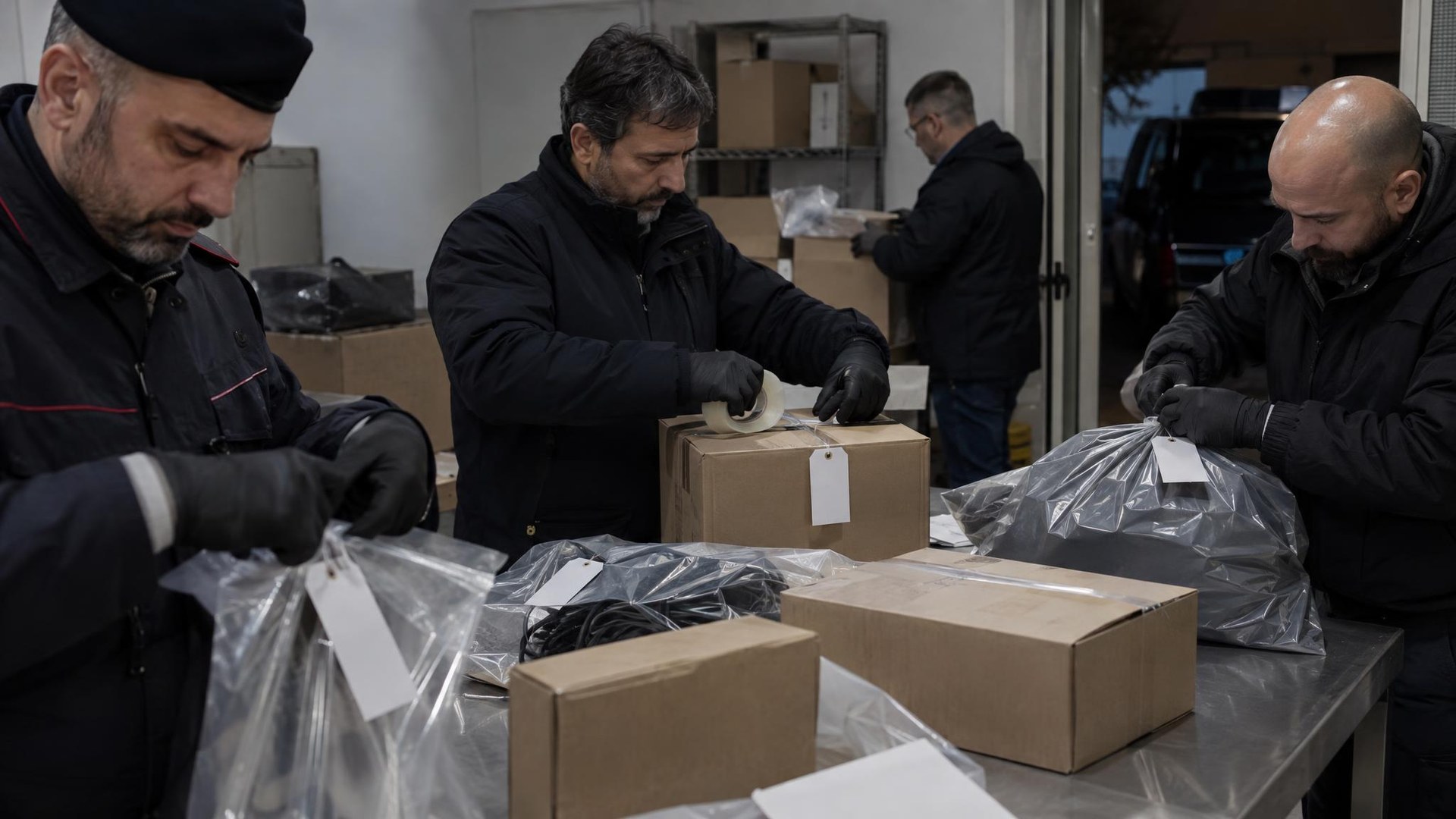
Carabinieri and personnel of Italy’s customs and monopolies agency, ADM, executed a court order applying personal precautionary measures against 15 people on October 26, 2026, in an investigation into tampered cash-prize slot machines allegedly aided by an official inside the agency’s Cosenza office, according to an official statement from the Cosenza Public Prosecutor’s Office.
The order was issued by the preliminary investigations judge at the Court of Cosenza at the request of the prosecutor’s office and executed by Carabinieri of the Provincial Command of Cosenza together with ADM personnel. Of the 15 suspects covered by the order, two were placed under house arrest, six were subjected to non-custodial measures, and seven were banned from exercising gaming activity for one year.
The offences alleged, in varying combinations, against the suspects are criminal association aimed at committing offences against the public administration, property and the administration of justice; corruption for acts contrary to official duties; revelation and use of official secrets; aggravated fraud against the State; and aiding and abetting. The prosecutor’s office said the measures rest on serious indicia gathered during the preliminary-investigation phase, a stage that requires subsequent verification at trial in adversarial proceedings with the defense.
Probe Traced to Telematic Anomalies
The investigation was carried out by Carabinieri of the Provincial Command of Cosenza and officials of ADM’s Central Gaming Directorate in Rome, working in the sector of telematic gaming machines with cash prizes. According to the statement, it grew out of an initial analysis by the Gaming Controls Office of ADM’s central directorate, which examined telematic flows and collection counters and found conspicuous anomalies in the gaming volumes of numerous amusement-with-prize (AWP) machines.
In a first phase, specialist personnel of ADM’s controls office, with operational support from the provincial Carabinieri, inspected numerous commercial premises in municipalities across the province of Cosenza. Those inspections produced the seizure of 145 machines suspected of using a double or tampered board, together with approximately €80,000 in cash held inside the machines.
On November 6, 2025, the preliminary investigations judge, again at the prosecutor’s request, ordered the preventive seizure (including by equivalent) of financial assets, goods and other utilities exceeding €12 million from an economic operator active in the management of telematic cash-prize gaming machines. The prosecutor’s office said the seizure was based on the hypothesized offence of embezzlement concerning sums tied to the prelievo unico erariale (PREU), the state levy applied to amounts collected from wagers.
The Alleged Cloned-Board Scheme
The prosecutor’s office said the first-phase findings allowed investigators to reconstruct, at the precautionary level, a fraudulent system built on double registration of the sums played by customers at the premises hosting the machines, which were traceable to the company managed by the investigated entrepreneur. A cloned board kept part of the wagers from being registered by the national network, and the operator then removed those sums during “scassettamento,” the collection of cash from the machines, without paying the corresponding PREU, according to the statement.
Prosecutors described the system as highly sophisticated. Inside the machines, a second illicit clone board unknown to the Treasury sat alongside the regular board connected to the state telematic network, while wireless remote controls, modified cabling, timers or monitor switches diverted the flow of wagers to the illegal board so bets could be collected off the books. To prevent the automatic blocking of a machine for failing to communicate with the network, the group used cloned “schedini” replicating official smart cards, and physical anti-tamper sensors were blocked with glue or ties, the statement said.
The Alleged Insider Pact
According to the prosecutor’s office, the precautionary indicia outline a corrupt pact between a slot-machine distribution entrepreneur and an official at ADM’s Cosenza office. In exchange for periodic sums of money, the official allegedly disclosed in advance the dates, times and targets of planned controls, allowing the concealment of the illegal boards and the temporary restoration of lawful operation.
The official also allegedly removed sealed boxes containing previously seized AWP boards from the deposits of the ADM Cosenza office and handed them to the entrepreneur and a trusted technician so the boards could be formatted, have their counters zeroed and be placed back on the market.
The statement also outlines, at the precautionary level, the roles of other participants: a supplier who provided the association with altered game boards, cloned smart cards, electronic components and IT technical support, and members of a technical-operational network who handled the maintenance, installation, management, removal, restoration and concealment of the altered apparatus. One member in particular managed the removal or concealment of illicit boards during controls and interventions on sealed packages containing already-seized boards.
The precautionary order was adopted for corruption for acts contrary to official duties and revelation and use of official secrets against the ADM Cosenza official; for aggravated fraud against the State against participants in the association; for aggravated fraud against the State against shop operators, managers and others with availability of the premises and machines who allowed altered AWP machines to operate in their businesses; and for aiding and abetting.
The prosecutor’s office said the order resulted from further investigative work consisting of cyber analysis and digital-forensics techniques, which allowed investigators to extract, preserve and analyze data hidden inside seized smartphones, tablets, computers and memory media. That material was cross-referenced with seized writings and documents and with decrypted accounting notes, informal writings and paper and digital documentation recovered during searches, allowing investigators to reconstruct the alteration methods, map the distribution of illicit proceeds and identify the strategies used to elude inspections, according to the statement.
The criminal proceeding for the alleged offences is currently pending in the preliminary-investigations phase, the statement said.