Licenses
Chicago Council Majority Demands Bally’s Restart Full Casino Buildout

 Add Gaming.net to your preferred sources on Google
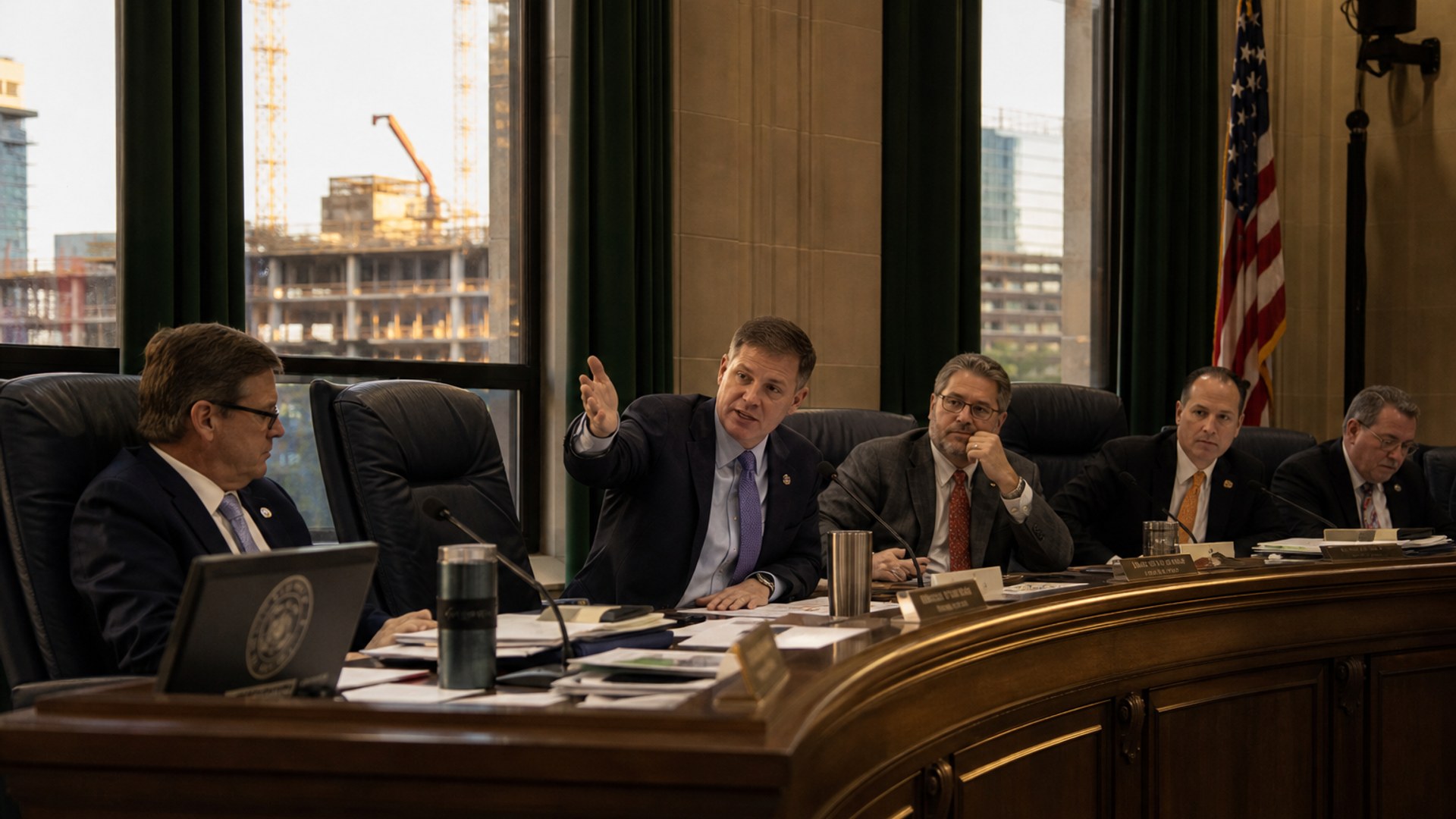
Twenty-eight members of the Chicago City Council signed a letter on August 12, 2026 demanding that Bally’s Corporation (BALY ) resume full construction of its $1.7 billion River West casino resort, escalating a dispute that now runs in both directions: the council majority says the operator is breaking its contract with the city, while Bally’s says the city broke the contract first by legalizing video gambling terminals.
The letter, first reported by the Chicago Sun-Times, calls on Mayor Brandon Johnson to enforce the host community agreement the city signed with Bally’s Chicago Operating Company in June 2022 and to ensure the operator “delivers the complete project it committed to build.” The signatories are the same bloc that rejected Johnson’s corporate head tax and pushed through an alternative 2026 budget that lifted Chicago’s ban on video gambling terminals, projecting $6.8 million in licensing revenue. None of that money has arrived: the city has yet to issue a single video gambling license.
The trigger was Bally’s decision, disclosed August 9, 2026, to pause work on the non-gaming parts of the development, including the 500-room hotel tower, the 3,000-seat entertainment theater and some restaurants. The casino floor itself is still being built, and the company says the permanent property remains on track to open in early 2027. Bally’s told the construction firms on site it was “resetting the pace of construction of elements” of the project, and argued that an “uncontrolled proliferation” of video gambling terminals breaches the city’s commitment in the host agreement not to expand gaming.
The alderpersons reject the premise. Continuing the casino floor while slowing everything else does not erase the company’s obligations, the letter argues, and amounts to a material change to the contract that requires City Council approval. Downtown Ald. Brendan Reilly was blunter, telling the Sun-Times: “Many of us suspect that this is really a cash flow issue for Bally’s, and they’re trying to turn lemons into lemonade by blaming VGT as the reason they’re slowing down construction.”
What the Host Community Agreement Requires
The executed agreement, published by the city, supports the council’s reading on the letter’s central point. It defines “Final Completion” of the permanent project as 90% completion across every component: the hotel tower, retail, restaurant space, event and exhibition space, greenspace and the riverwalk, alongside the gaming area. Adding or deleting a component counts as a “Material Change” requiring city approval, and once Bally’s holds its permits it is obliged to “promptly and diligently” prosecute the work on all components to completion.
The same document also hands Bally’s its counterargument. A clause covering new competition states that if the state or city authorizes a new mode of lawful gaming inside Chicago, and licensed operators begin offering it, Bally’s obligation to pay the city its direct and indirect impact fees becomes subject to good-faith renegotiation. Bally’s has warned that lifting the video gambling ban would force renegotiation of “critical elements” of the agreement and wipe out a $4 million annual lump-sum payment to the city, and in June it hired former Mayor Lori Lightfoot’s law firm as it weighed legal action.
The agreement’s enforcement teeth sit with the mayor, not the council. Chicago can declare an event of default if construction is discontinued or suspended for 120 consecutive days, with remedies that include termination and per-diem liquidated damages tied to projected tax revenue. Ald. Walter Burnett, whose ward covers the site, told colleagues he believes Bally’s is acting within its rights: “If you assume that your revenue is going to go down to nothing, you want to reevaluate the cost before you have to commit everything to it.”
The Balance Sheet Behind the Dispute
The council’s cash-flow suspicions land on a leveraged company. Bally’s reported long-term debt of roughly $4.4 billion as of March 31, 2026 in its first-quarter results, and its 2026 capital commitments are heavy even by its own standards: a $500 million New York casino license fee paid in the first quarter for the $4 billion Bally’s Bronx project, plus the Chicago buildout and early work on its Las Vegas development at the former Tropicana site.
The lender record has been active. On July 29, 2026, Bally’s signed a fifth amendment to its Deutsche Bank (DB ) credit agreement, disclosed in an SEC filing on August 5, 2026, conforming negative covenant language to the newer $1.1 billion Ares-led facility it closed in February. Bally’s has not said financial constraints drove the Chicago slowdown.
Funding for the Chicago project has been unconventional from the start. The company closed a community investment program in August 2025 that brought in nearly 1,800 mostly local shareholders, and the project has already worked through a reported $800 million funding gap, a redesigned hotel plan and delays that pushed the opening into 2027. Gaming.net tracked the project’s path as Bally’s assembled its US development pipeline.
What Happens Next
The alderpersons have set two triggers: if Johnson does not enforce the agreement, they say they will summon Bally’s executives to a public hearing and consider suing the company themselves. The mayor’s office had not commented on the letter as of August 12, 2026.
On the video gambling side, the Illinois Gaming Board meets August 20, 2026 and could approve more state-level licenses, with 294 Chicago bars and restaurants already in the application queue. City licenses remain unissued, meaning the machines Bally’s blames for the slowdown are not yet operating anywhere in Chicago. Bally’s, for its part, says it is ready to make its case to the council. “We have held up, and will hold up, our end of the bargain,” the company said in its statement, adding that it intends to show a video gambling rollout would cause “material detriment” to its business. The permanent casino, topped off in late April 2026 with more than 1,000 tradespeople having worked on the project, is scheduled to open in spring 2027.