Licenses
VNLOK Serves Meta With Court Summons Over Illegal Gambling Ads

 Add Gaming.net to your preferred sources on Google
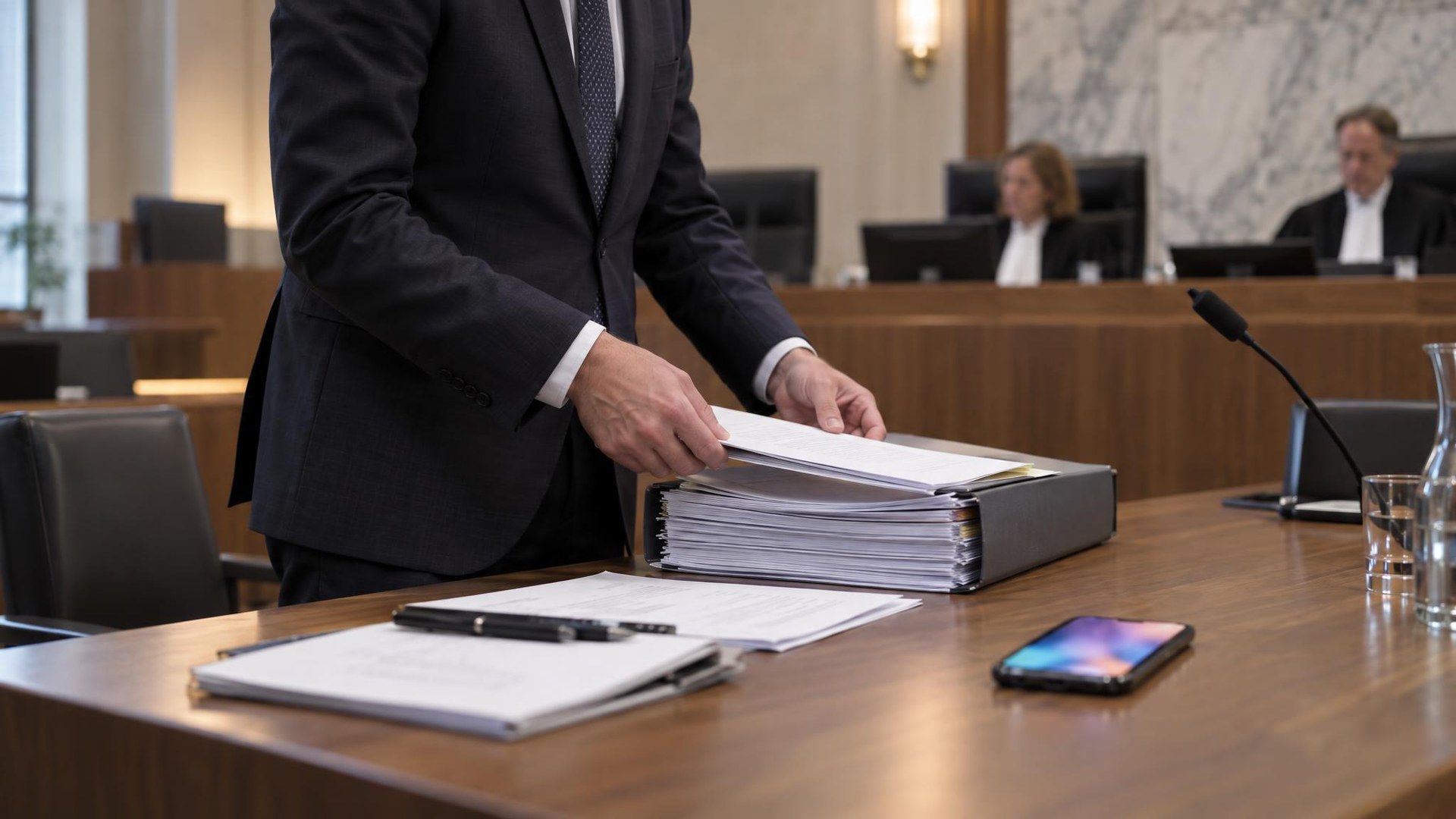
VNLOK, the trade association of licensed online gambling providers in the Netherlands, announced on September 28, 2026 that it has served Meta with a summons before the Amsterdam District Court over the large-scale distribution of illegal gambling advertisements on Facebook and Instagram. The Hague-based organization described the summons as the final step in the legal proceedings it announced in June 2026.
In the summons, VNLOK asks the court to establish that Meta is not meeting its obligations under the European Union’s Digital Services Act and to require Meta to take measures to better prevent illegal gambling advertisements aimed at Dutch consumers. According to VNLOK, the Digital Services Act obliges very large online platforms such as Meta to take adequate measures to limit the risks of illegal content on their platforms, particularly when that content occurs structurally and on a large scale. The organization stressed that the case is not directed against social media as such, but against the facilitation of illegal offerings.
“We have repeatedly drawn Meta’s attention to the scale of the problem and asked it to cooperate structurally on a solution. That has produced insufficient results. That is why we are now bringing the case before the Dutch court,” said VNLOK chairman Björn Fuchs. Fuchs said the Tweede Kamer, the Dutch House of Representatives, is also expressly putting the responsibility of platforms on the agenda, which he called an important signal because, in his words, illegal gambling providers can only reach Dutch consumers by using the infrastructure of large online platforms.
The June Proceedings and the Brussels Complaint
VNLOK announced on June 22, 2026 that it would summon Meta and file a complaint with the European Commission over the large-scale spread of illegal gambling advertisements on Facebook and Instagram. That announcement set out two steps. First, VNLOK asks the court for a declaration that Meta has breached the Digital Services Act and is directly liable for the illegal content, an order requiring Meta to comply with the act, for example through better systems to prevent and detect problems, and a penalty payment for each day Meta fails to comply with such an order. Second, VNLOK said it was filing a notification with the European Commission requesting investigation, enforcement and possible sanctions over the Digital Services Act violation.
According to VNLOK, it is not the first time Meta has had to answer before a Dutch court: in 2025 and 2026, the Amsterdam District Court and the Amsterdam Court of Appeal ordered Meta to remedy a structural violation of the Digital Services Act. VNLOK also said Meta has refused substantive dialogue with the trade association for a considerable time, asking for examples of illegal advertisements but declining to cooperate on structural solutions.
VNLOK said the illegal gambling market in the Netherlands is now roughly the same size as the legal market, estimating that more than €1 billion per year is spent on illegal online gambling. Fuchs described this in June as above all a consumer-protection risk, saying illegal providers do not comply with rules on addiction prevention and actively target vulnerable groups such as minors and problem gamblers.
VNLOK’s Research on Illegal Advertising
VNLOK said its research has repeatedly found that more than 90% of the gambling advertisements it examined on Facebook came from illegal gambling sites, and that Meta removed only 11% of illegal advertisements in May 2026 and 15% in June 2026. Because illegal advertisements often remain online only briefly, removal after the fact frequently comes too late, according to VNLOK, which argues Meta must act more proactively and efficiently against illegal advertisements before they are placed.
In an analysis published on January 26, 2026, VNLOK examined Meta’s Ads Library for October, November and December 2025 and found that in each month more than 95% of the gambling promotion it identified, covering both Facebook pages and advertisements, came from illegal providers. The monthly tallies were 588, 1,158 and 1,003 gambling Facebook pages, of which 96.4%, 97.5% and 97.8% illegal, and 61,717, 84,493 and 67,732 gambling advertisements, of which 96.9%, 97.2% and 95.9% illegal, in the three months respectively.
The analysis found that illegal advertisements rotated quickly: they were visible for one and a half days on average in October 2025, with 79% visible for less than one day, for two days in November, with 69% visible for less than one day, and for two days in December, when 87% were visible for less than one day. Illegal gambling advertisements reached a peak of 50 million impressions in November 2025, and Meta removed 3% of illegal advertisements in October, 5.2% in November and 4.7% in December, according to the analysis.
In its June announcement, VNLOK said an average of more than 70,000 gambling advertisements aimed at the Netherlands were visible on Meta’s platforms in the last quarter of 2025, generating tens of millions of impressions among Dutch consumers each month. The same announcement said the Kansspelautoriteit, the Dutch gambling regulator, makes thousands of reports of illegal gambling advertisements to Meta each month.
The Parliamentary Motion
On September 23, 2026, members of parliament Bikkers, Tijs van den Brink and Mohandis tabled a motion in the Tweede Kamer. The motion states that illegal gambling providers advertise illegal games of chance via online platforms, that the Kansspelautoriteit reports thousands of removal requests to Meta each month without this leading to structural results, and that a specific legal norm is lacking that would oblige online platforms to actually remove illegal gambling advertisements after repeated reports from the regulator and to prevent recurrence.
The motion requests the government to establish in the Betting and Gaming Act that an online platform which repeatedly shows illegal gambling advertising after a removal request itself commits an offence, on which the Kansspelautoriteit could impose an administrative fine or an order subject to a penalty payment.
VNLOK said it is positive about the motion but called on the Kansspelautoriteit not to wait for new legislation and to act more firmly within the existing legal possibilities against parties that facilitate illegal online gambling. “The regulator must more emphatically hold the parties that play a role in reaching Dutch consumers with illegal offerings accountable for their responsibility. No change in the law is needed for that; the regulator already has those legal options,” Fuchs said.
VNLOK said the handling of the motions in the Tweede Kamer and the summons of Meta come together at an important moment: the parliamentary debate on gambling showed broad support for a tougher approach to the illegal market and for more responsibility for online platforms, and the State Secretary called combating illegal gambling a top priority, according to VNLOK.
Fuchs said the problem is broader than Meta, noting that illegal providers use various online routes, from advertisements and search results to misleading referrals and Telegram channels, and resurface through another channel when removed from one platform. In June, VNLOK also pointed to Google, banks and game providers as parties that should do more to stop the activities of illegal gambling companies, including advertising.
VNLOK said the Tweede Kamer will vote on the motion on September 29, 2026.