Best Of
10 Best Puzzle Games Like Myst
Find ten puzzle adventures like Myst, from Riven and Obduction to Quern and Outer Wilds. Explore strange places and understand their rules without spoilers.

 Add Gaming.net to your preferred sources on Google
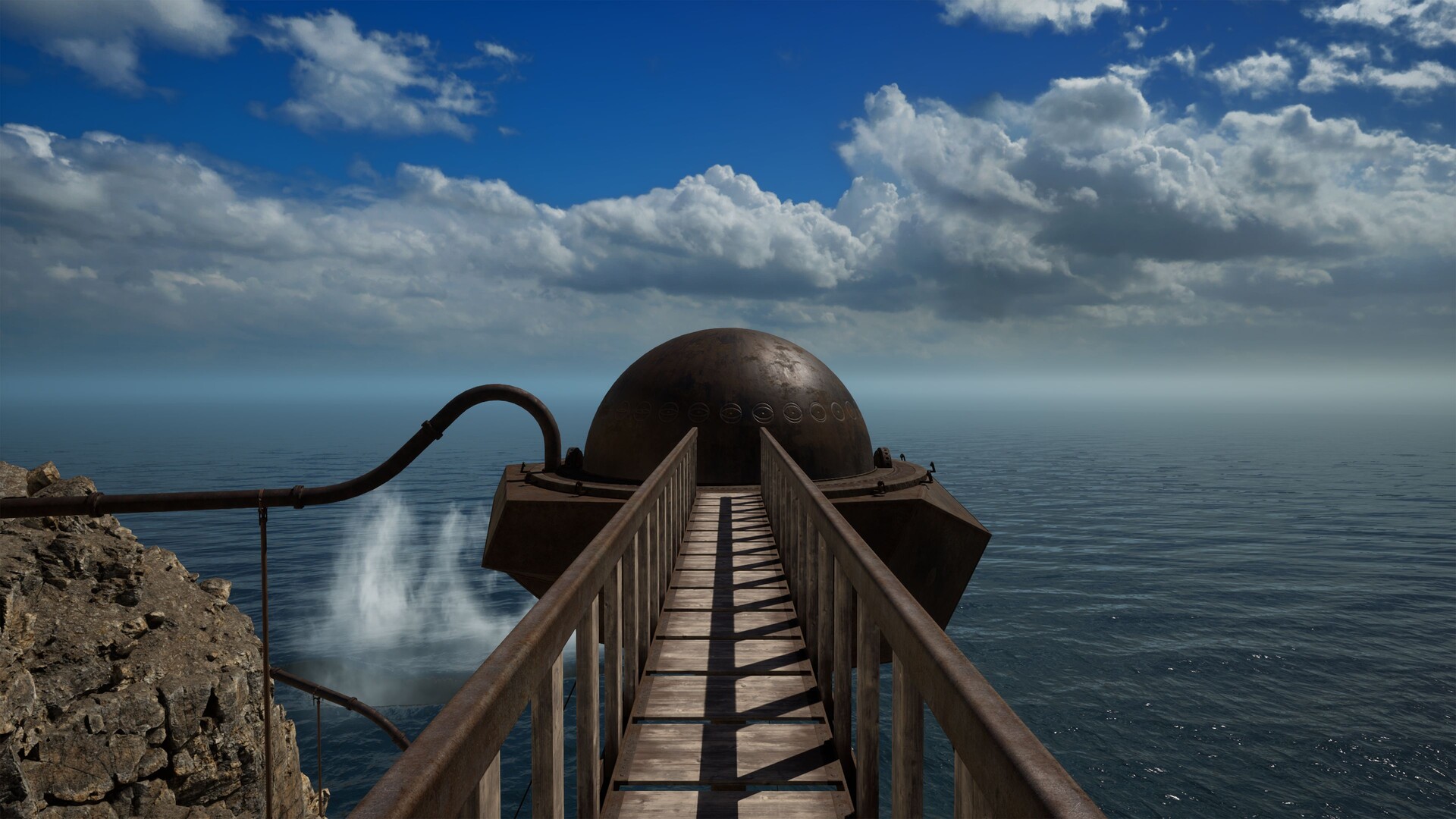
Myst makes a place feel like a question before it hands you a conventional puzzle. A machine, a building or an oddly deliberate arrangement might mean something, and understanding the world becomes the way forward.
The ten games here approach that pleasure from different directions. Some are close relatives from Cyan; others favor visual logic, a tactile mechanism or a larger mystery. They all reward noticing things, but the best next choice depends on whether you want a whole unfamiliar civilization or a smaller object to unravel.
Looking for somewhere to start?
- Riven (2024) for the closest continuation of Myst’s world-based deduction.
- Obduction for an alien mystery from Cyan.
- Quern – Undying Thoughts for a tightly connected island of mechanisms.
10. The Room 4: Old Sins
Best for a dollhouse full of closely observed mechanisms · PC edition · Single-player
An odd dollhouse in an attic is enough to make Old Sins’ opening disappearance more unsettling. Looking closely reveals that the model is not a simple decoration, and examining its rooms becomes a way to investigate the people and secrets connected to the house.
The puzzles reward turning, opening and inspecting objects with care. New access can change how a familiar part of the model is used, giving the small setting room to develop. The atmosphere keeps the mystery present without replacing the practical pleasure of manipulating a convincing mechanism.
This is the most intimate-scale recommendation here. It suits someone who enjoyed Myst’s devices but wants a tactile puzzle-box adventure rather than a large landscape to map. Knowing how the dollhouse works would remove much of the attraction, so leave the detailed demonstrations until afterward.
9. The House of Da Vinci 3
Best for intricate Renaissance mechanisms in a story adventure · PC edition · Single-player
A handle or hidden compartment in The House of Da Vinci 3 is something to investigate at close range. Its mechanical puzzles make progress feel tactile, with Renaissance-inspired devices giving you a clear object on which to focus instead of an entire island of possibilities.
Exploring locations and manipulating machinery carries the story forward. The appeal is watching an apparently closed object become understandable through a sequence of observations and adjustments. Each discovery has a visible effect that makes the next part of the mechanism worth examining.
This is the third chapter of a trilogy, so the earlier games give its narrative better context. For Myst fans, the connection is mechanical curiosity rather than an identical world structure. It is a particularly useful direction when you want smaller, more concentrated puzzles.
8. Firmament
Best for exploring large machines with a mechanical companion · PC edition · Single-player; optional VR
An enormous machine is more inviting when you have a tool that can help you understand its controls. Firmament gives you the Adjunct, a mechanical companion used to interact with the devices spread through its seemingly deserted realms.
Moving through those spaces means learning their functions and how one action changes the route elsewhere. The spectacle has a practical role: the structures you admire are also the things you need to operate. A story unfolds through that exploration without requiring conventional combat to drive you onward.
It belongs here for players drawn to Cyan’s environments and industrial puzzles. The Adjunct gives the interaction a different emphasis from Myst’s direct manipulation. You can play on a regular screen; compatible VR is an optional way to inhabit the spaces, not an entry requirement.
7. Haven Moon
Best for a compact island mystery with curious machinery · PC edition · Single-player
An abandoned island gives Haven Moon a clear invitation: follow the traces, inspect the machines and find out why someone wanted you here. Its Jules Verne-inspired setting makes each curious mechanism feel like part of an inventor’s environment rather than a modern escape-room prop.
Routes and clues connect as you explore. The smaller scope makes it possible to concentrate on a contained mystery without committing to a sprawling RPG or learning a complicated combat system. Understanding a machine still asks you to look at what surrounds it.
This is a useful option for someone who wants the old-fashioned pleasure of a solitary puzzle expedition. It is more focused than the larger worlds near the top of the list. Go in for the atmosphere and connected observations, with the treasure-hunt premise doing enough to get you started.
6. Quern – Undying Thoughts
Best for an interconnected island of reusable puzzle systems · PC edition · Single-player
A device you understand in one part of Quern can become useful context somewhere else. Arriving on its mysterious island starts a process of learning how the place works, with mechanisms that form a connected vocabulary rather than a row of unrelated locks.
Exploration and note-taking help you carry those lessons between areas. The central attraction is recognizing a familiar principle in a new situation, then testing whether your understanding is complete. The setting’s past supplies another reason to keep investigating beyond the immediate machinery.
Choose this when you want a close relative of the classic Myst-like structure. It expects concentration and a willingness to hold several clues in mind. A shortcut to one answer can skip a lesson the game assumes you will remember, so hints deserve a little restraint.
5. Outer Wilds
Best for a solar-system mystery driven by what you learn · PC edition · Single-player
Your little spacecraft can take you toward an intriguing landmark long before you understand why it matters. Outer Wilds makes exploration the engine of its mystery, with the solar system’s changing conditions encouraging you to notice where and when something becomes possible.
Discoveries give the next expedition a purpose. You are building understanding rather than grinding for a character level that will solve the problem for you. Following a thread can make an earlier place suddenly worth another visit, even when you have no new equipment to bring.
This is a broader and more mobile alternative to Myst, with spaceflight and environmental hazards alongside deduction. It asks some comfort with movement as well as patient observation. The less you know about specific discoveries, the more room you leave for that learning to be your own.
4. The Talos Principle 2
Best for first-person mechanisms with a more conversational world · PC edition · Single-player
Walking into a new puzzle area in The Talos Principle 2 gives you a concrete problem before the surrounding society raises a less easily answered one. Light beams, connectors and later mechanics provide the practical work; conversations ask what kind of future that work might serve.
The systems expand as you travel, requiring you to combine ideas rather than repeat an unchanged solution. Exploration also gives the world room beyond individual chambers. Its cast and philosophical discussions make this a more talkative journey than wandering alone through an abandoned island.
Try it if you want substantial mechanical puzzles without giving up a story and people to meet. It is not a direct imitation of Myst’s structure. The useful connection is learning a place through careful thought, with more explicit dialogue alongside the discoveries.
3. The Witness
Best for discovering an island’s visual puzzle language · PC edition · Single-player
The Witness leaves you with an island and a set of panels that seem simple until their rules start interacting. A successful line is not merely a way to open something; it demonstrates that you understood the lesson a particular area was offering.
Different environments introduce different clues, and exploring elsewhere can break a spell of unproductive staring. The lack of conventional explanation makes small observations unusually important. Progress comes from recognizing relationships rather than collecting a larger set of character abilities.
This is the recommendation if Myst’s pleasure was inference more than its narrative. It tells a much less conventional character-led story. Give the island time to teach you its language, and resist assuming that a panel’s immediate surface contains every clue you might need.
2. Obduction
Best for untangling an unfamiliar place with fragments of Earth · PC edition · Single-player; optional VR
A familiar-looking object becomes suspicious when the landscape around it is alien. Obduction uses that mismatch to make exploration interesting before you understand how you arrived, with pieces of ordinary life scattered through somewhere that plainly does not belong to them.
Operating machinery and following connections gradually turns the location into a system you can reason about. Cyan gives you information through the environment, so revisiting an area with a better understanding can be more valuable than searching for a new item. The mystery and the physical route are closely related.
It suits a Myst player who wants another place to inhabit slowly rather than a sequence of quick riddles. Some routes require backtracking, making a mental map useful. The opening predicament is enough context; learning what the strange arrangement means should remain part of playing.
1. Riven (2024)
Best for understanding an island civilization through its surroundings · PC 2024 remake · Single-player; optional VR
A machine in Riven belongs to a place with its own history and inhabitants. That is what makes working it out satisfying: observation connects a mechanism to the world around it, rather than revealing a detached brainteaser that could have been placed anywhere.
The 2024 remake rebuilds and expands the original adventure, with free movement through its islands. Learning the setting makes details more useful on a return visit. A notebook and a willingness to reconsider an assumption will serve you better than rushing to operate every visible control.
This is the closest match for Myst’s particular kind of curiosity. It is also a new version of Riven, so memories of the 1997 game do not replace looking carefully. Keep solutions out of sight; the meaning of a small discovery can reach much further than the immediate obstacle.
Which should you play next?
Riven is the natural first stop for a Myst player who wants the world itself to supply the clues. Obduction offers a different science-fiction setting with a related approach, while Quern keeps its mechanisms closely connected.
For a more tactile puzzle box, consider The Room 4: Old Sins. The Best Puzzle Games on PS5 list broadens the platform options, and Best Point-and-Click Puzzle Games includes adventures where conversations and inventory puzzles do more of the work.