Reviews
Just Cause Series Review (Xbox, PlayStation & PC)


Just Cause follows the mantra of, if it explodes and has a Michael Bay-esque feel to it, then it must be fun—four mainline entries worth of fun, that is. It doesn’t make an attempt to construct a bold narrative, nor does it fill your head with numerous characters and thought-provoking questions. Instead, it tells you how it is, with a grenade launcher and a sandbox to keep you mindlessly distracted from its general shoddiness. It believes that, if it can supplement its lack of plot points and interesting features with volatile gameplay facets and open-ended combinations, then it can keep you invested for the long haul. And to be honest, it does keep to that promise, warts and all.
At no point would I refer to Just Cause as a perfect series, for it lacks the basic bone structure of a clean, structured saga with calculated measurements. No, if anything, Just Cause is a bit of a broken record—a vinyl that you love to listen to and rewind back, but also can’t help but feel annoyed about when it begins to grovel over the cracks and reveal its imperfections. And Just Cause is exactly that: a record that you adore listening to, but also know to not get your hopes up for. It doesn’t reinvent the wheel, and it definitely skips out on a lot of crucial areas that you would typically see in other big-budget sandbox IPs. That said, what it does bring to the table is worth the asking price alone — and that’s mindless chaos on a tropical platter. Frankly, you can’t put a price on that. And if you did put a price on it, then it wouldn’t set you back much more than a few dollars, weirdly.
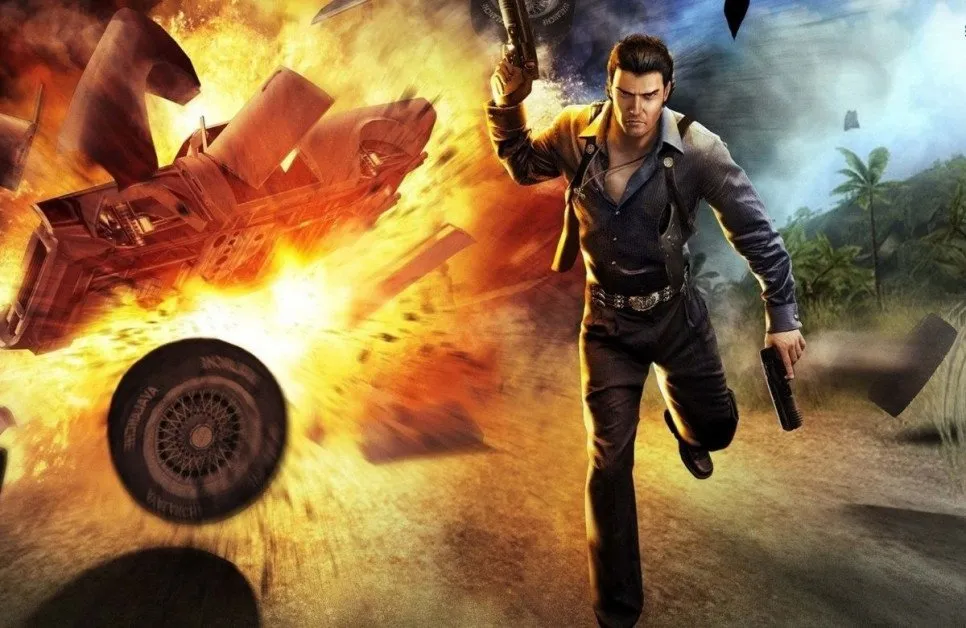
Just Cause finds its niche within an open-ended world and a vast trove of sandbox missions that often invite you to tackle set objectives in a number of different ways, whether it’s in a tactical, confrontational, or absurdly complicated manner. In most situations, it follows the mantra of, if you can dream it, you can pull it off — even at the expense of your honor and dignity. It can be slick, stylish, or outright ridiculous. More to the point, you can slug through each campaign in any manner you deem appropriate, whether it’s by taking the bull by the horns or a dying fish by its scales, so to speak. And I think that why the series is so darn fun: it’s pure, unadulterated freedom without the bells and whistles of a pompous RPG. It doesn’t always look great I’ll admit, but that doesn’t make it a bad thing.
Of course, if you can happily set aside the fact that the series has no redeeming qualities in its storytelling department, then you should find no issue with sinking your teeth into a jam-packed sandbox and simply enjoying it for what it is. It’s a tropical haven with a million opportunities to explore, be it on the road, from the skies, or in a blazing inferno with bullets and projectiles bolted to your back. For the most part, it can make you feel like James Bond on a desperate quest to thwart an evil tyrant in an otherwise harmonious world, though it can also make you feel like an inadequate rag doll who’s only fit for canon fodder. I suppose, when all’s said and done, it depends on how you choose to play your cards.

The series falls beneath a similar umbrella as the likes of Crackdown, in that it spends little to no time telling you all about the finer points of the problem, but also arms you to the teeth with gadgets and weapons and ultimately expects you to make short work of the issue at hand. It hands you a plethora of objectives, an open world setting with a bunch of activities and challenges that range from combat-driven takedowns to full-throttled aviation battles, and a simple stepping stone system that allows you to progress as you see fit. And that, really, is the same system that Just Cause has been using since day one. It’s incredibly predictable, yet just as satisfying and comforting, weirdly. But then, as the saying goes, if it ain’t broke, don’t fix it.
While you could argue that the franchise as a whole has been one of the most absurd sagas in the history of open-world sandboxes, there’s no denying the fact that, with hindsight, it has brought about a ton of great features and epic scenarios in the past. Suffice it to say, it is ridiculous, but that’s sort of the point. It doesn’t make an effort to disguise itself as a serious franchise; on the contrary, it embraces its wackiness and simply rolls with it. It’s comical, unorthodox, and above all, harmless mayhem on a silver platter. It may not be the most technically advanced series on the block, and it certainly doesn’t harbor any real value in its audiovisual departments, either. That said, if Just Cause is anything at all, it’s an excuse to take a walk on the wild side—an opportunity to take a breather and bathe in mindless violence and destruction. Frankly, Just Cause has always been capable of hitting that on the head.
Verdict

Just Cause solidifies its position on the slate as the oddball of open-world sandboxes—a rebellious force unto itself that doesn’t bow to conventional logic or ironclad storytelling, but to mindless chaos and open-ended gameplay styles that can keep you conjuring up epic scenarios for hours, weeks, even months. It isn’t always pretty, and it certainly lacks a lot of detail in its world-building department. That being said, it is a ton of fun to work through, especially if you’re actively looking for a way to blow off a little steam after a long day at the office. It’s a simple saga that still leaves a lot to be desired, but that doesn’t make its wall-to-wall explosions and tongue-in-cheek remarks any less of a hoot to marvel at.
Just Cause Series Review (Xbox, PlayStation & PC)
Michael Bay, Gamified
Just Cause solidifies its position on the slate as the oddball of open-world sandboxes—a rebellious force unto itself that doesn’t bow to conventional logic or ironclad storytelling, but to mindless chaos and open-ended gameplay styles that can keep you conjuring up epic scenarios for hours, weeks, even months.




