News
Over 60% of Philippine Online Casinos Could Face Exit Under New PAGCOR Fees

 Add Gaming.net to your preferred sources on Google
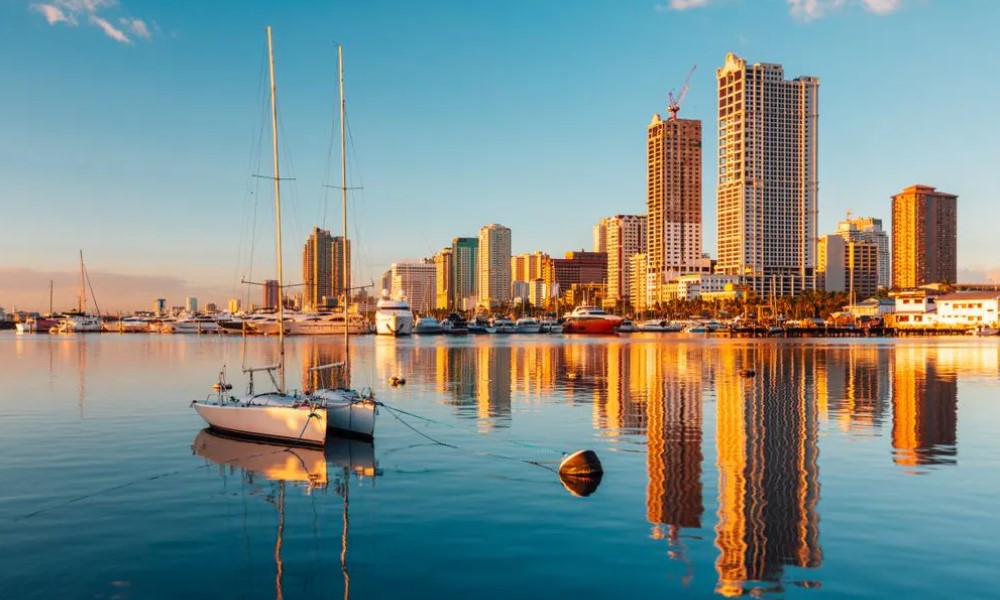
Over 60% of online casino operators in the Philippines may be forced to either exit or raise money ahead of the Minimum Guaranteed Fees that PAGCOR introduced in July. This insight was raised by Arden Consult International, a B2B iGaming services provider that has extensive knowledge of the Philippines and the wider Asian online gambling industries. And while it is a speculative case made by a B2B services provider, there is real weight behind the implications.
At the end of last year, the Philippines iGaming regulator, PAGCOR, forwarded the notion of a minimum guaranteed fee, applicable to all licensed operators in the market. Operators all have to pay it, and any who can’t afford to will have to complete suitability checks. The idea behind this is to clean up the Philippines online casino sector and either force the struggling operators to scale up or to drop out. But does this strategy kill real competition?
PAGCOR Minimum Guaranteed Fees
The PAGCOR minimum guaranteed fee is imposed as a safety net under the existing percentage-based fees that operators have to pay in the Philippines. Online gaming system administrators (GSAs) and gaming venue operators (GVOs) will have to pay the minimum fee, unless they qualify for the percentage fee.
The minimum guaranteed fees are tiered based on whether the operators have online casino games (yes, this fee also applies to operators who provide non-casino games), and also based on their monthly gross gaming revenue. Operators must pay the minimum guaranteed fees on a monthly basis, determined by their monthly GGR. And here is where it gets controversial. The operators who don’t reach the minimum GGR threshold will eventually have to undergo a suitability review.
Here is the minimum guaranteed fee broken down:
- GSA with casino games: Minimum GGR of ₱30 million (~486,000).Minimum guaranteed fee = ₱9 million (~145,000)
- GSA without casino games: Minimum GGR of ₱15 million (~243,000).Minimum guaranteed fee = ₱3 million (~48,600)
PAGCOR will assess the revenue made by the operators, and charge the regulatory fee based on their GGR, but these are the minimums that must be paid monthly. The PAGCOR electronic gaming licensing head, Jessa Mariz Fernandez, implied back in December that it will close the loopholes in the previous (“current” when the announcement was made) regulation.
“In order to address the gaps in the current fee structure and uphold the principles of fairness, accountability and fiscal responsibility, please be informed that the PAGCOR’s Board of Directors approved in its meeting on 04 December 2025 the implementation of a Minimum Guaranteed Fee per month.”
3 in 5 GSAs Could Be At Risk
The report from Arden sheds light on the damaging impact this can have on Philippine operators. As of August 12, there are only 61 gaming system administrators in the Philippines, meaning Arden’s assessment of the first quarter of 2026 signals that a good 36 or 37 operators may be at risk. Now this is a monthly fee, based on monthly GGR, and so there can be fluctuations throughout the year. So where there are dips or ebbs and flows, the market may look more endangered than it actually is.
But this is still not a great situation for the smaller or indie operators in the Philippines. Under PAGCOR casino licensing law, they can’t just sell or transfer their licenses. That is, not without the approval and consent of the PAGCOR board. Arden finished up with cautionary advice, recommending investors not to jump in straight away and to wait out the impacts of the fees on the market before making any moves. But that is not the end of it either.
The Imminent Increase in the MGFs
PAGCOR announced that it will collect a minimum guaranteed fee from all licensed online gambling operators from 2026, in 2 phases (“tranches). Back in 2025, they planned the first tranche to start in April and last until the end of September, but earlier this year the schedule was shifted. On July 1, the first tranche was started, and it will last until December 31. From January 1, 2027, the second tranche will start.
Tranche 1 for casino operators
- July 1 – December 31, 2026
- ₱30 million (~$486,00) GGR threshold
- ₱9 million (~$145,000) minimum guaranteed fee
Tranche 2 for casino operators
- January 1, 2027 onwards
- ₱35 million (~$567,000) GGR threshold
- ₱10.5 million (~$170,000) minimum guaranteed fee
An online casino that makes ₱30 million in a month in GGR has to pay at least ₱9 million in fees – which is just under 30% of its entire revenue. After that come the overheads, supplier costs, operational costs, and every other cost that they need to pay out. And from January 1, not only will the minimum GGR threshold increase by a good ₱5 million, but also the minimum guaranteed fees increase up to ₱10.5 from ₱9.
What Happens When Operators Can’t Reach the MGF
In PAGCOR’s December memorandum, it states that failure to pay the MGF within the prescribed period will result in the imposition of interest charges and automatic deduction of that amount from the GSA’s “Performance Cash Deposit” on the 20th day of the month. Should an operator fail to reach the required GGR for 5 cumulative months, then they will trigger the issuance of a Final Warning and a comprehensive evaluation of the GSA’s continued suitability will take place.
In short, failure to meet the minimum guaranteed fees can result in interest (and automatic deductions from the PCD). But if an operator fails to meet the minimum GGR threshold, which will increase from 2027, then it will have to undergo these suitability accreditations. After all, licensed GSAs in the Philippines have to prove that they are compliant with the iGaming laws, and part of that is upholding a suitable financial framework to conduct their business. If their business just happens to be under the minimum GGR (~486,000now,~567,000 from 2027 onward), then they may not be able to cut it in the new Philippines iGaming sector.
The Philippines Online Casino Landscape
PAGCOR has slowly been moving away from the Philippines Offshore Gaming Operators, or POGOs, one of the defining parts of its iGaming sector until 2024. These were Philippines-based operators that targeted foreign countries, much like what Europe has with Malta, Gibraltar, and what, recently, the international casino licences Georgia is proposing. In the Philippines, these operators mostly targeted Chinese players, which was illegal, and after political pressure, the Philippines ended the program.
Now, the market is domestic and uses a strict licensing model. There are 61 GSAs in the Philippines, and these can offer virtually all kinds of online casino games, from slots and baccarat to live games and jackpot titles. The Philippines has been, in recent years, implementing extremely strict bans on gambling ads, to the point that they are no longer allowed in public spaces or on primetime TV. Then, there are restrictions such as:
- Deposit limit: Players can deposit up to 20% of their average bank daily balance
- Self exclusion: Exclusion can be made for anywhere from 6 months up to 5 years, and there is also a family exclusion program
- Cashback limits: Cashback is allowed, but online casinos can only offer up to 15% cashback, and from net losses only
The restrictions are quite tight, but not so much as European regulators like Germany or Netherlands – where deposit limits and constraints on the gameplay or bonuses can define the experience.
Philippines Reforming its Gambling Sector
The Philippine gambling industry is rising, and an annual report of 2025 showed that it had grown 6.39% from 2024. The land-based gambling sector was the bigger one until 2025, when the online sector took 50.77% of the total ₱396.14 billion. The iGaming industry, comprising electronic games, electronic bingo, and onsite and offsite poker, had grown a phenomenal 30%, from ₱154 billion up to ₱201 billion in 2025.
But the Philippines landbased casino industry is also a formidable player in the broader Asian market. The largest are the Macau Casinos, which are worth an estimated ~$29.8 billion, with the luxury casinos in Singapore valued between $6 and $6.5 billion. The Philippines is not far behind, and there is a lot of international interest in the market. Just recently, Travellers International (joint venture of Genting Group and Alliance Global Group) announced it will pump up to $1 billion into the Westside City Resort development and two more projects in the Philippines.
To make matters more interesting, PAGCOR, which owns landbased casinos through Filipino Casinos (its subsidiary brand), announced recently it wants to sell its 40+ casinos. As the regulator focuses more on overseeing the market, it wants to privatize its own gambling venues. And while these don’t make up a huge portion of the market, the sheer spread and visibility are a good opportunity for any Philippine (or international) investor to take a punt.
The Philippines is undergoing major reforms in its landbased and online casino sectors. The minimum guaranteed fees may force some of the smaller operators to shut down, or force them to rethink their strategies and plan bigger, in a market that is on the up and up.