igaming
Gaming and Leisure Properties Posts Record Q3 Revenue as Net Income Falls

 Add Gaming.net to your preferred sources on Google
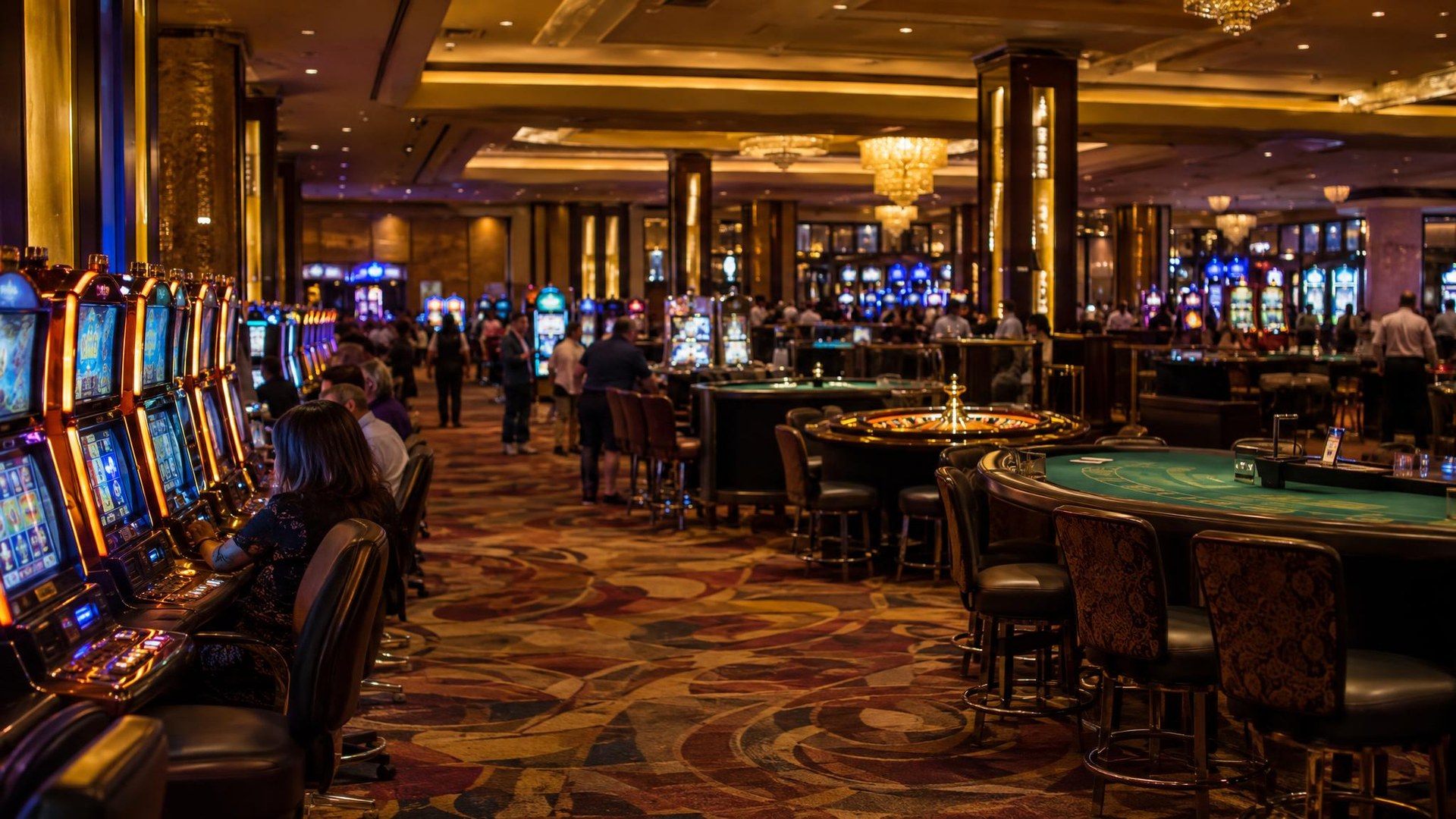
Gaming and Leisure Properties reported total revenue of $435.4 million for the third quarter ended September 30, 2026, up from $397.6 million in the same period of 2025, and updated its full-year 2026 adjusted funds from operations guidance. The real estate investment trust, which owns casino real estate leased to gaming operators under triple-net arrangements, described the quarter as a record for revenue, AFFO and Adjusted EBITDA in its third-quarter results release.
Net income for the quarter was $213.8 million, or $0.71 per diluted common share, down from $248.5 million, or $0.85 per share, a year earlier. Income from operations came to $309.9 million against $337.2 million. Funds from operations fell to $275.9 million from $315.5 million, while adjusted funds from operations (AFFO) rose to $311.7 million from $282.0 million and Adjusted EBITDA increased to $413.9 million from $366.4 million. AFFO per diluted share and OP/LTIP units was $1.04, compared with $0.97.
The income statement shows rental income of $371.0 million and interest income from real estate loans of $7.7 million for the quarter. Operating expenses included a $36.2 million provision for credit losses, against a $37.4 million benefit in the prior-year quarter, while interest expense rose to $98.9 million from $94.1 million.
For the nine months ended September 30, 2026, total income from real estate reached $1.286 billion against $1.188 billion a year earlier, with net income of $688.2 million versus $575.0 million and diluted earnings per share of $2.33 versus $2.00. AFFO was $912.8 million, up from $830.1 million, and Adjusted EBITDA was $1.212 billion against $1.088 billion.
Chairman and Chief Executive Officer Peter Carlino said total revenue rose 9.5%, AFFO grew 10.5%, Adjusted EBITDA increased 13.0% and AFFO per share rose 7.2%. He pointed to the company’s focus on long-duration triple-net leases carrying contractual rent escalators and strong coverage, along with its ability to underwrite complex transactions for quality tenants, and said GLPI’s share price remains significantly dislocated from its fundamentals, producing what he called an attractive yield of more than 8.5% based on the current quarterly cash dividend.
“Regional gaming has proven its resilience for decades, and it is doing so again,” Carlino said. “Same-store operator results delivered healthy year-over-year gains through the first nine months of 2026, and the durability of our rents and strong coverage stand out against the currently volatile macro backdrop.”
2026 Guidance and Dividend
The company now estimates full-year 2026 AFFO of between $1.222 billion and $1.225 billion, or between $4.11 and $4.12 per diluted share and OP/LTIP units, compared with prior guidance of $1.219 billion to $1.225 billion, or $4.10 to $4.12 per share. The updated guidance incorporates approximately $265 million of additional development fundings, which will bring total 2026 development spending to $800 million, and excludes the impact of any future acquisitions, dispositions, capital markets activity or other non-recurring transactions not yet announced.
The board declared a third-quarter dividend of $0.82 per share, announced September 1, 2026 and paid September 25, 2026 to shareholders of record on September 11, 2026. The annualized dividend per share stood at $3.28, versus $3.12 a year earlier, with the dividend yield based on the period-end stock price at 8.6% against 6.7%.
Prologis Joint Venture and 2026 Transactions
On October 27, 2026, GLPI entered definitive agreements to form a joint venture with Prologis to develop the former Hollywood Casino Joliet site in Illinois. GLPI will contribute its owned land in three phases, with Prologis serving as managing member and developer. Subject to review and approval by the City of Joliet, Prologis intends to build a Class A warehouse and distribution park expected to consist of five buildings totaling more than 3.8 million square feet over approximately five years, and it holds options over the development of phases two and three. GLPI will receive a $61 million capital account credit assuming all three phases are developed and will hold an ownership interest of approximately 20%, which could rise to approximately 30% if GLPI elects to contribute additional capital.
Earlier in the year, on January 15, 2026, GLPI agreed to fund up to $440 million of real estate construction costs for the Live! Casino & Hotel Virginia project with The Cordish Companies and acquired the project land for $27 million, a total commitment of $467 million at an 8.0% capitalization rate. On February 11, 2026, it exercised its option to acquire the real property assets of Bally’s Lincoln Casino Resort for $700 million plus $56.0 million of additional annual rent at an 8.0% cap rate, issuing 332,890 OP Units with the balance of the consideration paid in cash.
On March 4, 2026, the company issued $800 million of senior notes due March 1, 2036, priced at 99.857% of par with a 5.625% coupon, using the net proceeds to repay borrowings under its term loan credit facility and for working capital and general corporate purposes. On June 1, 2026, it settled a forward sale agreement by issuing 7,589,487 shares of common stock for net proceeds of $351.0 million, and on June 24, 2026 it funded $216.3 million to complete its $225 million commitment for PENN Entertainment’s Hollywood Casino and Hotel Aurora landside development at a 7.75% capitalization rate. On June 30, 2026, a second amendment to the Hard Rock Casino Rockford loan brought a $16.0 million principal repayment from the borrower, scheduled future repayments on or before March 31, 2028 and March 31, 2029, an extended maturity of December 31, 2029 and an option for GLPI to acquire the building improvements at the property.
Balance Sheet, Portfolio and Funding Commitments
Total assets stood at $14.1 billion at September 30, 2026, compared with $12.9 billion at December 31, 2025. Long-term debt totaled $8.16 billion gross, or $8.08 billion net of unamortized costs and discounts, with a weighted average 6.6 years to maturity at a weighted average interest rate of 5.097%. The release lists issue credit ratings of BBB- from Standard & Poor’s, BBB- from Fitch and Ba1 from Moody’s.
As of September 30, 2026, the portfolio comprised interests in 71 gaming and related facilities across 21 states: 34 operated by PENN Entertainment, 16 by Bally’s, six by Caesars Entertainment, four by Boyd Gaming, three by Cordish, four by Strategic Gaming Management, one by American Racing & Entertainment and one managed by a Hard Rock International subsidiary, with two further facilities under development: the Bally’s project in Chicago and the Cordish and Bruce Smith Enterprise project in Petersburg, Virginia.
Outstanding funding commitments at quarter-end included $940 million for Bally’s Chicago construction, of which $640.7 million had been funded; $467 million for the Live! Casino & Hotel Virginia site and construction, with $48.6 million funded; a $175 million potential transaction at the former Tropicana Las Vegas site with Bally’s, with $48.5 million funded; a $150 million Ameristar Casino Council Bluffs landside move, with nothing funded; a $110 million loan for a casino development near Sacramento, California, with $98.9 million funded; and a $180 million delayed draw term loan for the Dry Creek Rancheria resort development, with nothing funded. The company noted that tenants retain the option to decline its financing for certain projects and may seek alternative financing.
GLPI will hold its earnings conference call on October 30, 2026 at 10:00 a.m. Eastern Time to discuss the results, with a live webcast in the investor relations section of its website and a replay available for 90 days.