Best Of
10 Best Dungeons & Dragons Video Games
Explore ten Dungeons & Dragons games, from Baldur’s Gate 3 to classic party RPGs, online adventures and approachable cooperative action.

 Add Gaming.net to your preferred sources on Google
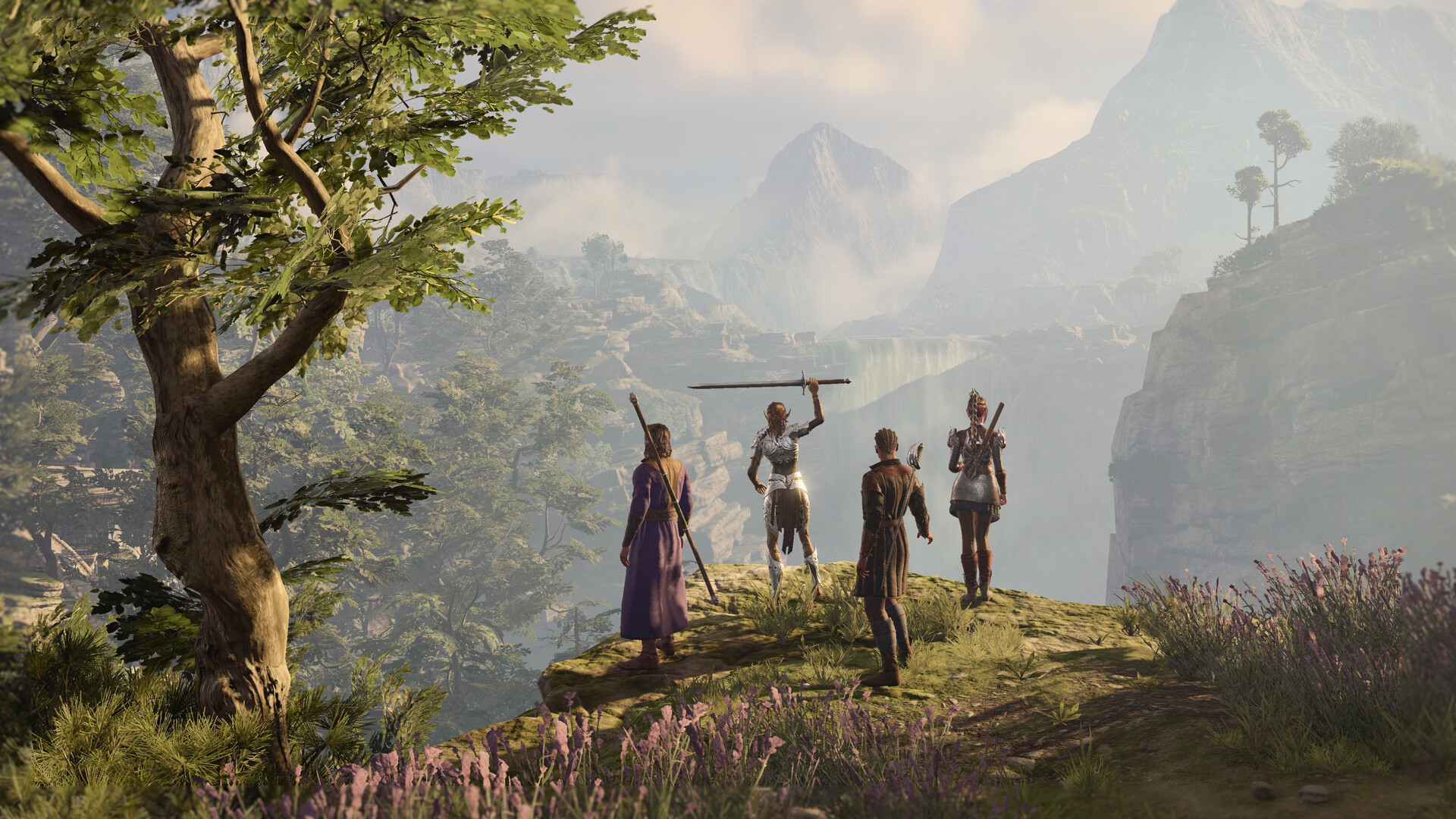
Dungeons & Dragons video games do not all ask you to play the same way. Some hand you a party and a mountain of spell choices; others make it perfectly reasonable to solve an evening’s problems with a sword and a friend. These ten cover character-driven RPGs, dungeon-focused adventures, online worlds and arcade action.
Looking for somewhere to start?
- Baldur’s Gate 3 for a flexible modern party RPG.
- Planescape: Torment: Enhanced Edition for conversation and strange ideas.
- Baldur’s Gate: Dark Alliance for immediate couch co-op action.
10. Baldur’s Gate: Dark Alliance
Best for accessible dungeon action · PC, re-release of the original game · Solo; two-player local co-op
Trouble in Baldur’s Gate draws a small band of adventurers into a threat larger than the city’s ordinary criminal problems. The journey moves from familiar streets into increasingly dangerous places. Its story is a straightforward reason to keep exploring together, leaving most of the attention on fighting and finding equipment.
Smash a barrel, collect the contents and push into the next room beside a friend. Dark Alliance translates the Forgotten Realms into immediate action rather than asking you to direct a full party through paused tactical orders. A small selection of heroes keeps the initial decisions manageable.
The attraction is a steady sequence of fights, equipment and character upgrades inside a compact adventure. This recommendation is the re-release of the original Dark Alliance, not the separate game titled Dungeons & Dragons: Dark Alliance. It is a welcoming choice for couch cooperation when both players would rather move and attack directly than read a dense spellbook first.
9. Dungeons & Dragons: Chronicles of Mystara
Best for arcade teamwork · PC · Solo; up to four online
These two adventures send a D&D party through Mystara, where monsters and powerful enemies turn the road into a series of escalating confrontations. Branching routes can change the journey between major encounters. The setup is classic heroic fantasy, told mainly through the places you visit and the enemies blocking the way.
A quick spell or well-timed attack can rescue a group that has become a little too enthusiastic about charging forward. Chronicles of Mystara collects Tower of Doom and Shadow over Mystara, two arcade adventures that turn D&D classes into distinct ways to fight through a colorful side-scrolling world.
Branching routes and character differences make repeating the journey more interesting than simply memorizing one corridor of enemies. It is the pick for shorter cooperative sessions and players curious about D&D beyond conventional RPG menus. The emphasis is on action, shared resources and replaying the arcade games, rather than building one hero through a lengthy open-ended campaign.
8. Neverwinter
Best for a free-to-play online Forgotten Realms · PC · Online action MMO
Neverwinter’s continuing adventures put your character in and around a city that repeatedly finds itself facing magical and military threats. Different story arcs lead toward different corners of the Forgotten Realms. Think of it as a growing sequence of campaigns within a shared world, not one detective-style plot with a single final answer.
Roll out of danger, fire a class ability and move into another encounter without waiting for a turn order. Neverwinter uses the Forgotten Realms as the setting for an action-oriented MMO, with character advancement and group activities providing a reason to return after the opening adventures.
It is an online world with free-to-play systems and optional purchases, rather than a single-player successor to Neverwinter Nights. That makes it most appealing when you want other players, recurring activities and a persistent character to develop. If the attraction is controlling every party member or playing an entire story offline, one of the classic enhanced editions is a better starting point.
7. Dungeons & Dragons Online
Best for dungeons that reward party roles · PC · Online MMO; solo and group quests
Your adventurer begins taking on dangers in a world where an apparently modest assignment can lead into a much larger dungeon expedition. Stormreach and later destinations connect many separate story arcs. That structure suits a group interested in collecting adventures together instead of following only one protagonist’s tightly controlled personal journey.
A trap, a locked route or a difficult encounter gives different party skills a chance to matter. Dungeons & Dragons Online centers its appeal on instanced adventures and character-building decisions, turning many sessions into expeditions rather than an uninterrupted stroll through an open map.
Its long history means there are many systems and adventure packs to understand, with free access and paid content covering different portions of the game. That complexity suits players who enjoy learning how a build works within a group. It is the dungeon-party recommendation here, provided an older interface and an ongoing online structure are part of what you are willing to explore.
6. Baldur’s Gate: Enhanced Edition
Best for a classic low-level journey · PC · Solo; online multiplayer
A sudden departure from Candlekeep leaves your character trying to understand why an ordinary life has become unsafe. An iron crisis and growing unrest give the Sword Coast its immediate problems. Exploring those troubles gradually connects a personal mystery to something larger, with the important connections left for the game to reveal.
Leave a sheltered home and an ordinary stretch of road can suddenly make a fragile party feel very small. Baldur’s Gate: Enhanced Edition begins with relatively vulnerable adventurers, so equipment, formation and choosing which trouble to investigate matter long before anyone becomes a legendary spellcaster.
Exploration connects settlements, wilderness and a mystery involving the Sword Coast’s iron crisis. Real-time combat can be paused to issue orders, giving you room to think when several things happen together. Start here if watching a party grow from its uncertain beginnings is the appeal. The rules reflect an older D&D system, which is part of the adjustment rather than a modernized fifth-edition campaign.
5. Icewind Dale: Enhanced Edition
Best for building a complete adventuring party · PC · Solo; online multiplayer
Create the whole party and every new fight becomes a test of the combination you assembled. Icewind Dale: Enhanced Edition puts combat-heavy expeditions through the frozen north ahead of the companion-centered storytelling associated with Baldur’s Gate. Your group’s roles are yours to define from the start.
Your party travels into the frozen north, where disturbances around the settlements lead toward a more dangerous regional threat. The story gives the expeditions a reason to continue, but the companions are the people you create. It is an adventure about a party confronting a crisis, rather than a cast’s individual relationship dramas.
Working through dangerous areas gives spells, positioning and equipment a practical purpose, with real-time-with-pause control keeping busy encounters manageable. It is especially satisfying for someone who enjoys tuning a party rather than negotiating with a cast of strongly authored companions. Expect a more directed dungeon adventure, with the setting supplying atmosphere while your chosen characters supply the working plan.
4. Neverwinter Nights: Enhanced Edition
Best for custom adventures and community worlds · PC · Solo; online multiplayer
A plague has put Neverwinter under extraordinary pressure, and your character becomes involved in the effort to help the city. That original campaign is only one part of the package’s identity. Other campaigns and community modules use the same rules to tell different stories, so the next adventure need not share the same premise.
Take one character into an adventure, then discover that the same rules can support an entirely different campaign. Neverwinter Nights: Enhanced Edition combines its own stories with the Aurora toolset and a long tradition of community-made modules, making it unusually interesting for players who want more than one fixed journey.
The original campaign concerns a city facing a deadly plague, but the game’s lasting identity reaches well beyond that premise. Your focus is a single protagonist rather than directing a large classic-RPG party. Choose it for authored modules, multiplayer worlds and the possibility of making adventures yourself; finding the right module is part of finding the right experience.
3. Planescape: Torment: Enhanced Edition
Best for conversation with consequences · PC · Single-player
The Nameless One wakes in a mortuary without a reliable account of his past, surrounded by signs that this is not an ordinary case of forgetfulness. Following those clues leads through an extraordinary city and the people connected to his existence. The central question is personal long before its wider implications become clear.
Wake in a mortuary without a clear account of who you are, and even a seemingly simple conversation becomes a clue about your place in a very strange universe. Planescape: Torment builds its appeal around dialogue, companions and questions of identity rather than a race toward stronger equipment.
Its unusual setting gives ordinary RPG expectations a useful shake: paying attention to people and ideas can matter more than treating every obstacle as a combat problem. The enhanced edition improves access to the classic without turning it into a modern action game. Pick it when reading and considering an answer are the main event, not pauses between the fights you actually came for.
2. Baldur’s Gate II: Enhanced Edition
Best for a powerful party and memorable companions · PC · Solo; online multiplayer
Imprisonment and an unsettling enemy force your character into a search for freedom and answers in Amn. The party’s companions bring their own concerns into that journey, making detours feel like more than a distraction from the main threat. You do not need its major revelations spoiled to understand why the group keeps moving.
A spell combination works, the battlefield changes and a seemingly impossible encounter becomes a plan you can explain. Baldur’s Gate II starts with more capable characters than its predecessor, allowing the tactical possibilities of a developed D&D party to become a larger part of the adventure.
Escaping captivity opens a story in Amn, where companions and side quests provide reasons to explore beyond the next major objective. It rewards players willing to understand older rules and manage several characters through real-time-with-pause combat. This is the classic choice for a substantial party RPG; its enhanced edition packages the adventure for modern systems without removing the need to learn its spell-heavy encounters.
1. Baldur’s Gate 3
Best for creative choices and tactical cooperation · PC · Solo; two-player local co-op; online co-op
A mind flayer parasite gives your character and several companions an urgent problem they cannot safely ignore. Searching for help pulls them into a larger conflict while personal loyalties develop along the road. That is enough of the setup to begin; what the parasite means and how different companions respond are discoveries worth protecting.
Move a party member onto higher ground, talk your way past a confrontation or discover that an object in the room is a better solution than your strongest attack. Baldur’s Gate 3 gives its turn-based encounters and branching conversations enough flexibility for a plan to feel like your own.
A dangerous parasite brings the party together, supplying urgency without requiring you to know the resolution before you start. Companions, exploration and build choices give the journey several competing priorities. It is the most approachable broad recommendation here for someone seeking a modern D&D adventure, with solo control of the group or cooperative play that lets friends share the decision-making.
Which should you play next?
For a first substantial adventure, begin with Baldur’s Gate 3. Choose Planescape: Torment when conversation matters most, or Dark Alliance when you want immediate shared action. Our Best Isometric RPGs guide offers more party-based choices, while Best Games Like Disco Elysium focuses on stories shaped by dialogue and character decisions.