Sports
Types of Golf Bets: Outrights, Each-Way, Matchups, and Cut Markets

 Add Gaming.net to your preferred sources on Google
Key PointsThe same golfer can win a matchup bet while losing an outright tournament wager.
View more
- The same golfer can win a matchup bet while losing an outright tournament wager.
- Tie rules change payouts because split-stake terms leave only part of the stake eligible.
- Course fit and field strength shape scoring so compare those before judging place or matchup prices.
Golf odds can cover the entire tournament, one round or one golfer’s finishing position. The same golfer can win a matchup and lose an outright. Check the event format, what the ticket needs and the rule for a tie or withdrawal.
Understand the market scope
| Market | What it measures |
|---|---|
| Tournament outright | The named winner, normally after any official playoff |
| Top-10 finish | Place relative to the cutoff, including tie terms |
| Round matchup | Named players’ scores for the specified round |
| Make the cut | Whether the player advances under the event format |
| Each-way | Separate stakes on the win and specified place outcome |
The USGA’s rules distinguish ways golf competitions can be played. A head-to-head betting matchup within a stroke-play event need not be a match-play tournament. Check grades for tied scores, missed cuts and rounds shortened by weather.
Work out the effect of a tie
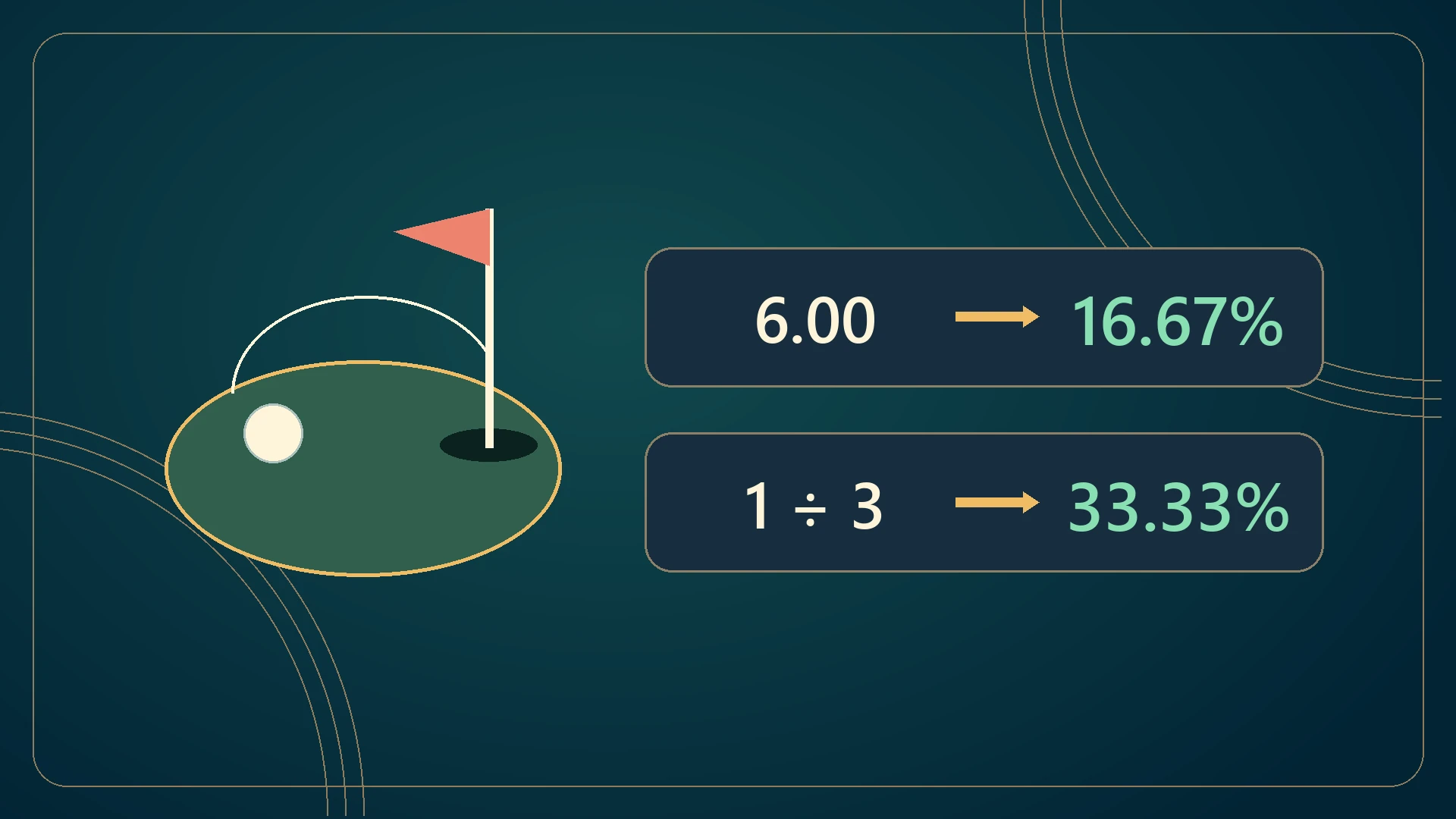
At 6.00, a winning 30-unit stake would normally gross 180. If three players tie for one paid spot and the ticket uses a split-stake rule, 10 of the 30 units remain eligible. They return 60 in total, for +30 after subtracting the original 30. An offer paying ties in full has different economics. The PGA Tour’s dead-heat explanation shows how the remaining places matter.
Compare course fit with actual opportunity
Field strength, course design and wind conditions can affect the scoring range. Use the Tour’s strokes gained statistics to compare golfers’ performance against the field. Check the tournament’s cut process or lack of a cut before comparing place or matchup prices.