Licenses
Kalshi Rebuts Report Trump Jr. Pitched GOP Attorneys General

 Add Gaming.net to your preferred sources on Google
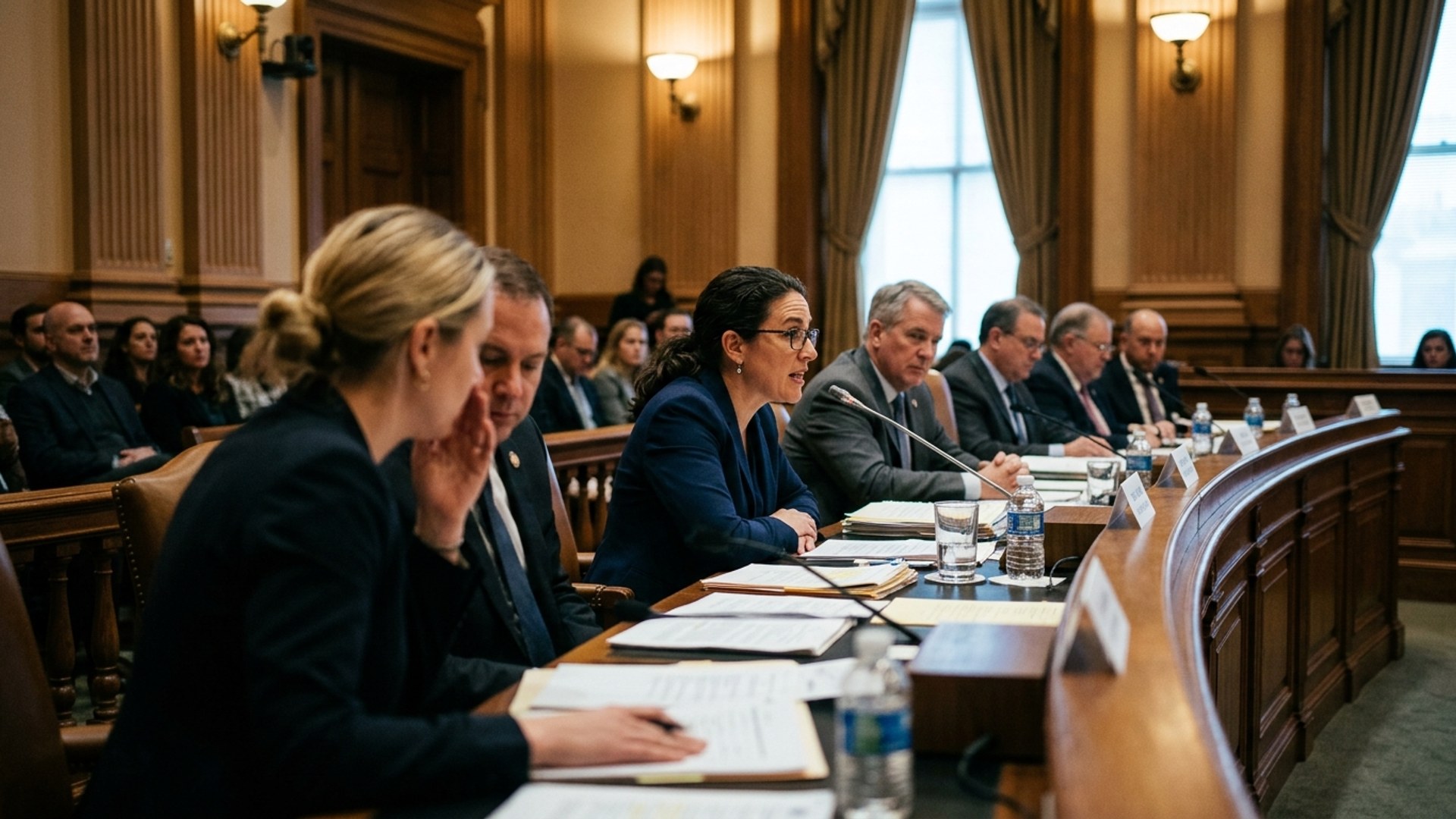
Prediction market Kalshi published a point-by-point rebuttal on August 27, 2026, after The New York Times reported that Donald Trump Jr. made a closed-door pitch for prediction markets to Republican state attorneys general and that the White House communicated its position on state regulation to North Carolina lawmakers.
In a company blog post titled “Fact Checking The New York Times,” Kalshi said the outlet “asked a series of questions, then ignored almost every answer that didn’t align with the narrative that was being pushed.” The company then published the Times’ descriptions of its reporting alongside Kalshi’s answers.
Trump Jr.’s Remarks to Republican Attorneys General
According to the reporting quoted in Kalshi’s response, Trump Jr. addressed a crowd of Republican attorneys general at the Republican Attorneys General Association’s winter retreat in New Orleans in March 2026. Onstage, he made the case that prediction markets are different from sports betting and fall under the Commodity Futures Trading Commission rather than state officials, describing them as like “any other derivative.” He also suggested state leaders were being led astray by a “vested interest” — gambling companies seeking to preserve their monopolies.
Responding to that account, Kalshi said of Trump Jr.: “He’s a fan of the industry and has his own views. He provides advice on marketing strategy, but he does not advise on regulatory matters.”
Kalshi had previously announced on January 13, 2025, that Trump Jr. had joined the company as a strategic advisor. In that announcement, chief executive Tarek Mansour said Trump Jr.’s “strategic guidance will help accelerate our growth, refine our market strategies, and open doors to new partnerships and audiences.”
Litigation and State Tax Disputes
The Times’ reporting, as quoted by Kalshi, stated that 20 states are engaged in active litigation with Kalshi and/or other prediction markets, and that 44 signed a letter to the CFTC last month arguing that prediction markets have evaded state regulations and failed to pay state taxes.
Kalshi answered that federally regulated companies are subject to state taxes and that it has never said otherwise. The company pointed to telecom, energy, insurance, financial services and banking, and aviation as industries that are exclusively regulated at the federal level and also pay state taxes, calling that structure unremarkable.
The states’ position, as summarized in the quoted reporting, is that Kalshi’s product is virtually indistinguishable from traditional sports betting and that Kalshi lacks safeguards required under state gambling laws.
Kalshi rejected that characterization, saying it is “flat-out wrong” to describe its product as indistinguishable from traditional sports betting. The company said it offers risk management tools including trading breaks, self-exclusion, and deposit limits at the national level, places accountability limits on each market as a federally regulated exchange, and partners with the National Council on Problem Gambling and Birches Health.
The North Carolina Budget Provision
The Times also reported, as quoted in Kalshi’s post, that the recently approved North Carolina state budget contained a provision allowing prediction markets registered with the CFTC to operate in the state in exchange for a 6 percent tax. The reporting said Jim Harrell, a lobbyist for Kalshi, helped shape the budget language in discussions with the House’s Republican leadership, and that Kalshi’s feedback produced a lower tax rate than legislators initially proposed.
“This is literally what lobbyists do — represent client interests and help inform legislators regarding potential legislation,” Kalshi responded. The company said prediction markets and sportsbooks have different revenue structures, so the state enacted a percentage that contributes roughly the same in tax revenue as sportsbooks.
Kalshi said that, despite the difference in headline rates, prediction markets will generate tax contributions for North Carolina slightly greater than those of sportsbooks when accounting for taxable capital gains generated by traders. The company said sportsbooks’ margins are 10 times those of prediction markets, citing a 2025 national hold for online sportsbooks of 10.2 percent against a blended prediction-market fee of roughly 1.0 percent. Kalshi also said the budget passed with bipartisan support.
Asked about a Tax Foundation estimate that taxing prediction markets like sportsbooks would generate at least $2 billion annually for states, Kalshi said it was hard to comment without the underlying assumptions, but noted that North Carolina online sportsbooks generated roughly $130 million in tax revenue in 2025 and called the projection materially higher.
The Circuit Split
Addressing the state litigation record, Kalshi said it won in the Third Circuit and disputed the characterization that it is expected to lose at the Sixth and Ninth Circuits. The company described the legal split as close to 50-50, placing the Third Circuit Court of Appeals and courts in New Jersey, Minnesota, Tennessee, and Arizona on one side, and courts in New York, Massachusetts, Nevada, Wisconsin, Utah, Michigan, and Connecticut on the other.
Kalshi also addressed the CFTC’s lawsuits against states, saying it is “unprecedented and overly aggressive for states to try to shut down a federally licensed exchange.”