Betting
Brazil’s Supreme Court Hears Clashing Arguments Over Betting Ban

 Add Gaming.net to your preferred sources on Google
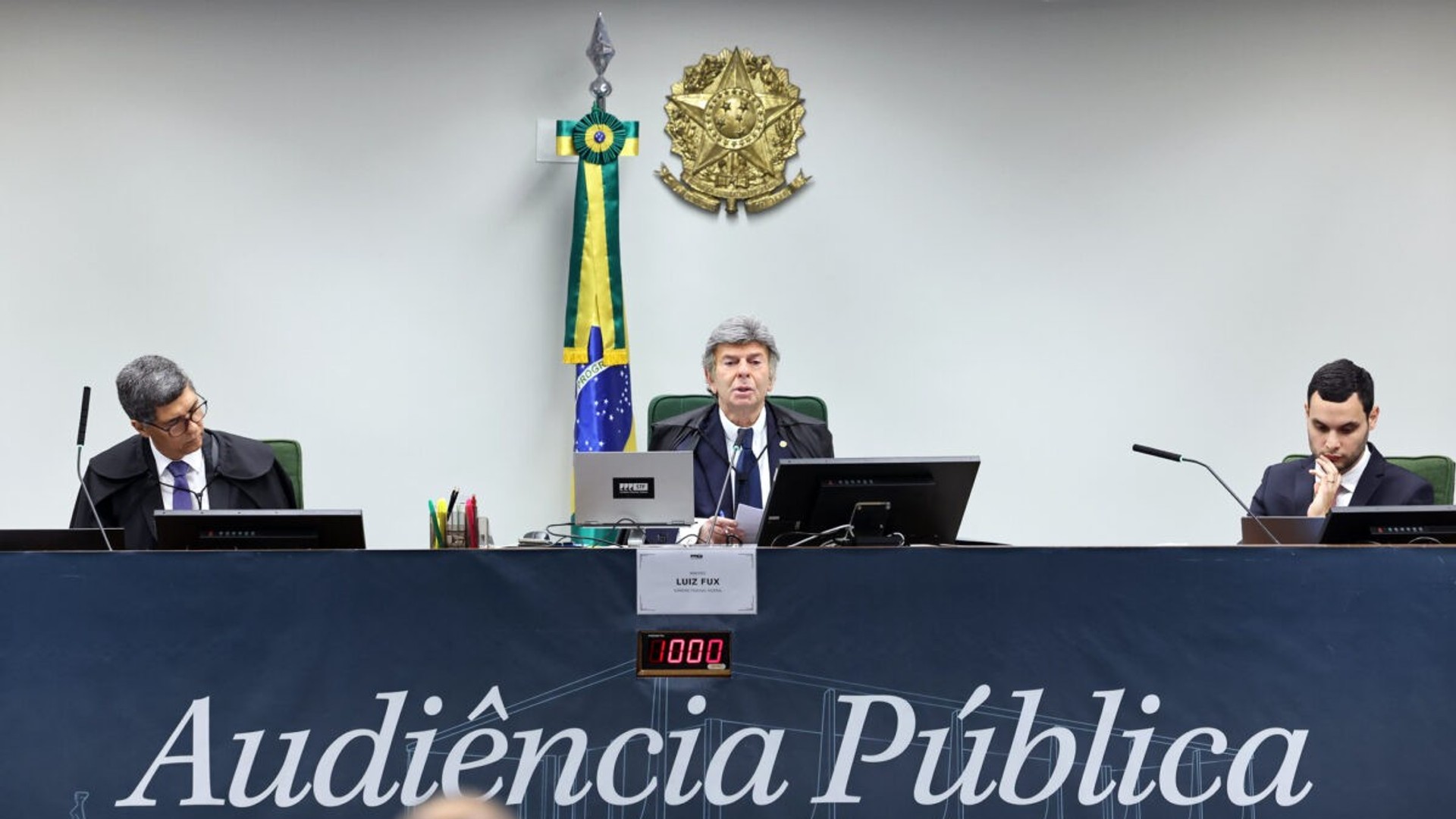
Brazil’s Supreme Federal Court held its second public hearing on the country’s fixed-odds betting ban on November 3, 2026, with ministers defending the prohibition and clubs, athletes and betting groups warning of financial losses, illegal gambling and damage to contracts and legal certainty. The session tested the public-health case for prohibition alongside objections to its abrupt implementation.
Justice Luiz Fux convened the hearing after Provisional Measure 1.394/2026 prohibited the activity, adding four actions to three existing challenges to the 2023 betting law. The questions include legal certainty, non-retroactivity, legitimate expectations and whether the constitutional relevance-and-urgency requirements for issuing a provisional measure were met.
Fux reiterated his earlier position that no fundamental right exists to exploit gambling, but the second hearing was called to hear opposing arguments and sectors affected by the measure. He said the presentations added information on economic effects, illegal betting, organized crime, athletes’ rights and legal certainty beyond material gathered at the November 2024 hearing.
Government Defends Intervention
Justice Minister Wellington César Lima e Silva defended the measure, arguing that harm to public health, public security and Brazilian families justified state intervention. The government had sought input from affected sectors and alternative approaches before concluding that regulatory measures were insufficient given the scale of the problem.
Attorney General Jorge Messias defended the measure’s constitutionality, arguing that the regulatory framework established in 2018 and 2023 had not effectively protected public health, human dignity, public security or families. He also cited effects on household budgets, mental health and family life, particularly among vulnerable people.
Health Minister Alexandre Padilha said demand for SUS public-health care related to gambling disorder rose more than 200% between 2018 and 2026, and that 40% of the 1.2 million people who requested platform self-exclusion reported losing control over betting. Finance Ministry official Rodrigo Toneto cited estimates that betting moved R$62 billion and that the probability of default rises almost 40% after a person starts betting.
Public Security Secretary Francisco Lucas Costa Veloso said betting-related Civil and Federal Police work from January 2022 through September 2026 involved 236 operations, more than 480 arrests and 1,600 search-and-seizure warrants, arguing that regulation had not prevented criminal activity. Digital Rights Secretary Victor Oliveira Fernandes said the Justice Ministry requested removal of more than 36,000 illegal betting sites between September 25, 2026, and October 29, 2026, and defended the measure’s additional enforcement mechanisms.
Clubs and Athletes Detail Financial Exposure
Football representatives focused on agreements reached under the regulated framework. Flamengo vice-president Flávio de Araújo Willeman said the club signed sponsorship contracts with two betting companies under the legislation then in force and asked who would cover losses from revoked contracts. Fluminense representative Matheus Reis e Montenegro put the impact on his club at R$200 million across sponsorship, stadium advertising and transmission rights. Botafogo’s representatives said the 10-day adaptation period was insufficient, with sponsorship losses affecting its judicial recovery, women’s football and youth categories.
Cruzeiro’s representative said activity under its sponsor’s five-year authorization was suspended less than two years later, and questioned the treatment of companies that paid more than R$30 million for licences. Brazilian Olympic Committee legal consultant Pedro Mendonça said betting-company transfers represented about R$130 million, or 20% of the body’s planned 2027 budget, and warned that projects and athlete preparation could be revised or cancelled.
Athletes’ representatives said players are entitled under law to a share of betting-contract revenue, warned of job losses at smaller clubs and argued that an underground market would expose athletes more heavily to match manipulators.
Transition and Regulation Proposals
The UERJ Economic Regulation Laboratory proposed a 180-to-360-day transition if the prohibition remains, with stages addressing contracts, workers and oversight systems. For a resumed market, it suggested betting limits by individual taxpayer number, advertising restrictions, expanded self-exclusion and compulsory funding for prevention and treatment through SUS.
ANJL representative Pietro Cardia Lorenzoni said deposits fell 32% in the last three analysed months of 2026 compared with 2025, argued for stronger consumer-protection rules and criticized the interruption of authorizations without compensation. IBJR representative Celso Cintra Mori said Brazil chose regulated gambling after years of legislative debate, and that the abrupt reversal damages good-faith legal relationships and confidence in the legal system. ABERT lawyer Gustavo Binenbojm argued that banning advertising by authorized companies benefits clandestine operators.
Grêmio’s representative distinguished online casinos from sports betting, supporting a casino prohibition while advocating strict sports-betting regulation, bettor limits, advertising restrictions and a longer sponsorship transition.
For operators and sports bodies, the practical question extends beyond whether the ban survives to whether any judicial response addresses transition periods, existing contracts and licence payments. Fux said some issues might be resolved outside the judiciary and that, if the Supreme Court has to decide, it should act with rationality and prudence.