Best Of
10 Best Open-World Puzzle Games
Explore freely, follow clues and solve interconnected mysteries in ten of the best open-world puzzle games.

 Add Gaming.net to your preferred sources on Google
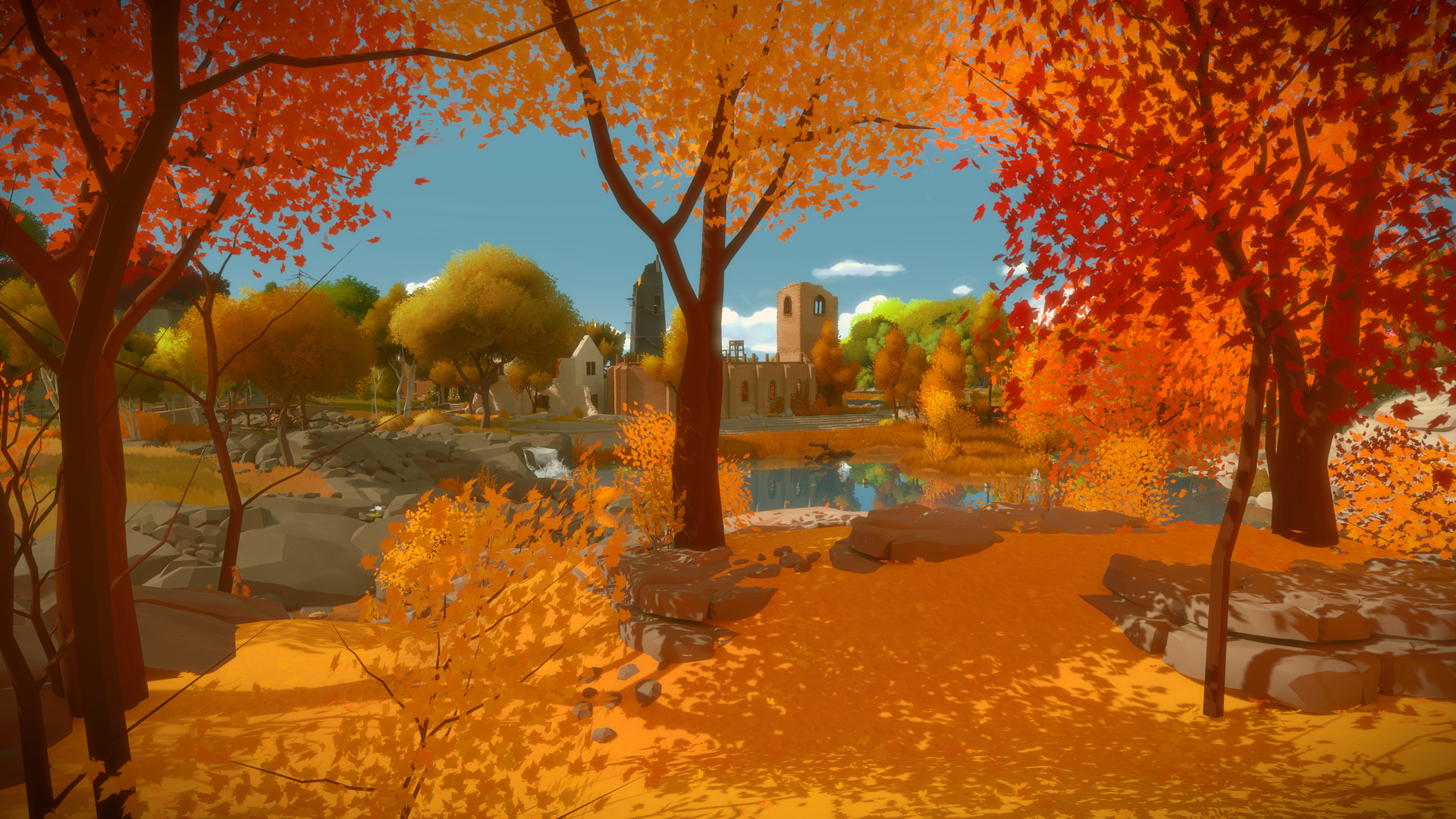
Getting stuck feels different when you can walk somewhere else. An open puzzle world gives you room to follow another question, notice something unexpected and return with a better idea. The journey between puzzles can be as rewarding as the solution.
These picks favour discovery, connected environments and the freedom to investigate. That includes compact, interconnected worlds as well as larger spaces. The descriptions leave puzzle solutions to you.
Looking for somewhere to start?
- Outer Wilds — A mystery spread across a solar system.
- The Witness — Logical deduction and self-directed exploration.
- A Monster’s Expedition — Low-pressure spatial puzzles.
10. Obduction
Best for an interconnected alien mystery · PC edition · Solo; VR optional
A familiar-looking building sits in a landscape where it clearly does not belong. In Obduction, that mismatch is a reason to investigate. You explore, operate machinery and work out how routes and devices relate to each other, gradually making an unfamiliar place understandable.
An unexplained encounter has transported you far from home into worlds containing displaced pieces of Earth. Finding a way back gives the exploration a purpose, while the environment supplies clues that reward studying a location rather than rushing through it.
Obduction is the choice for a more traditional adventure-game approach to an interconnected puzzle world. Progress depends on solving obstacles, so its freedom is closer to finding your way around a complicated place than wandering an unrestricted map. Keep notes and let the relationships between locations unfold for yourself.
9. Islands of Insight
Best for variety across a large puzzle landscape · PC · Solo; offline-only version
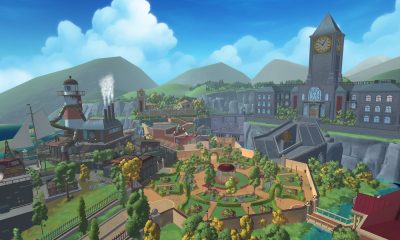
A short walk can take you from a logic grid to a perspective puzzle in Islands of Insight. The pleasure is in following whatever catches your attention, then finding a different kind of problem a little further along. You are rarely committed to only one line of thought.
The floating-island setting gives that variety room to breathe. Open landscapes support wandering and gliding, while curated challenge areas provide more focused collections of puzzles. Progress unlocks further possibilities without making every discovery follow the same route.
Its broad mixture of puzzle types makes it especially appealing when you want variety within one world. The game now runs offline-only; its original shared-world trailers show an earlier version of that experience. Come for the puzzles and the landscape rather than expecting to meet other players as you explore.
8. Isles of Sea and Sky
Best for an open-ended block-pushing adventure · PC and Switch versions · Solo
A box looks simple until moving it changes which side you can reach. Isles of Sea and Sky builds its adventure around that sort of spatial decision, then gives you an archipelago to investigate when one problem has you stumped.
You can explore and solve puzzles in different orders, returning to earlier places with fresh understanding. The island setting makes discoveries feel like parts of a journey, while the story unfolds through images rather than long stretches of explanation.
Simple directional controls keep the attention on the puzzle itself. That makes it inviting to start, without suggesting the later problems will solve themselves. It is a strong option if you enjoy the log puzzles in A Monster’s Expedition but want a different set of block-pushing rules and a more traditional adventure to explore.
7. Sensorium
Best for learning rules through exploration · PC · Solo
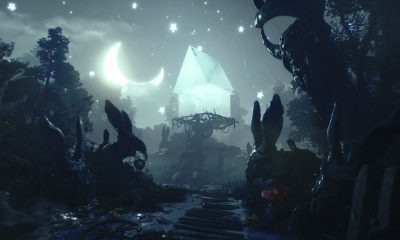
Explore an abandoned world and work out how its puzzles relate to the senses in Sensorium. There is little overt instruction, so your first task is often deciding what a place is asking you to notice. Walking away and returning with a fresh observation can be part of the solution.
The setting gives that uncertainty a purpose: you have arrived somewhere unfamiliar and need to find your way home. Its connected environment encourages you to piece together clues instead of treating each puzzle as an isolated exercise.
Sensorium trusts you to investigate, which is its appeal if learning a game’s language is part of the attraction. It provides less guidance than a traditional puzzle adventure. Patience and a willingness to reconsider an observation are more useful than rushing towards the next marker.
6. A Monster’s Expedition
Best for thoughtful, low-pressure experimentation · PC and console versions · Solo
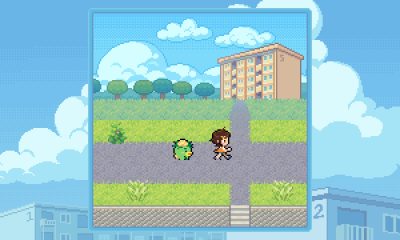
A tree lies between your monster and the next island. Push it over, roll the log and see whether it can bridge the gap in A Monster’s Expedition. That small set of actions supports a rich collection of spatial puzzles. Before long, the important question is where the log will end up after the next move.
You explore an outdoor museum devoted to the strange habits of humans. The exhibits provide gentle humour between problems, while the island network lets the journey feel like an expedition rather than a sequence of disconnected test rooms.
Undo makes trying a doubtful idea comfortable, without throwing away all your earlier progress. That low-pressure experimentation is a large part of the attraction. The island network supplies an ongoing journey, while individual puzzles give you the satisfaction of finding an elegant route across a small space.
5. ANIMAL WELL
Best for discovering unexpected uses for tools · PC, Switch, PS5 and Xbox Series versions · Solo
Collect an unusual item in Animal Well and try it against the creatures and obstacles around you. Its tools have uses that extend beyond first impressions, so exploration means revisiting an idea as often as revisiting a room. Paying attention can matter more than acquiring another upgrade.
You emerge into a dense, interconnected underground world full of animals and hidden passages. The game builds atmosphere through its lighting, sound and creature behaviour, leaving you to decide what feels helpful, dangerous or simply worth investigating.
This is the puzzle-heavy exploration pick for players who like secrets to remain secret until they find them. It has platforming and moments of tension, so it is less restful than the log puzzles above. Go in knowing as little as possible about specific item interactions.
4. Supraland
Best for combining movement powers with puzzles · PC and console versions · Solo
Look across Supraland’s tiny sandbox world, spot a place you cannot yet reach and start testing your tools. New abilities do more than open a single kind of door: they can combine with the environment in ways that invite experimentation.
Its first-person perspective makes that process feel physical. You move around obstacles, study their arrangement and try an idea in the space itself. A minimal story gives you a reason to explore without constantly pulling you away from the next puzzle or hidden route.
Exploration and problem solving depend on each other here. The toy-like setting houses puzzles aimed at players who enjoy working things out independently. Combat and platforming provide a change of pace, making Supraland a better match for an active adventure than an uninterrupted evening of quiet deduction.
3. Taiji
Best for visual deduction without first-person movement · PC · Solo
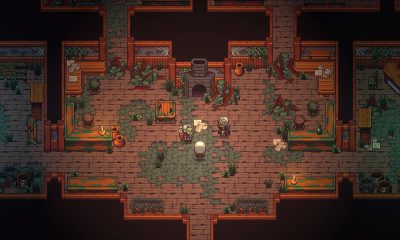
Toggle tiles on a grid, compare the result with your surroundings and work out which rule applies in Taiji. The basic interaction stays consistent, letting the challenge come from understanding a puzzle rather than figuring out an unfamiliar control scheme.
Its connected world separates ideas into distinct visual spaces. You can study one area, investigate another and return when an observation finally clicks. Environmental details deserve attention, but revealing exactly which details matter would spoil much of the pleasure.
The top-down presentation makes Taiji especially appealing if first-person movement gets in the way of enjoying exploratory puzzle games. The important work still happens through observation. You learn by comparing examples and carefully considering how each area’s visual details relate to its grids.
2. The Witness
Best for a world built around logical observation · PC and console versions · Solo
Trace a line across a panel in The Witness, then look at the next panel and ask what has changed. Its early interactions are easy to understand, but the island keeps developing the reasoning behind them. Progress comes from recognising a rule and knowing when to reconsider it.
You are free to investigate many parts of the island, so a difficult puzzle does not have to end the session. Moving to another area can introduce a different idea or simply give you room to think. The landscape is part of the experience, not just a backdrop for panels.
The Witness earns second place for the clarity and variety it draws from a consistent interaction. Choose it for sustained logical deduction and self-directed exploration. Avoid solution videos if you can; understanding the rule is often the reward.
1. Outer Wilds
Best for solving an interconnected mystery · PC and console versions · Solo
Launch a small spacecraft, choose a destination and investigate the traces of an earlier civilisation in Outer Wilds. Every trip can give you a new question or a piece of information that changes where you want to go next. Knowledge does much of the work usually handled by upgrades.
Its solar system makes exploration itself a puzzle. You learn how places behave and how discoveries relate to each other, with your ship’s log helping you keep track of leads. The premise involves a repeating stretch of time; the reasons behind it are best discovered in play.
Outer Wilds takes first place because understanding the world changes how you travel through it. Pick it if curiosity is your favourite kind of objective. Spaceflight and environmental hazards add physical challenges, but the discoveries are the reason to keep going.
Which game should you start with?
Choose Outer Wilds if you want discoveries to guide an entire journey. The Witness is the pick for sustained logical deduction, while A Monster’s Expedition makes trying an idea pleasantly low-pressure. For another route into the genre, see our games like Riven and games like Islands of Insight.