games
Unity 6.6 Adds Day-One Development Support for Meta VR Glasses

 Add Gaming.net to your preferred sources on Google
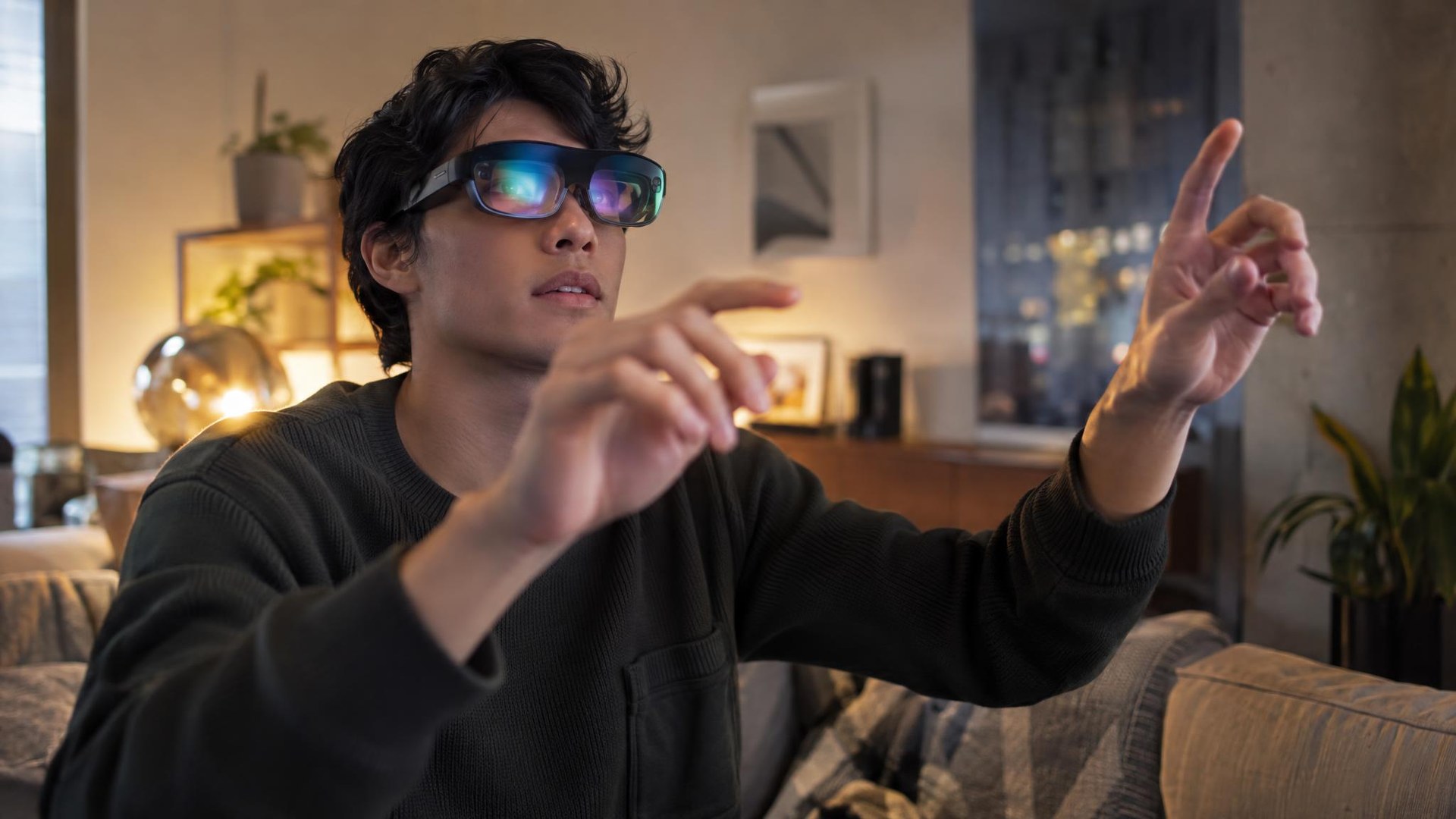
Unity announced day-one development support for Meta VR Glasses on September 24, 2026. Unity 6.6 targets the device through OpenXR, and the glasses were announced at Meta Connect 2026 with a retail launch planned for spring 2027. Unity described VR Glasses as Meta’s lightest, most comfortable, and most capable VR device, designed for entertainment, productivity, and gaming.
Unity 6.6 supports VR Glasses development through OpenXR, so existing Quest projects carry forward with minimal changes. Developers can start designing, building, and testing experiences for the device with the XR Interaction Toolkit, XR Hands, and the XRI Simulator before the hardware reaches retail.
A Shared OpenXR Foundation
According to Unity, the glasses weigh about 100 grams, which the company says enables longer wear time. The device features a 5K Infinite Display, with hand and eye input as the primary way to interact. Because VR Glasses sit within the same Meta VR ecosystem as Quest, sharing the same store and the same OpenXR stack, existing Quest apps can run on them from day one, Unity said.
Unity recommends that developers review their UI and interaction design to take advantage of hand and eye input while maintaining controller support for any titles that rely on it. The company said its XRI Simulator allows teams to test and validate inputs without a physical device.
For projects already built in Unity with OpenXR, existing projects, assets, and code carry forward with minimal implementation required. Supernatural CEO James Senior said: “Unity made our relaunch possible, allowing us to go from a fresh repo to an end-to-end playable Supernatural workout in under two months.” Senior said the team restored six Unity projects, removed legacy platform dependencies, and simplified the client for a new backend, and that the studio is now building Supernatural for VR Glasses on Unity’s engine and tooling.
Three New Capabilities
Unity detailed three new capabilities available on VR Glasses. The first is eye tracking, which supports foveated rendering and look-and-tap input; Unity said eye tracking data can inform both visual quality and interaction design. The second, quad views rendering, takes advantage of the device’s display architecture to render each eye’s periphery at a lower resolution than the center, an approach Unity says cuts GPU cost with no visible quality loss and gives developers more headroom for scene complexity. The third is spatial audio: Unity supports 7.1.4 surround sound, providing 7.1 channels around the listener plus four height channels above them.
Launch Titles and Tooling
Seven launch titles are already in development for VR Glasses with Unity: Cardmada, Dragon Grove, Phoenix Wright: Ace Attorney Dual Destinies VR, Dice Throne Digital, Supernatural, Two Point Hospital – Mixed Reality Edition, and Story of Seasons.
Miguel Gonçalves, lead game designer at Soul Assembly, who worked on Two Point Hospital – Mixed Reality Edition, said: “Developing for Meta VR Glasses has been a smooth and straightforward experience. The workflow feels very familiar to Quest 3, allowing us to build on the tools and experience we already have.”
Ryan Brolley, technical director of Schell Games, the developer of Dragon Grove, said leveraging OpenXR and Meta’s tools within Unity minimized deployment friction and allowed his team to prioritize the player experience. Alex Lieu, founder of Cardmada, the creator of Animal Repair Shop, said his team designed its card game around natural hand and eye interaction from the beginning.
Unity is pointing developers toward three broad categories for VR Glasses projects. For games, it recommends starting with its VR Template or VR Multiplayer Template, describing the lighter design as enabling longer play sessions. It also names entertainment and media, including video, social, and interactive content, and productivity and enterprise work such as training, simulation, and enterprise workflows.
VR Glasses support requires Unity 6.6 or higher, and developers on earlier versions must upgrade to access the supported tooling. Unity recommends the Meta Quest Build Profile as a starting point, since VR Glasses share the same OpenXR foundation, along with the OpenXR: Meta package version 2.6.1, AR Foundation 6.6.2 or newer, OpenXR Plugin 1.18.0 or newer, and XR Interaction Toolkit and XR Hands 1.9.0 or newer. The company has published an updated Getting Started Guide and Sample Projects with VR Glasses-specific guidance, alongside Meta XR documentation covering supported tools, workflows, and features.
Unity will host a livestream on October 1, 2026, at 9:00 AM PT, joined by Meta’s AR Schleicher and Dilmer Valecillos for a product walkthrough, demos of eye tracking, microgestures, and quad views rendering, and a step-by-step guide to adding VR Glasses support to an existing Quest experience or starting a new project. The session will close with a live Q&A, and Unity said further deep-dive content, including a video tutorial and a Learn course, is coming.