Reviews
The Blood of Dawnwalker Review (PS5, Xbox Series X/S, & PC)

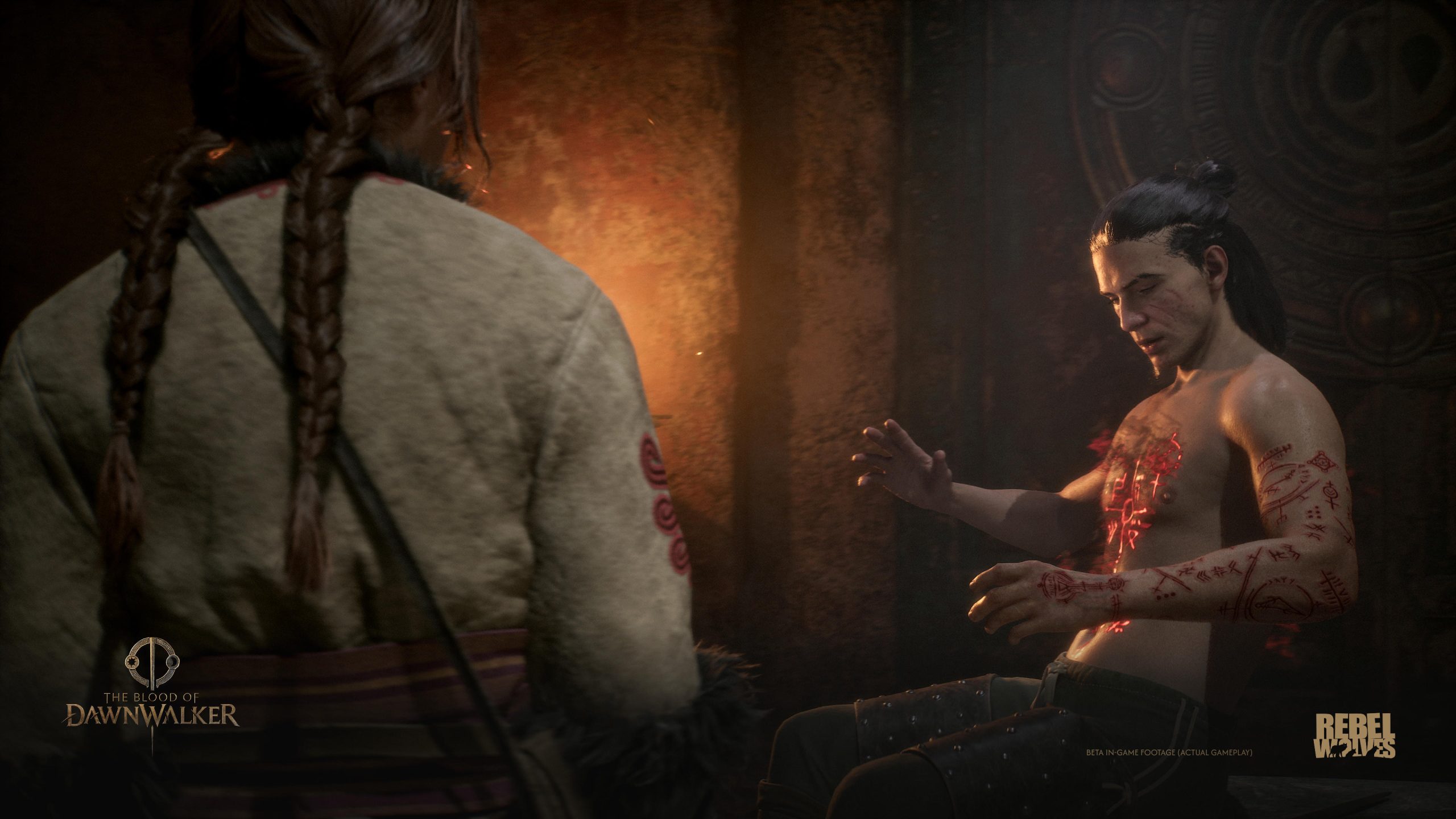
Vampires make good games (and television). But The Blood of Dawnwalker isn’t content with simply giving you fangs and sending you into the darkness. It puts an interesting spin on the familiar vampire fantasy, particularly through its day-and-night cycle. During the day, you’re human, with certain challenges and opportunities available to you. When night falls, you become a vampire, unlocking new abilities and possibilities. It’s a simple idea, but the way the game builds its gameplay around it makes every passing hour feel more important.
Beyond mission structure, your skills and abilities change, too. As a human, you wield the sword against enemies. And Rebel Wolves developing studio has taken an extra step to imbue you with witchcraft so you can perform magical spells. At night, tho, the fangs come out. You move faster, and the claws do the hacking and slashing.
It’s an interesting way to influence both the story and gameplay. But the idea that will likely stand out the most to you is using time as a resource. The in-game hours you have are finite, and every second counts. If you choose to fulfil certain requests or talk to an NPC, you’re using up your in-game hours. So, it has to count toward bringing you closer to your goal, which in this case, is rescuing your family from death. In 30 days, you have to complete your mission or else…
Very few areas could use more fine-tuning. Otherwise, the story, gameplay, visuals, and performance are so good that you’ll come away pleased. But first, let’s break it down step by step in my review of The Blood of Dawnwalker below.
Ticking Time Bomb
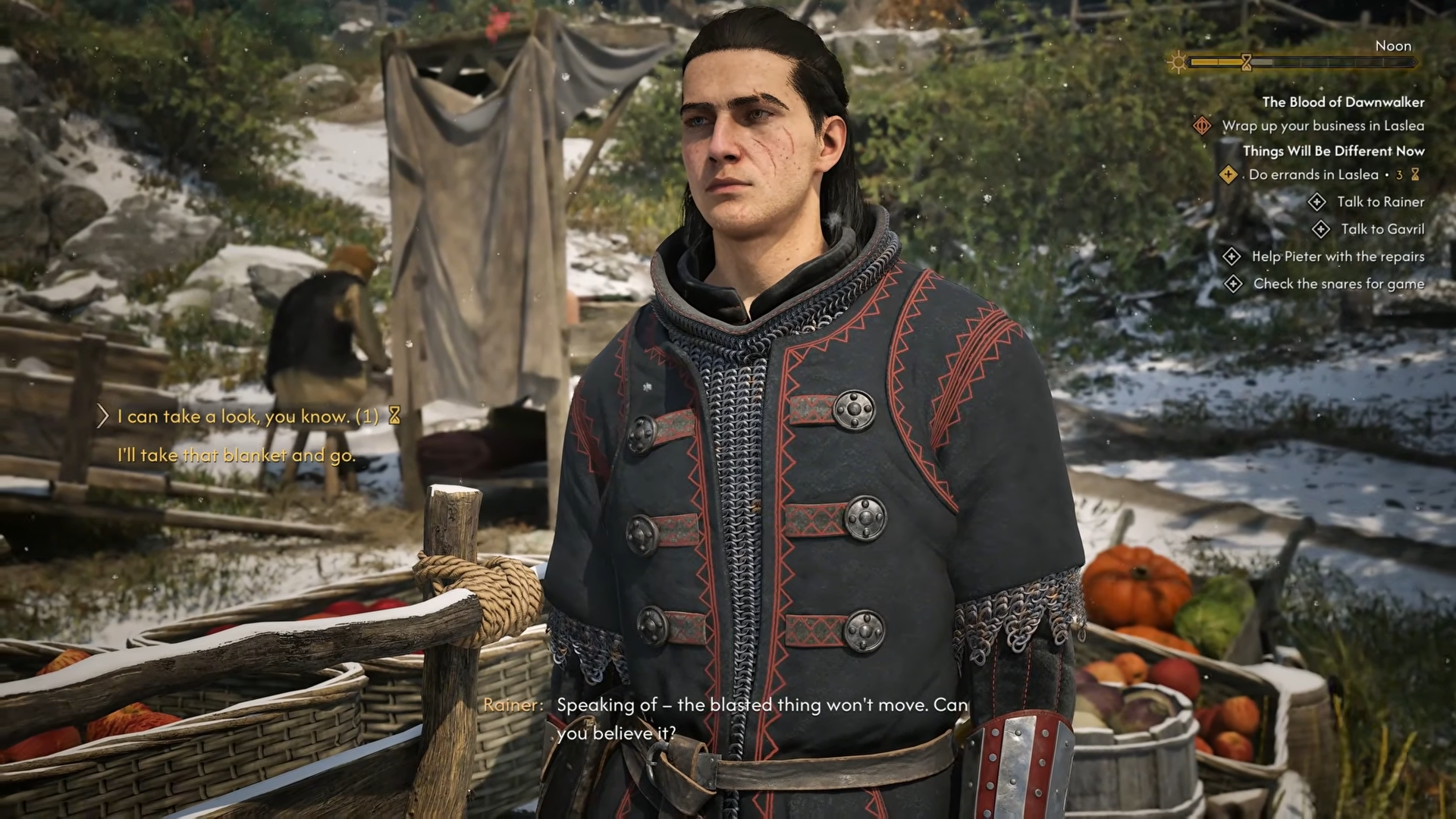
You’re in 14th-century Eastern Europe, around the time of the Black Death. It’s a dark time to be alive, with people falling ill to the plague and surviving on very little. The map is considerably huge, with medieval settlements, murky swamps, and snowy mountains. It’s a beautiful Bohemian-style spot you’ve seen in games like Kingdom Come: Deliverance and The Witcher. The valleys look familiar. The castles. A bit of historical realism, with muddy villages struggling through the plague and war. So what makes The Blood of Dawnwalker different?
Your home is Vale Sangora. People here live humble lives, surviving under the rulership of vampires. How that came to be is actually pretty interesting, under the guise of the “saviors of the town,” before they started to demand retribution for their troubles. Every month, the villagers have to give the vampires blood. And that seems fine, like tax, pay your dues kind of a situation, until you discover that the vampires are also culling the herd. Worse, your ailing mother could potentially be the next victim.
And so the story takes off. Your family is kidnapped, and you only have 30 days to rescue them. Tucked under your sleeve is the ability to cast magical spells, but also, a new turn of events leaves you with an unending thirst for blood. Because you’re a man-made vampire, you can walk under the sun during the day. At night, though, you’ll hide and scavenge for blood. If you don’t feed, you’ll die. But above that pressure is a ticking time bomb. An in-game time limit you cannot ignore.
Tick Tock
It’s pretty interesting how Rebel Wolves implements time as a resource. You have multiple quests you could complete. But because of the time pressure, you cannot possibly complete all of them. So, you have to pick and choose, depending on the ones you find most urgent or worth the time. Mind you, some quests are more time-consuming than others. Others cannot be “paused” and will “expire” if you fail to complete them within a certain time limit. You have quests restricted to daytime. Others are at night. And well, some use up no time at all.
The quests are pretty much what you might expect in an open-world RPG. You might talk to NPCs, help them out with chores, or find a specific item. Interestingly, the game may not always tell you where to find the item. It’s an open game like that, where you go wherever you want and talk to whoever you please. And then you have the main quests, which advance the story.
Despite the time pressure, I felt pretty calm when exploring and completing quests. Those quests that don’t tell you where to find a specific item, for example, often fall under the ones that don’t take up any time at all. Plus, if I wanted to just leisurely walk around and explore, I could, which should be great news for completionists.
Get Your Priorities Straight
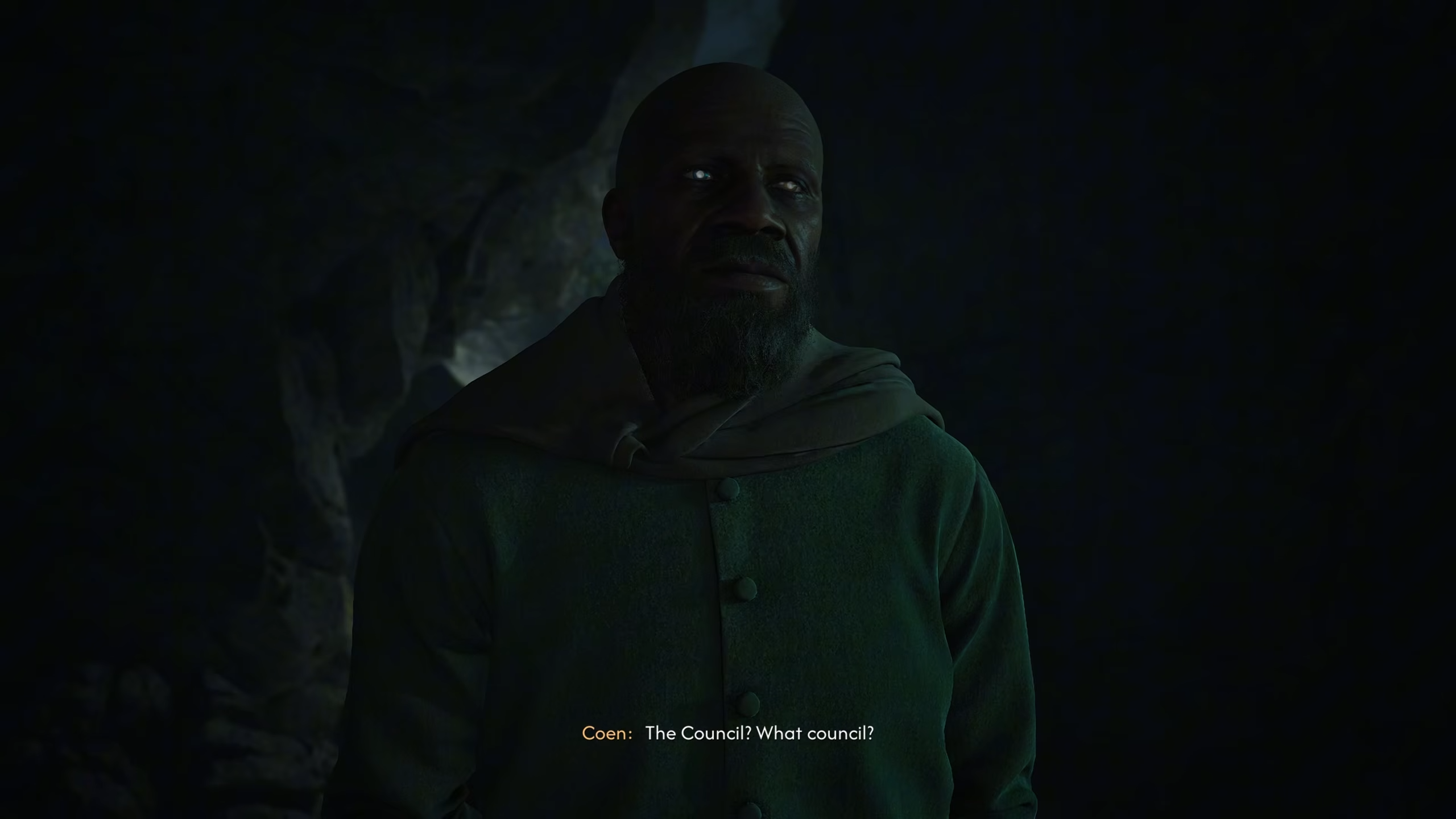
Not all quests are created equal, though, which is a problem most RPGs suffer from. When talking to NPCs and fetching them stuff or tracking down a lost item, it may not always feel rewarding. And The Blood of Dawnwalker attaching its time resource to side quests can elevate that problem. You might debate over which side quests are more important than others. But after a while, you realize that most of them don’t make a significant impact.
Among all the junk, though, there are a few side quests that are pretty cool, especially the ones that give you tough choices with consequences. Some consequences you actually see happening around you, in the future of the characters you affect, or the way they serve you later on. Whenever the consequences of your actions reveal themselves, it’s always an impressive experience to witness.
I also love the side quests that send you down the path of a detective. You’ll investigate crime scenes in much the same way you might in a detective game. Collecting evidence, piecing clues together. You might interrogate suspects and carefully decide who’s in the wrong. Moments like these demand careful scrutiny because you don’t want to accuse the wrong person and have it come and bite your ass later on.
Resist the Urge to Feed
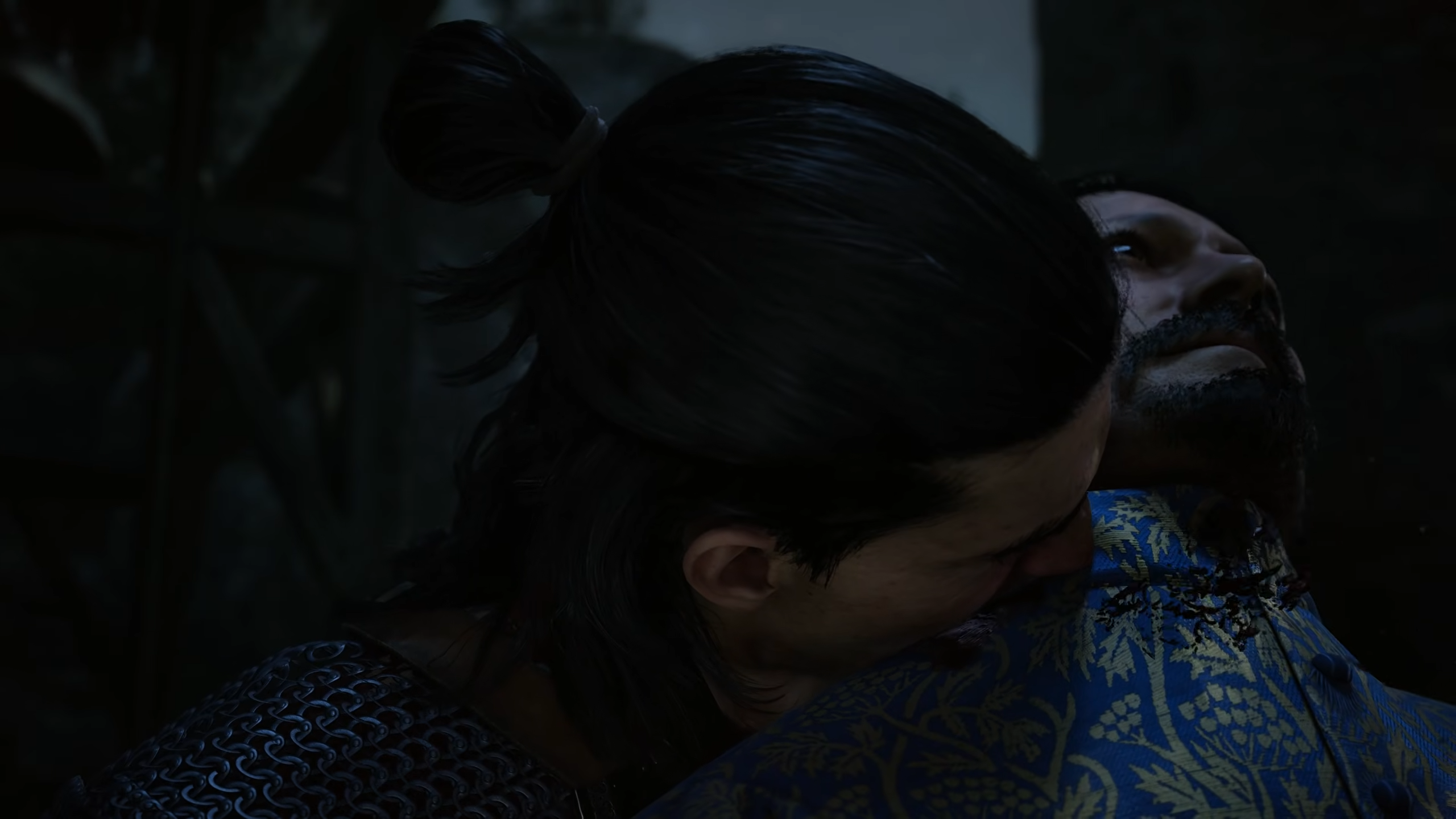
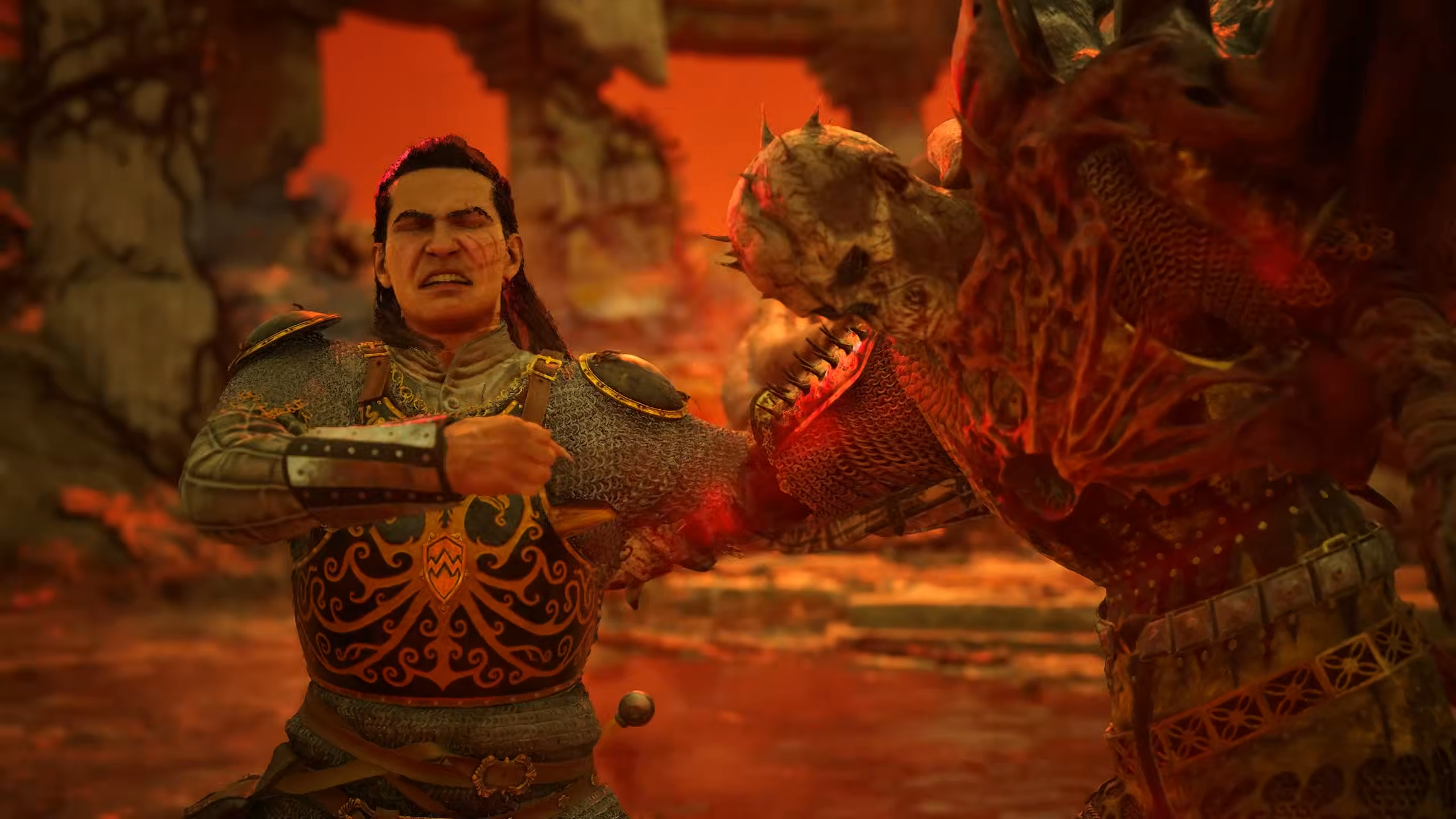
Combat and character progression also consume time. On the combat front, it has its moments. I love that Coen, the main character, moves and fights differently in human form versus vampire form. Just because you’re human during the day doesn’t mean you don’t have some cool tricks up your sleeve, well, thanks to the power of witchcraft. One of the cool moves you can do is turning your blood into fire. And that ability has a power-up that can chain fire from one enemy to another.
Your sword moves also have a unique omniattack and block feature, which means being able to attack and block from four directions. You have to study the enemy to know which direction they are attacking from, to know which direction to deflect. It takes a bit to get right, which is why you have the option of turning on the on-screen indicators to show you which direction to respond. But you might turn off the omni feature altogether and play the game like you would in a game like The Witcher.
As a vampire, you can climb walls and turn into a wolf to run faster. You can use your claws as weapons and feed on enemies to restore your health. Your thirst is a resource management feature on its own, which needs tending to, or else, you won’t be able to resist the urge to feed on the NPCs you talk to, and that’s bad because it raises your Corruption meter. Besides feeling guilty over attacking humans, I’m surprised the game doesn’t have a more severe punishment system for your Corruption meter filling up. Anyway, you can feed on animals, too, if human blood makes you queasy.
Verdict
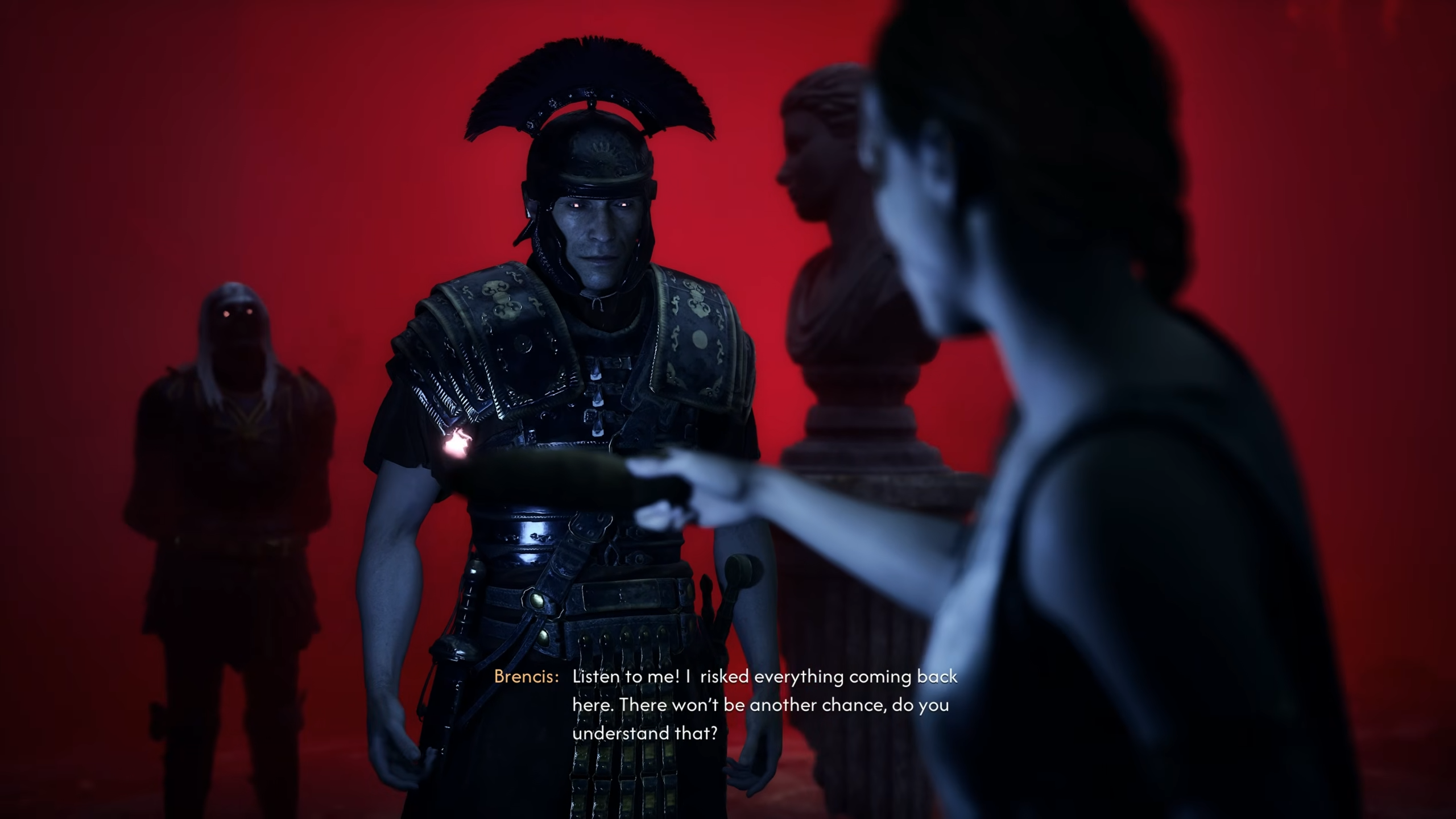
And uhm yeah, that’s most of it. I realized at this point that I wish there were more. Vampire: The Masquerade got in my head about sneaking around at night as a vampire. How could Rebel Wolves not take advantage of the opportunity to add some stealth sections in the nighttime mode? How could they not make you turn into bats instead of a wolf? You do have heightened senses that help you track blood trails. But the vampire abilities and gameplay don’t feel pushed to the limit. The same goes for the human side, which gains its flair from casting magical spells, and not swordsmanship. The distinction between your human and vampire side is the special sauce that The Blood of Dawnwalker has, and it doesn’t feel quite there yet.
Using time as a resource is innovative in ways I don’t think I’ve seen before. Time limits have been a nuisance when implemented in other games. Here, though, it’s a means to only do what matters. RPGs that take hundreds of hours to complete are more common these days. And what The Blood of Dawnwalker is proposing here is prioritizing. You will miss out on a lot, depending on the paths you pick. But that carries excitement, too, when you chart a unique path for yourself and live with the choices you made. I only wish that the side quests were rewarding. Some are impactful, to be fair, but after a while, it all doesn’t really matter too much how you spend your “precious” 30 days.
The Blood of Dawnwalker Review (PS5, Xbox Series X/S, & PC)
Your Time Starts Now
Anything that gives me a time limit should come with a certain level of pressure. And to an extent, The Blood of Dawnwalker cultivates that sense of urgency. It has its peak moments of making tough choices and living with the consequences. The juxtaposition between life as a human and a vampire is also an interesting angle. Overall, a great start to, hopefully, richer sequels to come.