Reviews
Sensory Overload Review (PC)

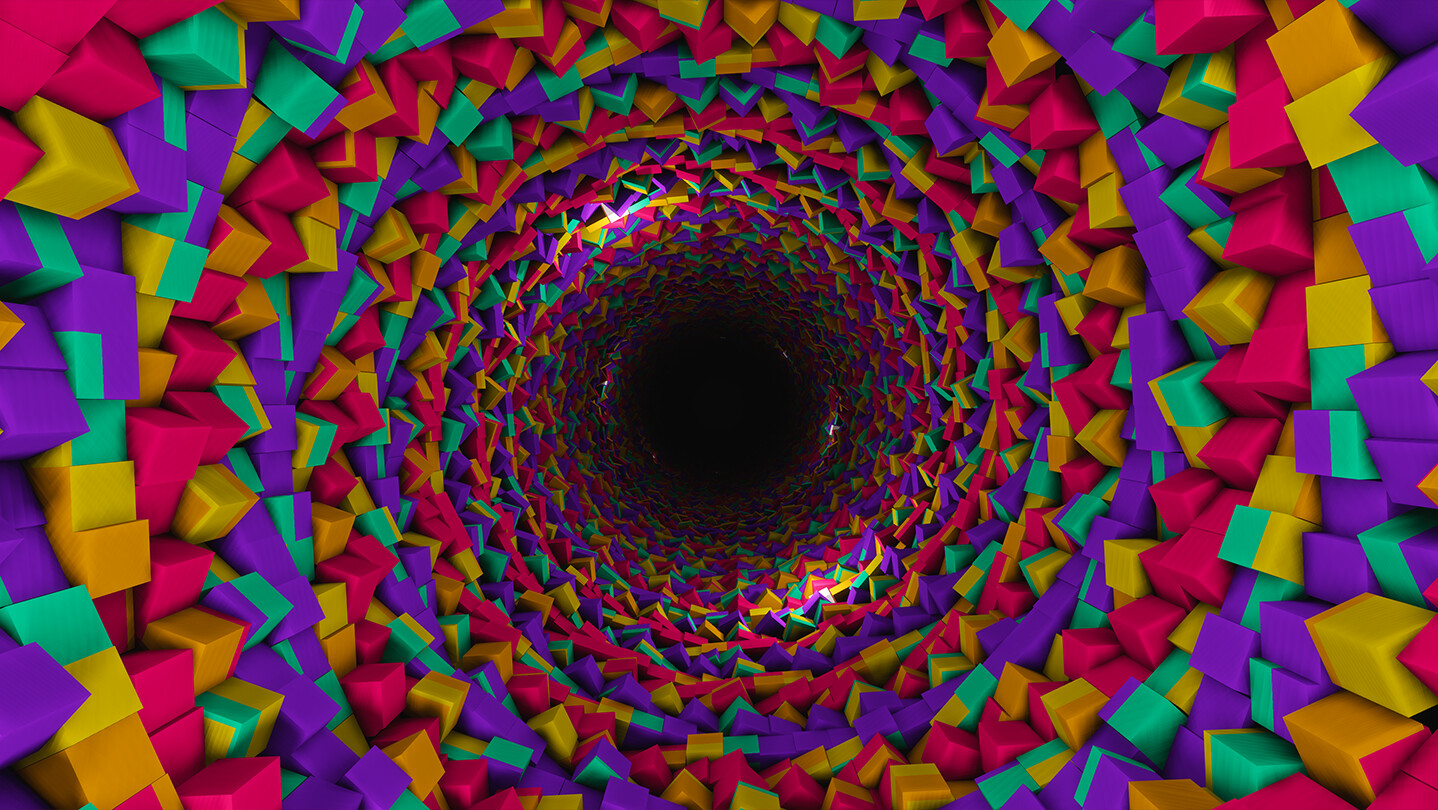
I’m the kind of person who needs to take a painkiller after visiting a local museum to marvel at a piece of contemporary art, an abstract painting, or an exhibit that serves only to stagger your senses. With Sensory Overload, I needed to take two. One might have been enough to temporarily numb the pain, but I needed more to be able to stick around for the duration of the journey to the spiraling underbelly of a psychedelic fever dream. I just wish that I could have seen the beauty in it, and not the dazzling effects that were causing the veins in my forehead to pulsate at an alarming pace. Maybe I’m just getting old. It’s either that, or that a game like Sensory Overload just isn’t my cup of tea.
I won’t pretend that I didn’t enjoy jackknifing through the LSD-fueled cortex like Alice in the ever-famous rabbit hole, because I did. In fact, I wanted to descend even deeper into it, not only to see where it would take me, but to see how far I could push myself before the painkillers started to look a little too inviting. As it wasn’t a conceptually difficult game to crack, I could quite easily slip down its throat and endure the act of pushing my senses to their boiling point. All I had to do, really, was fall. If I could do that, then I’d have no issue with finding Wonderland at the bottom of the barrel.
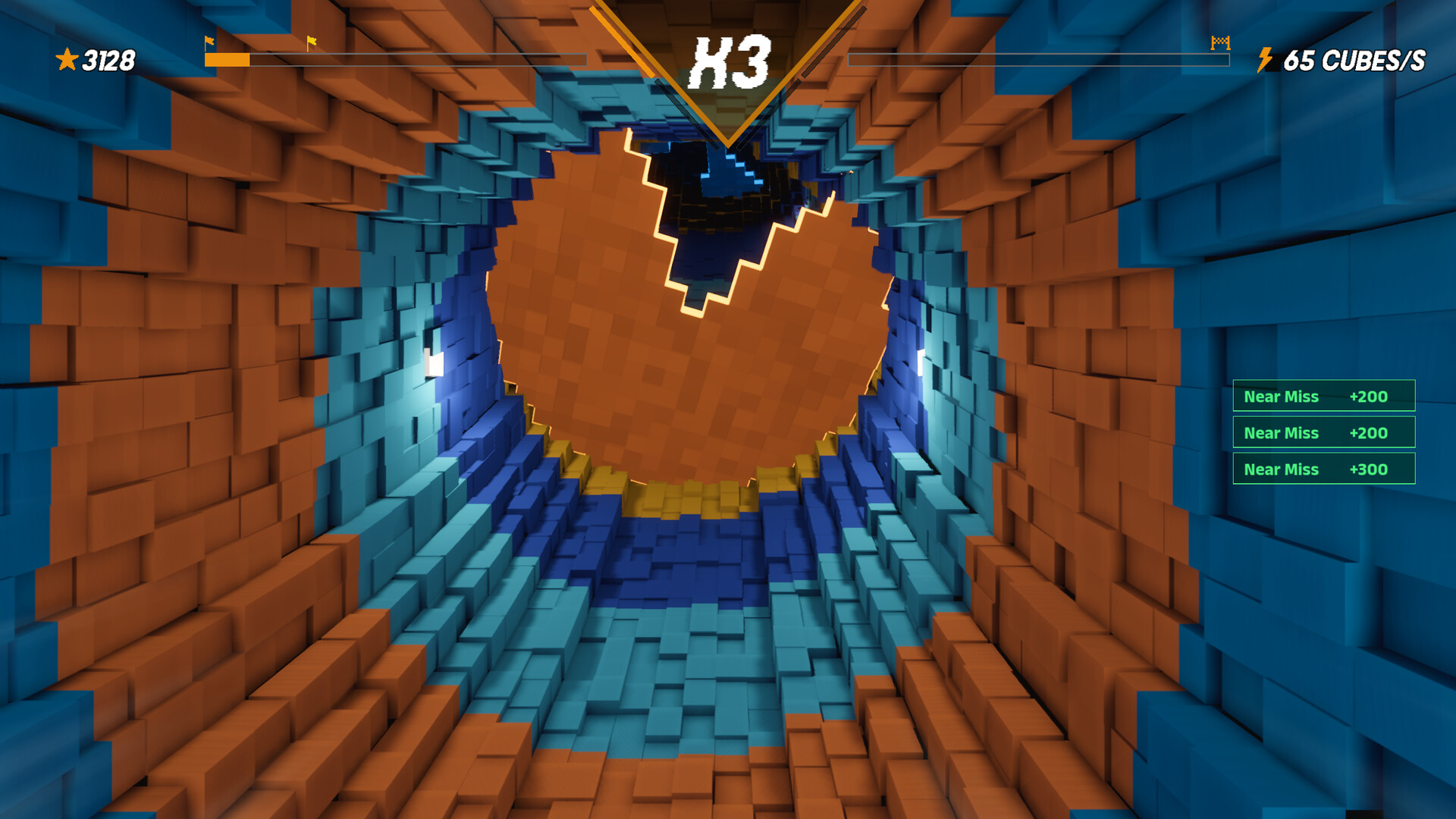
Sensory Overload was exactly what I thought it would be: a collection of psychedelic trust falls in which I could project my astral body into the heart of an old-school desktop visualizer and simply fall with the flow of moving shapes, shifting patterns, and multi-layered tunnels. At no point did it advertise itself as anything other than that. Simply, it told me to drop in and roll with the punches, and I, without thinking twice about it, happily accepted the bungee cord.
Like a traditional platforming-dropper game, Sensory Overload gave me a simple objective to complete: to plummet into an endless abyss of rotating tunnels, and to navigate its vast depths whilst simultaneously morphing into various forms with the hopes of reaching the bottom in one piece. It didn’t ask me to plan ahead, but to anticipate the next move, and to use whatever intuitive tools I had at my disposal to outsmart the terrain. It wasn’t a tough cookie to crack. It was, however, an absolute nightmare to digest, both psychically and mentally.
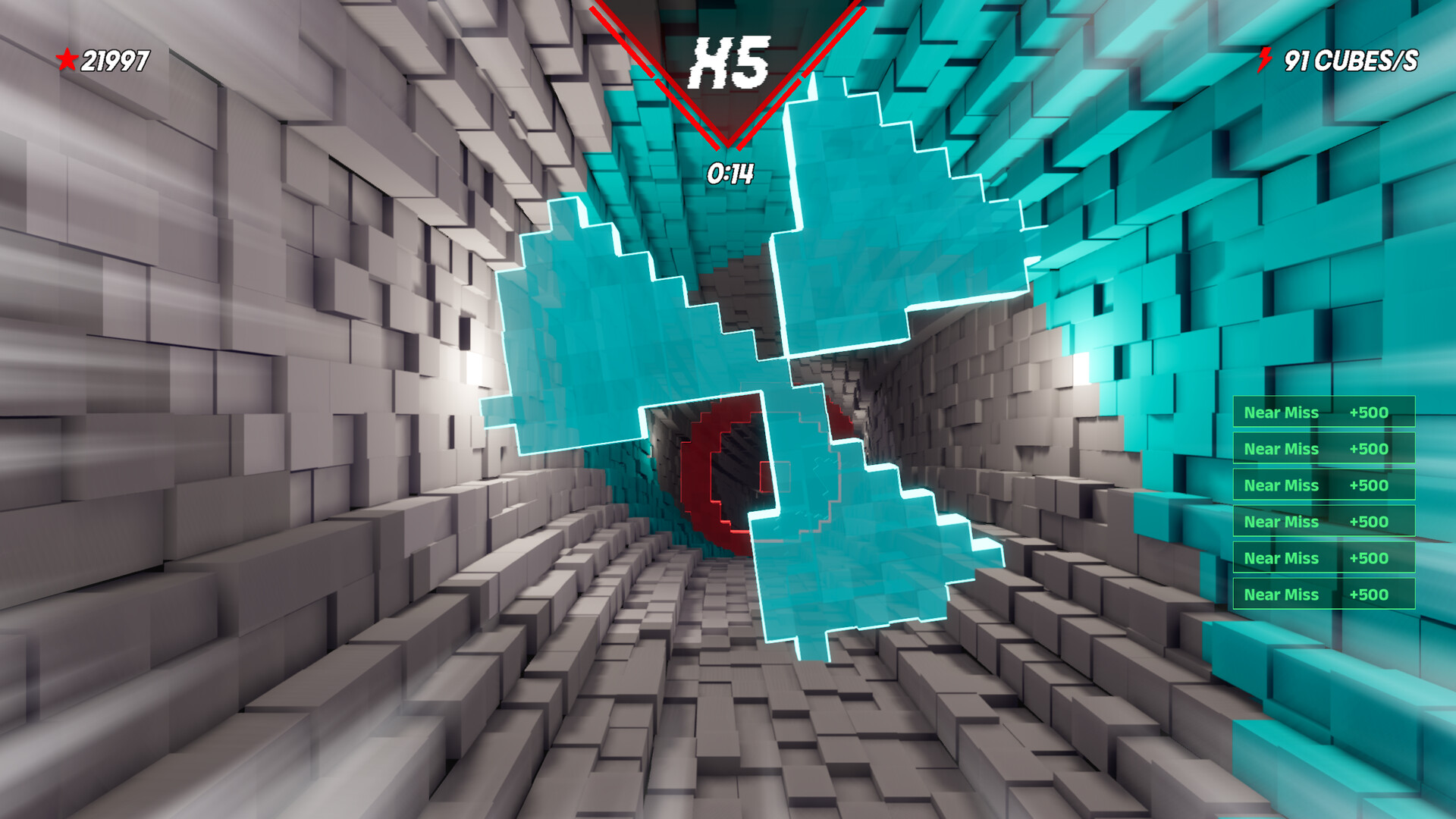
From a mechanic standpoint, Sensory Overload really wasn’t all that difficult to grasp. In a similar fashion as a traditional dropper game, it let me loose in a rabbit hole, and it told me that I could either strafe to the left or the right, or simply flop and flail like a ragdoll on a puppet string. And that was all that the game was: falling down a vertical rabbit hole. Like Geometry Dash, it wasn’t about racking up mouth-watering combos, but about timing each move, evading objects, and reaching the other side of the field with all limbs still intact. I understood the assignment. My eyes, on the other hand, couldn’t differentiate between fact and fiction, friendly obstacles and deadly threats.
Conceptually, Sensory Overload is a simple game, as it primarily consists of strafing to the left or right, and dodging various obstacles at lightning speeds. But, as with most psychedelic platforming hits, it all comes with a catch: the world isn’t a place where you have the power to manipulate time and space. As you have no control over the environment, you have a rather daunting task on your hands: to find a split-second solution for every problem during the fall. Essentially, you have to think on your feet, all whilst the world continues to morph and pull you deeper into a trippy cortex of moving pieces and art installations. Again, it isn’t a difficult game to learn, but it is one that can be awfully frustrating to master.
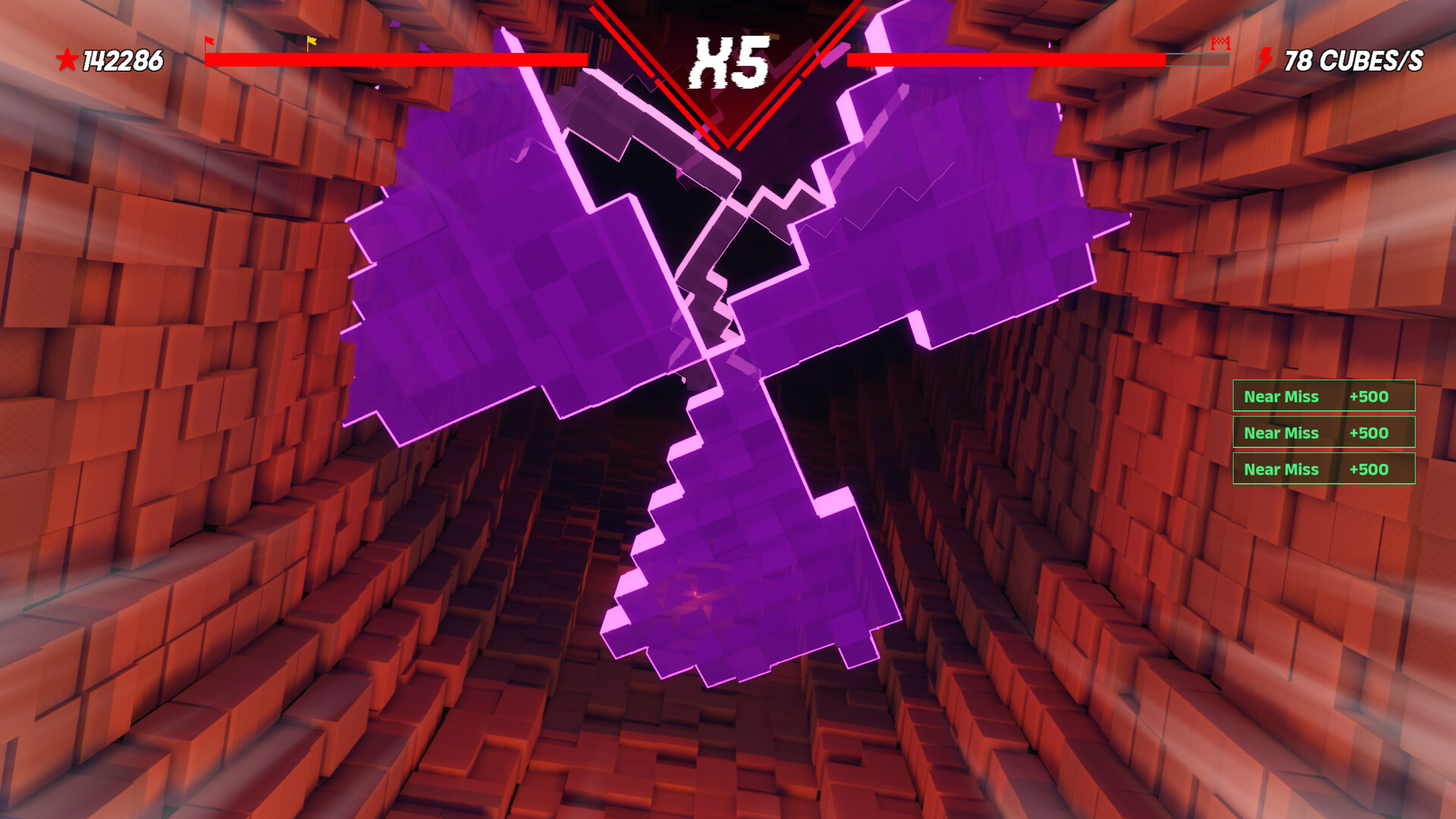
Sensory Overload is the sort of game that you return to, not out of spite, but out of desperation to build on your previous score. On occasion, you ask yourself if there is more to it than a simple free fall, and if there is an alternate route that you could have taken. More often than not, though, you find yourself with the same exercise—a series of stepping stone sequences that invite you to helplessly wade through various stages: Vertigo, Nausea, Peristalsis, and Apocalypse. You fall, repeat the same mistakes, and, slowly but steadily, learn the formations and the techniques.
As simple as Sensory Overload is, the game does fit a lot of psychedelic elements into its void. In addition to its themes, it also provides a library of excruciatingly complex endgame challenges, all of which require you to push your senses to the limit and conquer your fear of falling. As the title cards suggest, each bout aims to leave you feeling sick to your stomach, or desperate to reach the final goalpost before the side effects take hold of your trigger finger. While incredibly chaotic and in-your-face, each stage is, believe it or not, a lot of fun to spiral into. Frustrating at times, yes, but also surprisingly satisfying to complete.
It goes without saying at this point, but if you are known for suffering from spontaneous bouts of motion sickness, then it’s probably best to avoid Sensory Overload. As it injects a lot of energy with its psychedelic pipette, it can be a tough game to beat. If you can remove yourself from its overwhelming atmosphere, though, then you should be able to enjoy the experience. Take it all with a pinch of salt, though.
Verdict
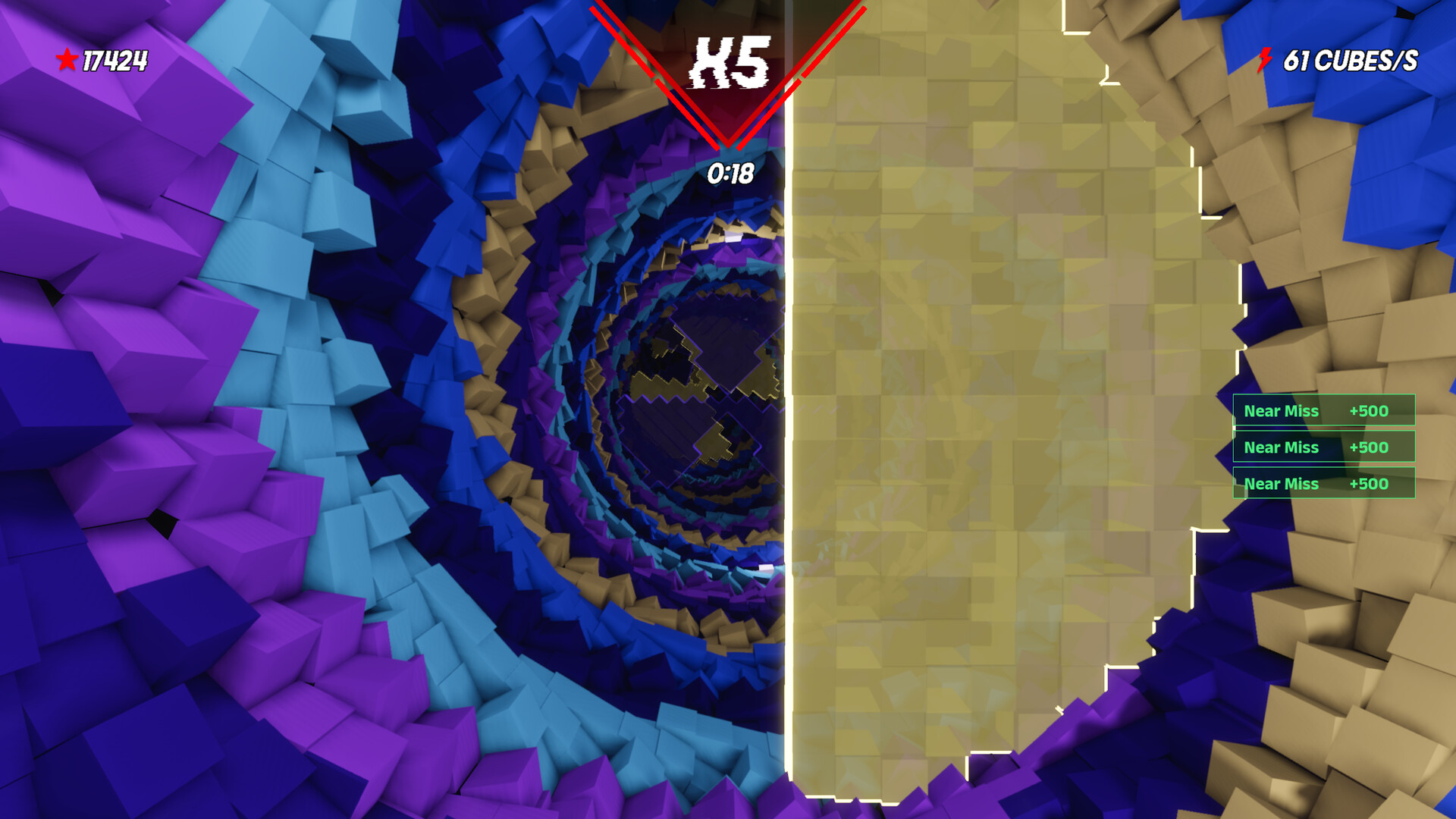
Sensory Overload drops you into the spiraling depths of a psychedelic fever dream with the intent to knock your senses and test your ability to act on impulse. As sickeningly abstract and complex as it is, it brings a great challenge to the dropper field, with a descent that, surprisingly, will make you want to jump down into the rabbit hole time and time again. It might be a nauseating experience, but I will say this — it’s a heck of a lot cheaper than a ticket to a contemporary art museum. Count your blessings, I guess.
Sensory Overload Review (PC)
Overloaded
Sensory Overload drops you into the spiraling depths of a psychedelic fever dream with the intent to knock your senses and test your ability to act on impulse. As sickeningly abstract and complex as it is, it brings a great challenge to the dropper field, with a descent that, surprisingly, will make you want to jump down into the rabbit hole time and time again. It might be a nauseating experience, but I will say this — it’s a heck of a lot cheaper than a ticket to a contemporary art museum. Count your blessings, I guess.




