Best Of
10 Best Medieval Games (2026)
Explore ten medieval games for swordplay, castle building, village life and dynastic strategy, with spoiler-free premises and practical reasons to play.

 Add Gaming.net to your preferred sources on Google
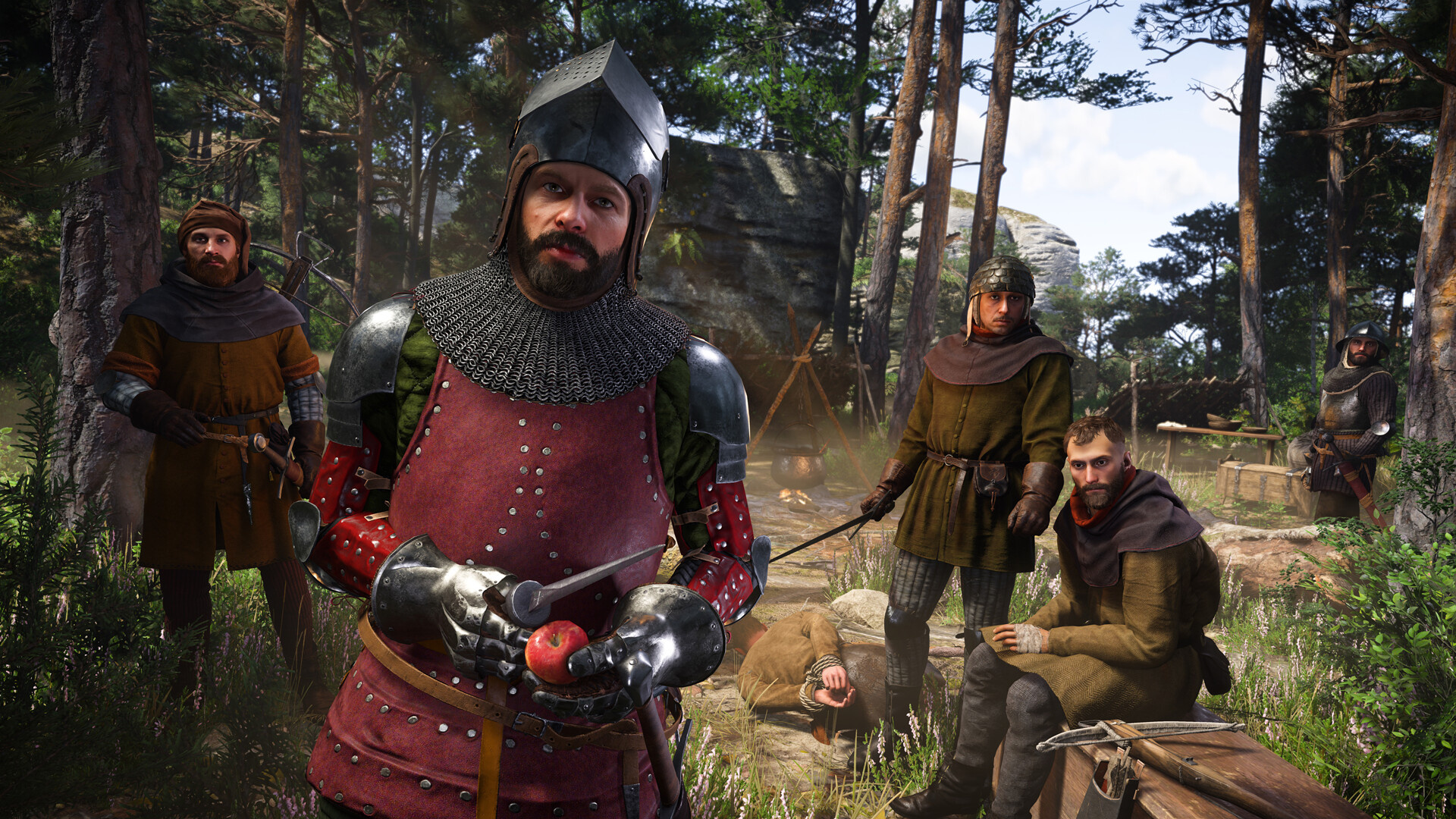
The best medieval games give you a reason to care about the next village, castle or muddy stretch of road. That might mean earning a reputation with a sword, keeping a settlement fed or inheriting a kingdom whose relatives have complicated plans. This selection favors games centered on medieval life and power, with clear differences between historical settings and fictional sandboxes.
Looking for somewhere to start?
- Kingdom Come: Deliverance II for a grounded medieval role-playing story.
- Mount & Blade II: Bannerlord for building a military career.
- Manor Lords for managing a settlement from the ground up.
10. Age of Empires II: Definitive Edition
Best for medieval armies and readable strategy · PC, Xbox, PS5 versions · Solo campaigns and skirmishes; online multiplayer
Campaigns turn medieval rulers and military conflicts into a series of objectives, while skirmishes let you write a less historically obedient version of events. Age of Empires II: Definitive Edition keeps the individual soldier small and the decisions around an entire economy large.
Villagers gather the resources behind each army, so a lost battle can begin with an earlier economic mistake. Civilizations, maps and build orders give familiar matches different problems. Learning when to advance, expand or attack is a satisfying project long after the introductory campaigns.
It is the approachable classic for players who want the medieval setting expressed through competing armies. Historical storytelling is dramatized for the campaigns, not presented as a documentary. Start with the included material before deciding which optional civilization expansions match the way you like to play.
9. Stronghold: Definitive Edition
Best for designing a castle that must function · PC version · Solo campaigns; multiplayer
A medieval kingdom is being contested, and your stronghold has to support both the people working inside it and the soldiers defending its walls. Stronghold: Definitive Edition turns a castle from a picturesque silhouette into a demanding little economy.
Food production, weapons, housing and defensive layouts compete for resources and space. A well-placed wall only helps if the archers have equipment and the population can keep working. Siege missions let you test the opposite problem by finding weaknesses in somebody else’s construction.
This suits players who enjoy the practical side of castle building. The presentation is deliberately rooted in an older strategy game, so it won’t look like a modern open-world medieval adventure. Its appeal lies in seeing the systems behind the battlements finally support one another.
8. Pentiment
Best for a medieval mystery told through people · PC, PlayStation, Xbox, Switch versions · Single-player
Andreas Maler arrives at an abbey to work on an illustrated manuscript, then finds himself involved in a death that threatens the surrounding community. Pentiment follows lives in sixteenth-century Bavaria as religion, work and local loyalties pull people in different directions.
Conversations and limited time determine which leads you can follow. Your background shapes what Andreas notices and how he can respond. Getting to know a person can matter more than collecting a perfectly labeled clue, because the story rarely supplies a comfortable view from above.
Play it when you want the period experienced through ordinary arguments, habits and relationships. There is no sword-combat system to master. The early-modern setting also sits at the edge of this list’s medieval scope, making it a useful bridge for readers interested in what changed as that world moved on.
7. Going Medieval
Best for a settlement built above and below ground · PC version · Single-player
Survivors of a plague-ravaged fictional medieval world need a place to live, and your hillside is the beginning of their new settlement. Going Medieval makes their immediate needs the foundation of a larger defensive home.
Rooms have practical purposes, temperature affects storage and comfort, and construction can rise upward or cut into the earth. Managing individual settlers gives the village a human scale. Raids make preparation matter without turning every quiet building session into a battlefield.
Choose it for the pleasure of engineering a useful home. A grand keep is more satisfying when its cellar, bedrooms and workshops all function, not simply when the roof looks impressive. It is a colony simulation in a medieval-inspired setting rather than a recreation of one documented historical town.
6. Chivalry 2
Best for messy, accessible medieval battles · PC, PlayStation, Xbox versions · Online multiplayer; offline practice
Two rival factions are fighting over a fictional medieval kingdom, and Chivalry 2 puts you among the soldiers doing the dangerous work. Its matches deliver the siege without requiring you to spend the previous evening managing taxation.
Directional attacks, blocks and counters give melee enough structure to learn, while crowded objectives keep the result gloriously untidy. Helping push an attack or defend a courtyard can be useful even before your dueling improves. Classes and weapons change how close you want to get.
This is the choice for a quick medieval battle with other people. It isn’t a role-playing campaign or an accurate combat manual. Expect to be interrupted halfway through an impressive duel by somebody whose contribution is much less elegant, and occasionally much more effective.
5. Medieval Dynasty
Best for a village you build by hand · PC, PlayStation and Xbox editions · Solo; online co-op on supported current editions/maps
Starting with little more than a place to settle, your character tries to establish a household and a future in a medieval valley. Medieval Dynasty connects that personal beginning to the slow construction of a working village.
You gather materials yourself, place buildings and gradually bring residents into the settlement. Seasons and production needs make planning useful, while hunting and crafting keep you involved at ground level. Walking through a village you’ve assembled gives the management a more personal scale than a distant overview.
It’s for players who enjoy practical chores and a place that changes gradually. The pacing is deliberately patient. Multiplayer support is tied to the supported co-op editions and map, so the original solo Valley campaign shouldn’t be described as identical to the Oxbow co-op experience.
4. Manor Lords
Best for a village economy with room to grow · PC version · Single-player
A small group of settlers needs food, shelter and a workable future on land that may eventually be contested. Manor Lords makes that beginning feel tangible, with homes, roads and fields shaping the settlement before armies become the main concern.
Burgage plots, seasonal work and supply chains make the layout more than decoration. Expanding too eagerly can strain the labor and materials keeping the existing village alive. When conflict arrives, the people involved in production may also be the ones you need in a militia.
Pick it for the settlement-building side of the Middle Ages. The main attraction is developing a functioning place rather than controlling one adventurer. Treat military expansion as one pressure on the economy, not a promise that every session will be a large tactical battle.
3. Crusader Kings III
Best for dynastic decisions and political trouble · PC version · Single-player or online multiplayer
Your ruler inherits land, obligations and a family that may become the most dangerous problem on the map. Crusader Kings III makes medieval power a relationship story, where a marriage or disputed succession can matter more than a winning battle.
You manage claims, vassals, heirs and personal traits while the wider map continues changing. A character’s death doesn’t necessarily end the game; it can hand an awkward inheritance to somebody less prepared. The resulting family history is the real campaign.
It belongs near the top for anyone interested in how medieval authority works beyond the battlefield. The strategy is deep, but accepting a messy outcome often creates a better story than chasing perfect control. The PC version covered here supports mods, giving you another way to reshape a campaign once the base systems feel familiar.
2. Mount & Blade II: Bannerlord
Best for a military career you shape yourself · PC, PlayStation, Xbox versions · Solo sandbox and campaign; separate online battles
A fractured empire and competing kingdoms leave Calradia full of opportunities for an ambitious newcomer. Mount & Blade II: Bannerlord begins with a small party and lets you decide whether the future lies in trade, service, command or a kingdom of your own.
Recruiting soldiers and choosing where to fight matter, but you can also ride into the battle and handle a weapon personally. Income, relationships and logistics support that army between confrontations. Building from a vulnerable warband to a force with political weight gives the campaign its long arc.
This is the medieval sandbox for someone who wants a story generated by decisions rather than a tightly authored plot. Calradia is fictional, and the campaign can require plenty of repetitive work between dramatic victories. Its battles and personal freedom are the reasons to accept that rougher rhythm.
1. Kingdom Come: Deliverance II
Best for a grounded first-person medieval story · PC, PS5, Xbox Series X|S versions · Single-player
Henry and Hans Capon travel into a Bohemia where a diplomatic errand becomes entangled with a much larger struggle. Kingdom Come: Deliverance II keeps that conflict close to people who have to eat, earn trust and deal with the consequences of a public mistake.
Sword fighting asks for timing and positioning, while conversation, equipment and reputation offer other ways through a problem. Towns and roads encourage observation rather than treating every destination as a marker to rush toward. Henry becomes capable through learning, not by beginning as an untouchable hero.
It takes first place for making medieval life part of the role-playing. The story is fictionalized within a historical setting, and patience helps with both its systems and long conversations. Playing the first game adds context, but the sequel provides the immediate situation without requiring a plot summary here.
Which game should you play next?
Kingdom Come: Deliverance II is the strongest starting point for a personal medieval journey. Bannerlord gives you a much larger military sandbox, while Manor Lords makes the village itself your responsibility. For other eras and different historical perspectives, see Best Historical Games on PC.


