Best Of
All Metro Games, Ranked 2026

 Add Gaming.net to your preferred sources on Google
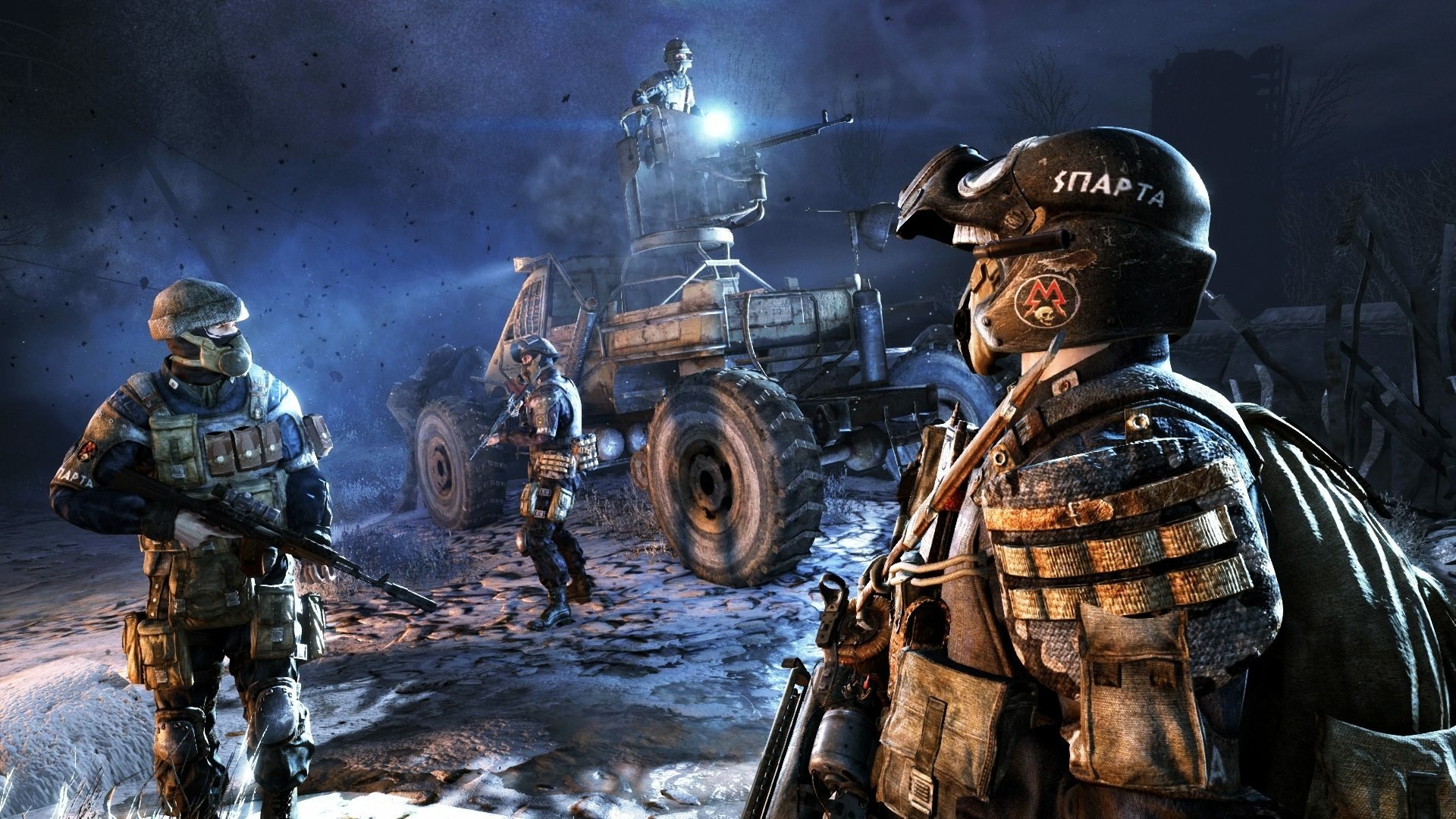
Even with a series as noteworthy as Metro, there’s bound to be weaker entries. Not that the weaker entries aren’t worth playing. The first game, Metro 2033, knocked it out of the park, introducing us to the hopelessness of humanity surviving for years underground. The terror of the mutants and radiation effects latches deeply in the later entries, with Metro: Last Light telling a weaker story, and Metro Exodus reclaiming the upward streak with a freer exploration on the surface of post-apocalyptic Moscow. In anticipation of the upcoming Metro 2039, I’ve outlined my thoughts on all Metro games, ranked below.
8. Metro Exodus: The Two Colonels
I shouldn’t include the DLC packages, but what the heck. They offer pretty compelling content to the Metro series that they are worth adding to the list of all Metro games, ranked. I’d say Metro Exodus: The Two Colonels ranks lowest because it’s much shorter. In just about two hours, you should be done with it, and within that time, you’ll mostly focus on the story rather than the gameplay. As most DLCs do, The Two Colonels adds more context to the base game. In this case, giving you a prequel of events explaining the fall of the society in the Novosibirsk Metro.
You control Colonel Khlebnikov traveling across the underground tunnels to see his son, Kirill. Along the way, you encounter the hurdles of a life underground, from radiation to running into mutants. Those combat sections will last for only a short bit before you’re launched back into the unnerving story and atmosphere the Metro series has mastered so well over the years. It can feel hands-off, which Metro Exodus: Sam’s Story is keen to fix.
7. Metro Exodus: Sam’s Story
Also, a DLC package, Metro Exodus: Sam’s Story is considerably longer, clocking in at about six hours. Within that time, your combat sections are considerably longer. And at the same time, the story has its moments of reflection and intrigue. A US Marine is trapped in Moscow after the nuclear war. He joins Arytom and his crew in Metro Exodus, but once their mission ends, he yearns to return to the Pacific Coast and reunite with his family, if at all they are still alive.
And so, Sam breaks away from the squad, ending up in the tsunami-ravaged port city of Vladivostok, hoping to find a submarine that takes him home to San Diego. So much of the content is new, including the detailed environments and characters you meet. And that’s Sam’s Story’s strongest suit. However, the gameplay is also pretty good, harkening back to your stealth and melee encounters in previous games.
6. Metro Awakening
I have high expectations walking into any VR experience because of its pioneering promise of unrivaled realism and immersion. And while Metro Awakening definitely has its moments of outright terror and fright rooted in the darkness of the underground tunnels, it can be a bit of a letdown when compared to more immersive VR experiences. You walk into the Metro universe in the shoes of a doctor searching for his wife. Creepy crawlies and mutated monsters demand moving as quietly as possible. The audio-visual cues are pretty strong, alerting enemies to approaching footsteps or the piercing cone of your flashlight.
However, the environments aren’t always fully interactive, which is a huge selling point for a VR experience. Not to mention that you can run into bugs when interacting with items in the environment. Plus, some of the levels can feel repetitive, running into enemies and areas that you’ve seen before.
5. Metro: Last Light
Metro: Last Light is the second entry in the Metro games trilogy. However, it certainly tells the weakest story. Not that the story itself isn’t good. Picking up from a point of grief and regret over annihilating the Dark Ones, Artyom embarks on a heart-wrenching journey seeking redemption. It just doesn’t hit as hard as the first or the third game. A part of it is dealing with a silent protagonist who is supposed to show remorse but can only do so via journals. Text can only go so far to capture the heavy emotions that come with guilt.
4. Metro: Last Light Redux
I’ll also quickly slot in the enhanced versions, starting with Metro: Last Light Redux. It really is the same game as Metro: Last Light. The only difference is better visuals, and thus, a better way to experience Metro: Last Light.
3. Metro Exodus
The third entry in the trilogy is a memorable hit of all Metro games, ranked. It opens up the Metro universe for players to explore more openly and freely. While not entirely open-world, Metro Exodus uses a sandbox level design, which keeps your playthrough exciting as you transition between exploration and combat. What makes this entry stand out is leaving the claustrophobic Metro tunnels you’re so used to by this point for the surface, not knowing what dangers await. There’s bravery that comes with pushing forward no matter what, and sure, you can miss the restrictiveness of the tunnels and the tension it brings during fights, but I love that the series experiments with a non-linear setup that works.
2. Metro 2033
Ukrainian studio, 4A Games, got it right the first time around with Metro 2033, adapting Dmitry Glukhovsky’s Metro trilogy into video game format. The studio captured the novel series’ atmosphere and design exceptionally well, taking you to a gut-wrenching version of post-apocalyptic Moscow. You can have a rough idea of what living in the underground train system can be after a nuclear war sweeps over the Earth and plunges it into an apocalyptic end. Only when you play the first game does it truly hit you how devastating life can be living underground.
The game has you experience the hopelessness of the tunnels through the eyes of Artyom, who has grown up in the Moscow Metro system. It’s not only the different factions underground that have become desperate and are fighting one another for survival, but supernatural mutant creatures that will tear you apart on sight. As such, the stealth elements of Metro 2033 thrive on being outnumbered and running low on ammo. You can practically complete levels on the low, but also have the option to make some noise. Granted, the gunplay can feel outdated and ineffective in the heat of the moment, and that’s fine. Metro 2033’s strength has always been its gripping story and tense worldbuilding anyway.
1. Metro 2033 Redux
And well, you want the enhanced gaming experience if you’re to enjoy fewer faults in the graphics and gameplay of Metro 2033. The new 4A Engine makes a major difference in how Metro 2033 Redux plays. It brings the original game up to speed on modern hardware. From the lighting to the frame rates and overall visuals, they are brighter, smoother, and slicker. Running at 60 fps, steady on last-gen consoles, along with more subtle gameplay changes like more customization and being able to clear the fog off your gas mask, make Metro 2033 Redux the ultimate best Metro game.