游戏
Epic Games Says It ‘Vibe Coded’ Its Rebuilt Launcher, Now in Preview

 将 Gaming.net 添加到您在 Google 上的首选来源
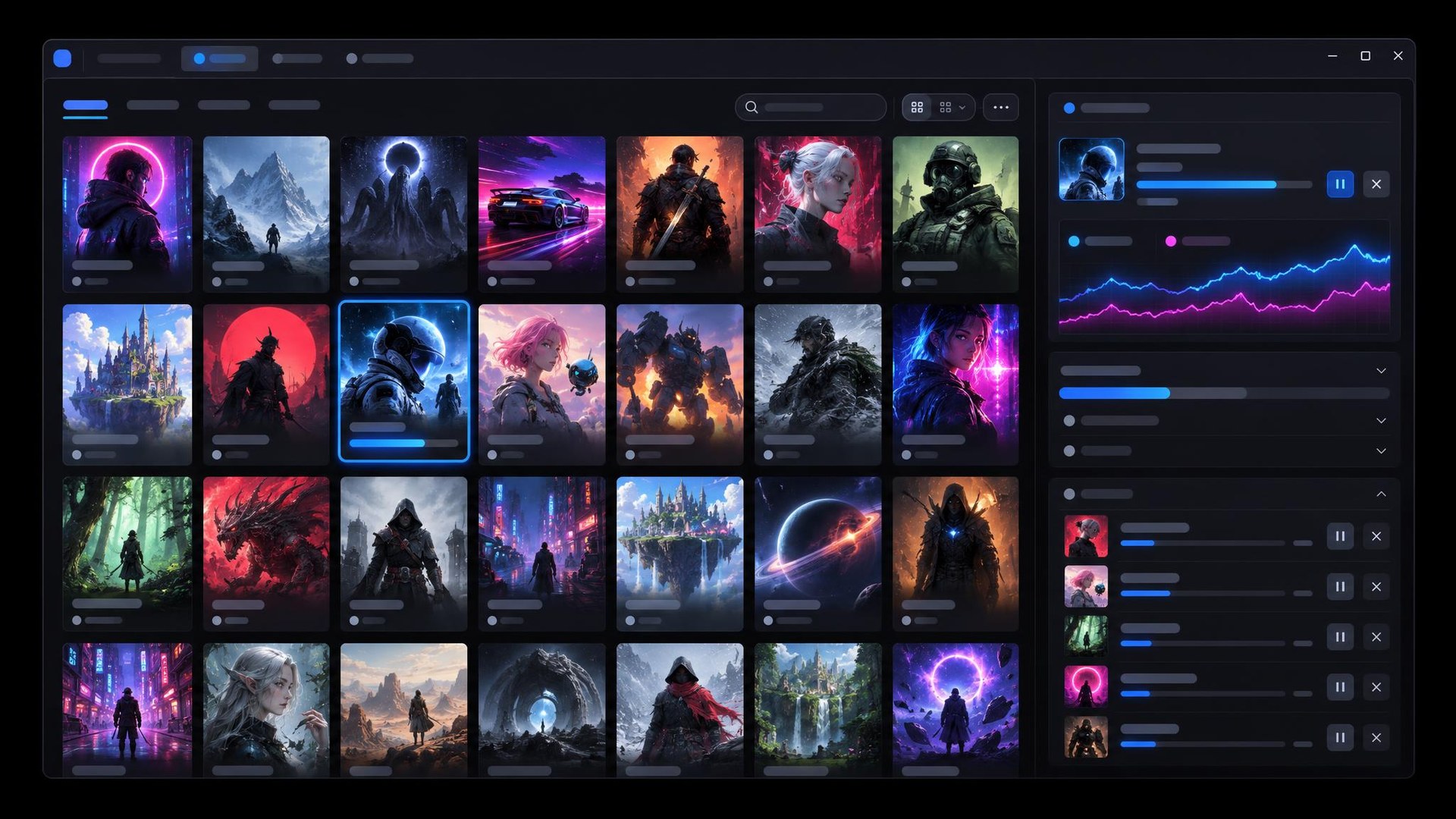
Epic Games released a Preview version of its rebuilt Epic Games Launcher on 2026年10月14日, making the new software available to everyone on Windows, macOS and, for the first time, Linux. The Epic Games Store Team announced the release in an official Epic Games Store blog post and described how the new launcher was built.
“Programming is hard. So, instead of doing that, we vibe coded a new Epic Games Launcher that’s way faster and more responsive than the current one, and has a new look,” the team wrote.
On the launcher’s official preview website, Epic claims a cold start of 5.47 seconds for the new launcher against 10.07 seconds for Steam, describing startup as 1.8x faster than Steam, and says the new launcher opens the Store 3x faster than Steam. Epic also claims a 0.36-second switch from the background to the library against 0.42 seconds for Steam, described as 1.2x faster, and describes library loading as “30x faster.” The announcement post says the Preview offers faster cold starts, quicker movement between the library and store, and reduced load on the system while the launcher runs in the background.
“This first release is light on features. Think of it as a speedboat and not a yacht! Though it does have advanced digital commerce technology such as a shopping cart,” the team wrote.
A Rebuilt Design
Epic describes a three-stage path for the project: rebuilt from the ground up, a Preview open to everyone, and a stable release polished with player feedback. The new launcher uses one frame for the Store, Library and Develop sections, keeps recent games one click away, and includes a customizable top bar where users can pin favorite games and apps or pick a ready-made layout.
Each game gets a dedicated page with its status, activity, details and play controls, and users can connect their PC libraries to see everything they own together within the launcher. The library supports grid and list views, including a Details view that places the game list on the left and the selected game’s page on the right, along with visual collections, search and filtering as the user types, the option to hide games, and sorting by platform and genre.
The download manager shows live download, read and write speeds and lists active, queued, scheduled and failed downloads in one place, with update status shown on game pages and in the downloads list. An activity feed covers playtime, updates and installs since the user last played. Players can also party up and voice chat with friends across Fortnite, the Epic Games Store and the Epic Games app.
Setup takes three steps: download the installer, install and sign in, then explore. Epic says a user’s Epic Games account, purchased games, installed games, cloud saves and progress are tied to the account and carry over to the Preview and the full release, and a Send Feedback button in the launcher reports issues.
Epic lists known limitations: certain social features and account management options from the legacy launcher are not available yet, and the company says it is working toward feature parity. For competitive games such as Fortnite and Rocket League, Epic recommends continuing to use the legacy launcher during the Preview, with full Fortnite integration in the new launcher still being finalized, and it makes the same recommendation to developers working on live projects.
System Requirements
On Windows, the Preview requires Windows 10 or 11 (64-bit), an Intel Core i3 or AMD Ryzen 3 processor and 700 MB of available storage. On macOS, it requires macOS 12 Monterey or newer and an Apple M1 chip or newer, with 200 MB of storage; Intel Macs are not supported. On Linux, it supports Ubuntu 22.04 LTS or newer, Fedora 43 or newer, or Debian 12 or newer, running on a 64-bit x86-64 2GHz dual-core processor or newer with 2 GB of storage. All three versions list 4 GB of RAM.
Epic says the new launcher is designed to run on the same hardware as the legacy one. An internet connection is required for setup, updates and online features, and offline mode is available for supported installed games. The launcher runs natively on Linux, but Epic notes that many games are Windows-only builds that may need a compatibility layer, and that distributions beyond the three listed may work but are not officially tested or supported.
Fortnite on Linux and Easy Anti-Cheat V2
Epic said Fortnite is coming to Linux through the new launcher once a rebuilt Easy Anti-Cheat (EAC) is working with a critical mass of distribution maintainers, and that it will make the improvements available to other developers so they can bring their games to Linux players.
In an Epic Online Services tech blog post published the same day, Epic said EAC has supported native Linux game clients since 2014 and Windows game builds on Linux via Wine/Proton since 2021. That support is opt-in for each game, and Epic said many games have not opted in because the Linux implementation could not offer the same level of protection as the Windows implementation, which it said is why Fortnite is not available on Linux yet. The post describes cheating in online games as having grown from a small cottage industry into a billion-dollar market in which operators sell frequently updated cheating tools by subscription.
The rebuilt implementation, EAC Linux v2, uses existing Linux features including a signed kernel, signed kernel modules and secure boot with attestation. Where the Windows version relies on a kernel driver that starts when a game launches and stops when the player exits, EAC Linux v2 uses no kernel module, drawing instead on measured boot, the kernel lockdown LSM, IOMMU support and Epic’s own eBPF logic, together with an anti-cheat systemd service that runs only while a protected game is running. Its stated system requirements include TPM 2.0, Secure Boot with well-known keys, measured boot, IOMMU enabled, kernel lockdown integrity mode, kexec disabled and the BPF LSM loaded and active.
Epic plans to pilot EAC Linux v2 in Fortnite first, testing it in a live environment and refining it before making it available to more developers for their multiplayer games. The company said it is reaching out to leaders in the Linux community and will co-host a panel discussion later this year with Fedora Project Leader Jef Spaleta. Epic also said the Steam Deck does not support the features EAC v2 requires, but that it is actively talking with Valve and hopes to support it in the future. Players who start a protected game without meeting the requirements will see an error message rather than receive a ban, according to the post.
Epic said the Preview is the beginning of the project and that it will ship updates, optimizations and new features on the road to the new launcher’s full release, engaging with players on Discord and the Epic Developer Community forums.