Najlepsze
10 Best RPGs With Shapeshifting
Discover ten RPGs where animal forms, monstrous bodies and borrowed creature abilities change how you fight, explore and build a character.

 Dodaj Gaming.net do preferowanych źródeł w Google
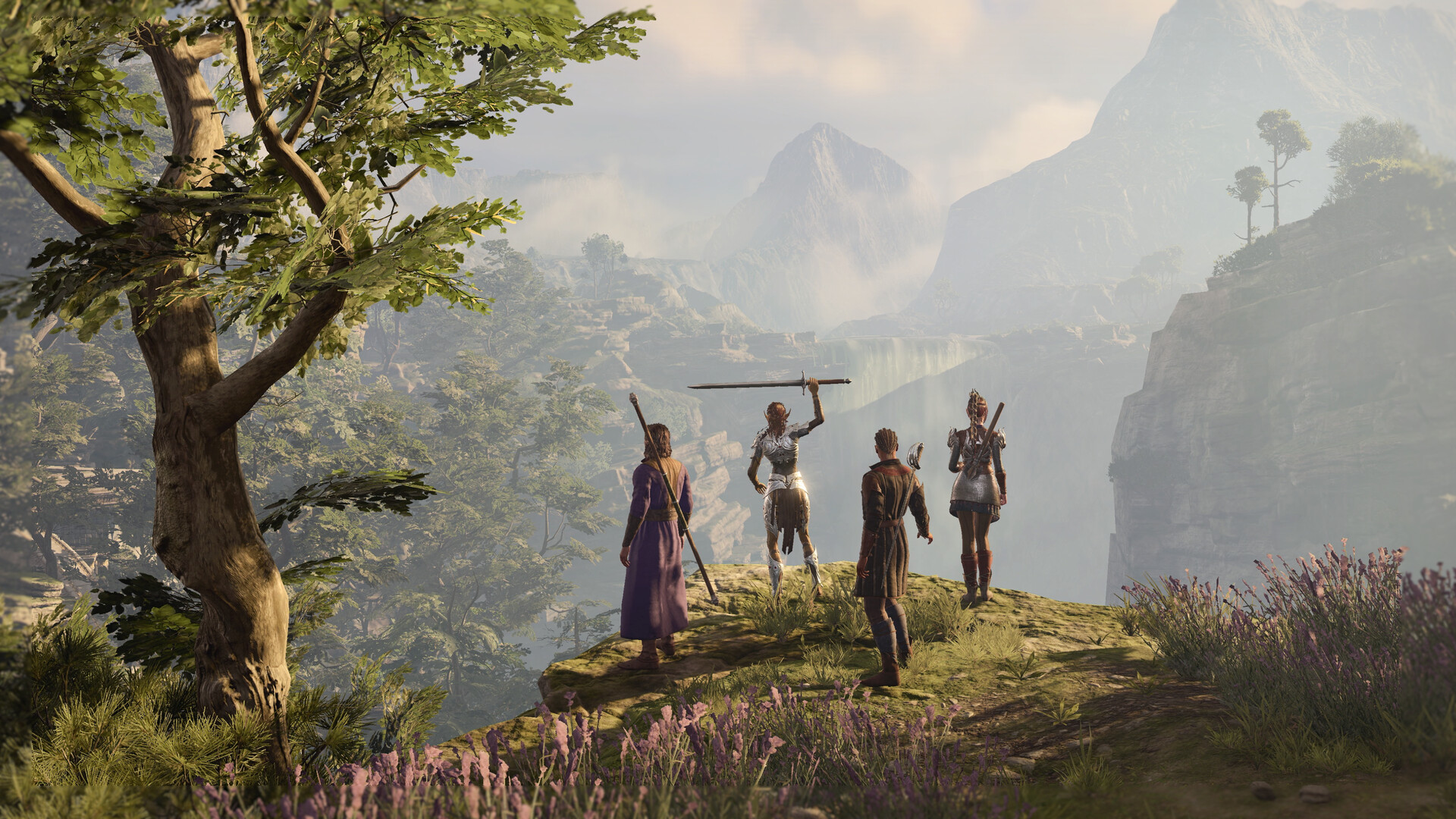
Becoming a bear should change how an adventure feels. The most interesting shapeshifting RPGs make a different body useful, whether it helps you hold the front line, slip into another space or build an entire character around a monster’s abilities.
This ranking weighs the variety of transformations, their practical role and how naturally they fit the wider game. Full-body animal forms sit alongside partial transformations and brief supernatural shifts; each entry explains what kind of change you are actually getting.
Looking for somewhere to start?
10. Dragon Age: Origins – Ultimate Edition
For shapeshifting as a mage specialisation · Origins on PC · Solo
Becoming a Grey Warden sends you across a kingdom threatened by the darkspawn, gathering allies who do not always agree about what should happen next. Dragon Age: Origins treats shapeshifting as one possible branch of that larger party-based adventure.
A mage who learns the Shapeshifter specialisation gains animal forms with different combat uses. Transforming changes what that character can contribute, so it works best when you think about the rest of the party rather than expecting one form to answer every encounter. Pausing to issue orders leaves time for those decisions.
The system is more limited than the games higher up this list, but it has a strong fantasy identity. It is a worthwhile choice when you want the option to become a creature within a story full of companions, difficult loyalties and consequential conversations.
9. Divinity: Original Sin 2 – Definitive Edition
For borrowing creature abilities · Definitive Edition on PC and consoles · Solo or co-op
The Source powers that make your characters dangerous also make them prisoners. Escaping that situation opens a world where conversation, surfaces and unusual abilities can change how a problem unfolds, which is exactly where Divinity: Original Sin 2’s Polymorph skills fit.
This is usually partial transformation rather than a full animal body. Sprout wings, grow horns or take on other strange traits to gain a new tactical option. Those abilities can complement a broader build, while turning an enemy into a chicken offers a particularly memorable form of control.
It earns this spot for letting transformation interact with a lively battlefield. A mobility skill can matter as much as another attack when fire, poison and awkward terrain are involved. Bring it into a solo party or discuss an outrageous plan with co-op friends before seeing what actually happens.
8. Pathfinder: Wrath of the Righteous – Enhanced Edition
For building a transformation specialist · Enhanced Edition on PC · Solo
A crusade against a demonic invasion leaves room for an enormous number of character concepts in Pathfinder: Wrath of the Righteous. Among them is the fantasy of giving up a conventional weapon and meeting enemies in another body.
The Druid’s Wild Shape provides a route in the base game. The Shifter class offers a more focused alternative through the separately purchased The Last Sarkorians DLC. Feats, attributes and class progression influence whether a form becomes the centre of a build or a situational tool.
The attraction is the depth of commitment: you can plan a whole character around transforming. It also asks more of you than a simple action RPG, with a dense ruleset and a large party to manage. Start here if working through those choices is part of the fun, and check which content your edition includes.
7. Last Epoch
For developing a Druid around different forms · PC · Solo or online multiplayer
Last Epoch sends a time traveller through different eras of Eterra, chasing a threat that stretches beyond one ruined place. Its Primalist class can develop into a Druid, making transformation part of the character’s long-term build rather than a temporary story reward.
Werebear, Spriggan and Swarmblade forms offer different approaches, and skill specialisation gives you room to refine how they work. Gear and passives then support the play style you are building. The interesting question becomes how a form fits the rest of your skills, not simply which one looks strongest.
This is a good fit for players who enjoy returning to a build and making a small improvement. Its appeal comes from that repeated adjustment across fights and loot drops. You get the spectacle of becoming a monster alongside the slower satisfaction of understanding why your setup works.
6. World of Warcraft: Forever
For a Druid journey in a shared world · PC · Subscription-based online MMO
A Druid makes travelling through Warcraft feel different from playing a conventional weapon specialist. World of Warcraft: Forever gives that class fantasy a place in a persistent online adventure, where the creatures you become belong to the journey as well as its battles.
Druid forms support different purposes, from close combat to moving through the world. The useful habit is choosing a form for the task ahead rather than treating transformation as a cosmetic flourish. Group play also gives your class decisions a social setting, with other players depending on the role you bring.
Forever is its own version of World of Warcraft, so guides and builds from modern WoW should not be assumed to apply unchanged. The reason to try it is the enduring pleasure of inhabiting a versatile class over a long adventure, especially when you want that experience to include a wider community.
5. The Elder Scrolls V: Skyrim Special Edition
For a darker transformation fantasy · Special Edition on PC and consoles · Solo
Skyrim gives a wandering adventurer plenty of ways to become something other than an ordinary traveller. Between the dragon crisis and the stories you find off the main road, there are opportunities to pursue both a werewolf’s power and the Vampire Lord fantasy.
These transformations change combat more dramatically than equipping another sword, with their own powers and limitations. Special Edition includes the Dawnguard content needed for the Vampire Lord route. There are consequences and restrictions to consider, so each form suits a character concept rather than serving as a universal upgrade.
Part of the pleasure is deciding how this secret fits the person you are playing. A quiet journey between towns can take on a very different mood once you know what your character might become. The freedom of the surrounding RPG gives the transformation its meaning.
4. Nioh 2 – The Complete Edition
For short, forceful monster transformations · Complete Edition on PC; Nioh 2 on PlayStation · Solo or online co-op
Playing a half-human, half-yokai protagonist gives Nioh 2 a clear reason to blur the line between samurai and monster. Its dark fantasy journey through Japan is demanding even before you start deciding how supernatural powers fit around your weapons.
Yokai Shift temporarily replaces your normal fighting style with a powerful form. Guardian Spirits determine whether that form is Brute, Feral or Phantom, each with its own feel. Soul Core abilities add another way to borrow from the creatures you defeat, although those attacks are distinct from a sustained transformation.
The excitement comes from choosing the moment to change. You still need to understand stamina, positioning and enemy openings, so becoming a yokai works with the combat’s discipline rather than removing it. It is a strong choice when you want transformation to deliver a sharp burst of action.
3. Diablo IV
For weaving animal forms into an action build · PC, PlayStation and Xbox · Solo or online co-op; internet required
Sanctuary is an unkind place to travel as an ordinary person. Diablo IV’s Druid responds by bringing storms, earth magic and animal forms into the same character, making the class a natural home for anyone who wants transformation to happen throughout a fight.
Werewolf and Werebear skills let you move between a fast, tearing style and heavier, more forceful attacks. Passives and equipment can encourage particular interactions, so the form you use belongs to a larger build. You can pursue a clear animal identity or mix those skills with other parts of the Druid toolkit.
It ranks highly for making shapeshifting feel immediate without sacrificing the long-term build chase. Loot keeps offering reasons to reconsider the setup. Exact balance changes with updates, but the lasting attraction is a character whose body changes as naturally as another hero changes attacks.
2. Baldur’s Gate 3
For transformations that help beyond combat · PC, PS5 and Xbox Series X|S · Solo or co-op
A dangerous parasite brings a group of strangers together in Baldur’s Gate 3, but it is far from the only way a body can change. Playing a Druid gives you Wild Shape and the chance to approach the journey from a very different size and perspective.
Animal forms can help with combat, movement and exploration. A smaller creature may suggest a route that your normal body cannot use, while a sturdier form changes what you can contribute in a fight. The Circle of the Moon subclass places greater emphasis on that side of the class.
Its strongest feature is context. A transformation can be part of an improvised plan rather than a button saved for boss encounters. Combine that with conversations, companions and a world full of alternative approaches, and Wild Shape becomes a way to role-play as well as win battles.
1. Nobody Saves the World
For making transformation the whole adventure · PC and consoles · Solo or co-op
Nobody begins without much of an identity and finds a wand that offers far too many. Nobody Saves the World sends this unlikely hero into a world threatened by a spreading calamity, using a collection of strange bodies as both the cast and the character-building system.
Forms such as Rat, Guard and Horse have their own abilities and progression quests. As the system opens up, you can mix unlocked abilities between forms, creating combinations that are useful, ridiculous or both. Dungeon conditions give you reasons to rethink a favourite setup instead of using one body forever.
It takes first place because the joke and the mechanics keep helping each other. A new form is funny to look at, interesting to learn and another set of tools for the rest of the game. You spend the adventure exploring what you could become next.
Where to begin
For an adventure built entirely around changing forms, begin with Nobody Saves the World. Baldur’s Gate 3 gives those bodies a wider role in exploration, while Diablo IV makes them part of a fast-moving build. Compare the surrounding roles in our Baldur’s Gate 3 class list and Diablo IV class ranking.