Licenser
New York AG Settles With VGW Over Illegal Sweepstakes Casinos

 Lägg till Gaming.net bland dina föredragna källor på Google
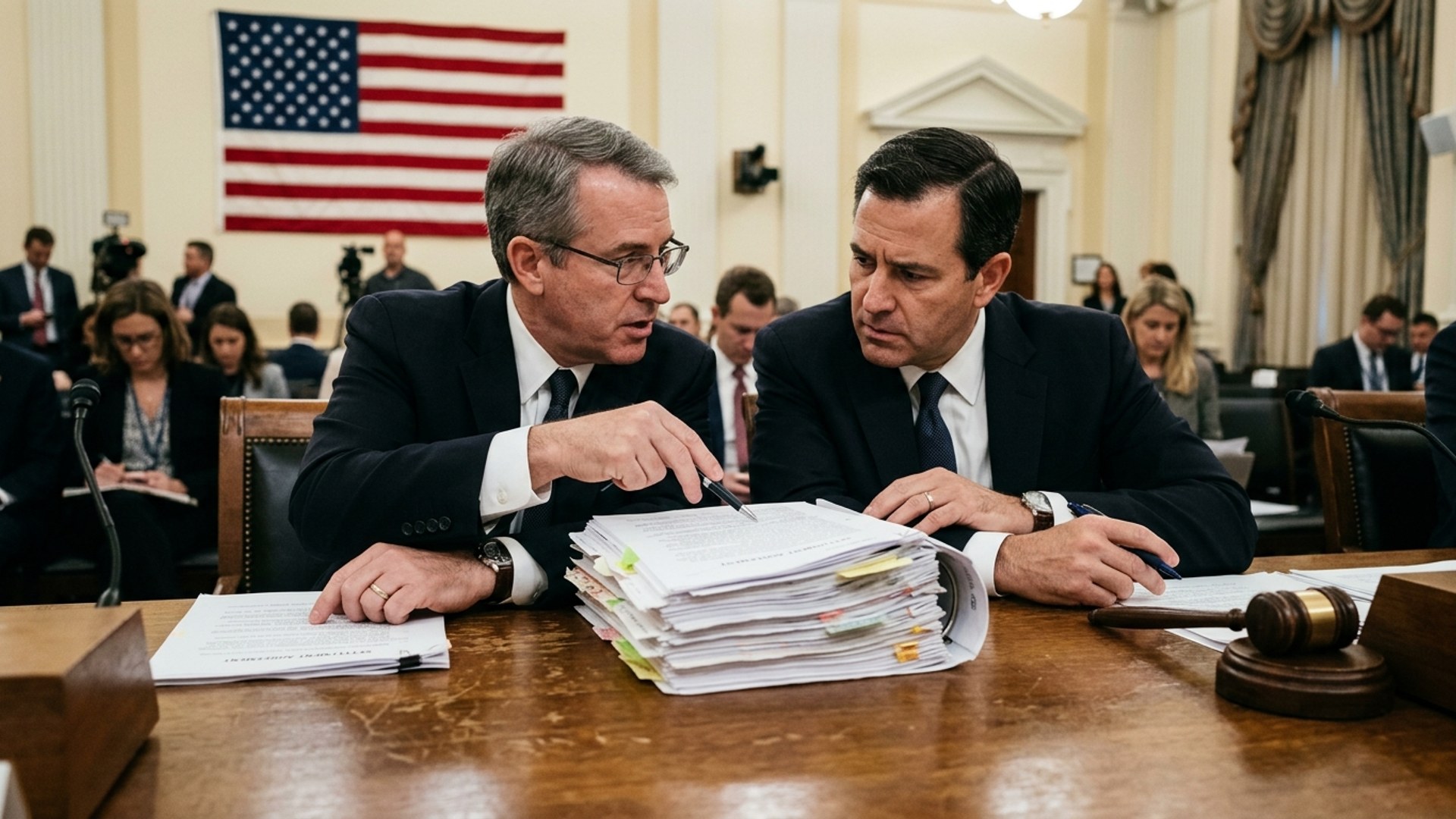
New York Attorney General Letitia James announced on 9 september 2026 that her office has secured $8 million from VGW Holdings Pty. Ltd. and its affiliates for unlawfully operating online sweepstakes casinos in New York. The agreement resolves an investigation into VGW’s Chumba Casino, Global Poker, and Luckyland Slots platforms, which allowed users to play traditional casino games with virtual coins that could be exchanged for cash or prizes.
The settlement was executed as an Assurance of Discontinuance, identified as Assurance No. 26-052 with an effective date of 31 augusti 2026. The named respondents are VGW Holdings Pty. Ltd., VGW Luckyland Inc., VGW Malta Limited, and VGW GP Limited, and the companies neither admit nor deny the attorney general’s findings.
“Online sweepstakes casinos like Chumba Casino, Global Poker, and Luckyland Slots posed a dangerous threat to New Yorkers and their financial and mental health,” James said. “My office took action to stop these illegal platforms last year, and now we are holding VGW accountable for the damage done.” The attorney general’s office said some New Yorkers lost tens of thousands of dollars gambling on VGW’s platforms.
How the Dual-Coin Model Worked
According to the findings set out in the Assurance, the three sites offered online versions of games simulating traditional casino games, including slot machines and table games such as blackjack, roulette, and craps. Players used two types of virtual coin, gold coins and sweeps coins. Both could be played in the games, but only sweeps coins could be redeemed for cash or gift cards.
The sites sold the coins together in specially marked packages in which the number of sweeps coins was roughly equivalent to the purchase price, the findings state. A user paying $5 received 5.05 sweeps coins and 1,000,000 gold coins, while a $50 purchase returned 51.50 sweeps coins and 15,000,000 gold coins. VGW characterized these transactions as sales of gold coins with sweeps coins included for free. The attorney general’s office said its investigation found the sweeps coins were effectively sold like casino chips, with players receiving approximately one coin for every dollar spent on the platform.
Users could also obtain five sweeps coins at no cost by requesting a code from the website and mailing a handwritten request that had to satisfy detailed requirements covering postcard and envelope size, required information, and format. A five-minute timer ran between code requests. The findings state that the respondents placed no limit on the number or frequency of packages a user could purchase.
The respondents advertised widely in New York, including through social media and podcast advertisements, according to the Assurance. The document reproduces a Chumba Casino Facebook post showing a player identified as Shawn S. holding a check dated november 2023 for $1,098,973.95, with the account congratulating him on becoming the site’s 50th millionaire through a win on a slot game called Aztec Quest. The image itself is marked as a promotional cheque with no cash value, while the accompanying text described the win as redeemable for the full amount.
Enforcement Timeline
Chumba Casino was first offered to people in New York in 2012, followed by Global Poker in 2016 and LuckyLand Slots in 2018, according to the findings.
On 25 april 2025, the attorney general’s office sent VGW a letter warning that most sweepstakes casinos are illegal in New York and demanding that it cease all prohibited gambling activity in the state. VGW voluntarily stopped offering sweeps coins to New York residents on 2 juni 2025. The company told the attorney general it had notified its New York customers of the phase-out and an 1 augusti 2025 deadline to redeem any sweeps coins, and the Assurance records that VGW cooperated with the investigation.
The action against VGW formed part of a wider sweep. On 6 juni 2025, the attorney general’s office and the New York State Gaming Commission announced that cease-and-desist letters had gone out to 26 online platforms offering slots, table games, and sports betting with cash-redeemable virtual coins, and that all 26 were ending sweepstakes-coin sales in New York. Chumba Casino, Global Poker, and Luckyland were among the operators listed.
“These so-called ‘sweepstakes’ games are unscrupulous, unsecure, and unlawful,” Gaming Commission Chairman Brian O’Dwyer said in the juni 2025 announcement.
On 5 december 2025, Governor Hochul signed Senate Bill S5925A, amending New York’s racing, pari-mutuel wagering, and breeding law to state expressly that the dual-coin model VGW used is unlawful. In the Assurance, the attorney general found that the respondents’ conduct violated penal provisions prohibiting the promotion of gambling and the possession of gambling records, as well as the Executive Law provision barring repeated fraudulent or illegal acts.
The attorney general’s office said sweepstakes casinos operate without state audits or other regulatory oversight, leaving players unable to know whether games are rigged, whether a platform can cover a winning bet, or whether it complies with the consumer-protection measures required of legal, licensed casinos under New York law.
The announcement also listed a series of related enforcement actions. In juli 2026, James sued Kalshi, which her office accused of running an illegal gambling operation in New York. In april 2026, she sued Coinbase and Gemini over what the office described as illegal gambling platforms, and in januari 2026, she sued video game developer Valve, accusing it of promoting gambling through video games popular with children and teenagers.
Settlement Terms
Under the Assurance, the respondents must pay the State of New York $8 million in disgorgement, restitution, penalties, and costs, in full within 14 days of the effective date.
The companies are barred from enabling any New York consumer to stake a redeemable virtual item, defined as a virtual currency, coin, token, or credit exchangeable for money or property, on the outcome of a contest of chance or a future contingent event not under the consumer’s control. If the cited gambling statutes are repealed, revised, overridden, or judicially construed to permit that conduct, the companies may notify the attorney general in writing; if the office does not object within 30 days, the prohibition lapses for the relevant conduct. If the office does object, the companies may seek a court order that the conduct is lawful, but may not engage in it without such an order or the office’s agreement.
The respondents also agreed not to make any public statement denying the findings or asserting that the Assurance lacks a legal or factual basis. The document states that it is not an admission of liability and is not intended for use by any third party in another proceeding. Mats Johnson signed for VGW Holdings Pty. Ltd. and VGW Luckyland Inc., and Timothy Moore-Barton signed for VGW Malta Limited and VGW GP Limited.
The VGW matter was handled by Assistant Attorney General Marc Montgomery and Senior Enforcement Counsel Jordan Adler of the Bureau of Internet and Technology, under the supervision of Bureau Chief Kim A. Berger and Deputy Bureau Chief Clark P. Russell.
For one year after the 31 augusti 2026 effective date, VGW must accept redemption requests from New York consumers who did not receive the earlier phase-out notification. The company must redeem sweeps coins held in those consumers’ accounts as of 2 juni 2025, paying out in fiat currency at the exchange rate set in the then-applicable version of its sweepstakes rules.