Lo mejor
10 Best Games Where You Run a Shop
Stock shelves, brew potions and sell dungeon finds in ten shopkeeping games with satisfying routines and worthwhile decisions.

 Añade Gaming.net a tus fuentes preferidas en Google
There is something satisfying about unlocking the door to a shop you have made your own. The stock might be supermarket staples, freshly brewed potions or relics you had to fight to bring home. Either way, the day’s work gives the next improvement a clear purpose.
These picks cover hands-on retail, thoughtful management and adventures whose loot ends up on your shelves. The ranking favours an interesting daily routine, meaningful decisions about what you sell and a reason to care about the people or place around the business.
Looking for somewhere to start?
10. Supermarket Simulator
For hands-on everyday retail · PC edition · Solo or online co-op
An empty shop becomes a working supermarket one shelf and delivery box at a time. Supermarket Simulator makes the ordinary jobs unusually absorbing: unpacking stock, arranging products and working the checkout are the business, rather than background tasks handled entirely by a menu.
You decide what to order and how to price it, then deal with the consequences when customers arrive. Expanding the store creates room for more products but also more work. Hiring staff gradually changes your role from doing everything yourself to noticing what is holding the shop back.
There is no grand fantasy quest pushing you forward. The reward is a tidier floor, a better organised stockroom and a day that runs more smoothly than the last. It is a good starting point when you want to understand the shop’s operation at ground level.
9. Saleblazers
For shopkeeping mixed with survival · PC · Solo or online co-op; Early Access
Setting up a respectable store is only part of surviving Saleblazers’ island. You also explore, gather supplies and deal with threats outside the shop, so an expedition can be about finding your next stock as much as making progress towards an escape.
The store gives those adventures a home. Build the space, fill it with goods and watch customers react to the business you have made. Combat and crafting sit alongside the retail systems, and online co-op lets friends share the work or contribute to the chaos.
Its appeal lies in the collision between a shopkeeper’s routine and an unpredictable survival sandbox. It is a busier, rougher proposition than a peaceful counter simulator. Early Access also means systems can change, but the combination offers a distinctive reason to run a shop with friends.
8. Winkeltje: The Little Shop
For a compact medieval management game · PC and consoles · Solo
Winkeltje gives you a small old-world shop and enough control to turn it into something personal. There is no dungeon waiting to interrupt opening time. Buying goods, arranging the room and deciding how to grow are the centre of the game.
Shelves and displays need to work as a business as well as look inviting. You can craft goods, produce ingredients and expand the building, gradually making the shop less dependent on whatever happens to arrive for sale. Seasonal changes and events give you reasons to adjust that routine.
The contained space keeps improvements easy to appreciate. A corner you barely noticed can become a useful display, and a new room can change the whole flow. It suits players who would rather refine one cosy establishment than manage a sprawling chain from a distant overview.
7. FINAL PROFIT: A Shop RPG
For a story about the price of business · PC · Solo
Madama Biz sets out to challenge an exploitative organisation by learning to beat it at its own game. Final Profit makes that premise playable through trade, investment and a growing shop, using an RPG structure without relying on conventional combat.
Exploring the world can reveal products, opportunities and people who alter the business. Money opens new routes, but decisions about how you make it give the journey its bite. The shop becomes part of a larger attempt to gain influence, rather than an isolated room that simply generates a higher number.
That makes it a rewarding pick when you want management with an argument behind it. There is humour in the strange customers and situations, alongside choices about what success should cost. The attraction is seeing how a merchant’s decisions reshape both the business and the story around it.
6. Trash Goblin
For restoring objects and meeting customers · PC · Solo
A muddy lump on the workbench might contain the very thing a customer has been looking for. Trash Goblin builds its shopkeeping around uncovering old trinkets, cleaning them and giving discarded objects a second life in a fantasy neighbourhood.
The hands-on work is the point. Chip away the dirt, scrub the object and combine suitable finds into something more useful. Customer requests give individual pieces a purpose, while upgrades let you improve the workspace where you spend your time.
It is a gentler kind of retail fantasy than balancing an enormous warehouse. Learning who wants what makes the shop feel connected to the people passing through. The little transformations are satisfying in their own right, especially if you enjoy restoration games and prefer a welcoming routine to constant financial pressure.
5. TCG Card Shop Simulator
For stocking shelves and collecting cards · PC edition · Solo
You open the shop to sell trading cards, then discover how tempting it is to keep opening packs yourself. TCG Card Shop Simulator understands that conflict and makes it part of the daily routine, alongside ordering stock and serving customers.
Your layout needs space for displays, counters and tables where visitors can play. Sealed products bring reliable shop activity, while individual cards introduce a collector’s interest in what might turn up next. Store upgrades and staffing give you more decisions as the business grows.
The strongest hook is having two projects in the same room: a healthier shop and a more interesting collection. It is easy to care about both for different reasons. Sell a valuable find to fund an expansion, or keep it because that empty space in your binder has been bothering you all week.
4. Potion Craft: Alchemist Simulator
For making the products you sell · PC and consoles · Solo
The people at your counter have problems that might be solved with the right bottle. Potion Craft casts you as a local alchemist, turning each request into a reason to experiment with ingredients rather than selecting a finished item from a catalogue.
Crushing, stirring and heating carry your mixture across an alchemy map. Ingredient paths matter, and a recipe can often be improved once you understand a more efficient route. Growing and buying materials connects those experiments to the practical question of what a day’s sales will cost.
The shop works because the craft is interesting before money changes hands. A familiar request becomes an opportunity to make a cleaner recipe or use a different ingredient. It is the most natural pick here if you want to learn a tactile process and build a business around getting better at it.
3. Potionomics
For bargaining with cards and getting to know the locals · PC edition · Solo
Sylvia inherits a potion shop with a debt large enough to make a quiet start impossible. Potionomics gives her a town full of rivals, suppliers and potential friends, then asks you to fit brewing and relationship building around a demanding competition schedule.
Making a good potion is only half the sale. Haggling uses a deck of cards, letting you build interest and raise the price while managing Sylvia’s stress. Relationships can supply new cards, so a conversation outside the shop may later change how you handle a difficult customer.
That link between people and business gives it an unusual warmth. You are improving a process, but also building Sylvia’s life around it. The time pressure makes the standard campaign more directed than a freeform shop sandbox, which is a strength when you want goals and characters to carry the routine.
2. Recettear: An Item Shop’s Tale
For haggling and dungeon-sourced stock · Original English PC release · Solo
Recette is left with her father’s debt and an item shop she needs to make profitable. Her fairy adviser Tear provides the push, while customers provide a steady lesson in why the highest possible price is not always the smartest sale.
You arrange stock, negotiate and learn how different customers respond. Outside opening hours, hired adventurers can take you into dungeons to gather things worth selling. Those trips create a satisfying connection between the RPG loot you normally sell without thinking and the person trying to build a livelihood from it.
Repayment deadlines give each stretch of play a purpose, so the cosy presentation comes with real decisions about time. This entry covers the original English PC game. It remains a particularly clear expression of the idea: adventure to fill a shop, then run the shop well enough to keep adventuring.
1. Moonlighter 2: The Endless Vault
For an adventure that feeds directly into the shop · PC edition · Solo
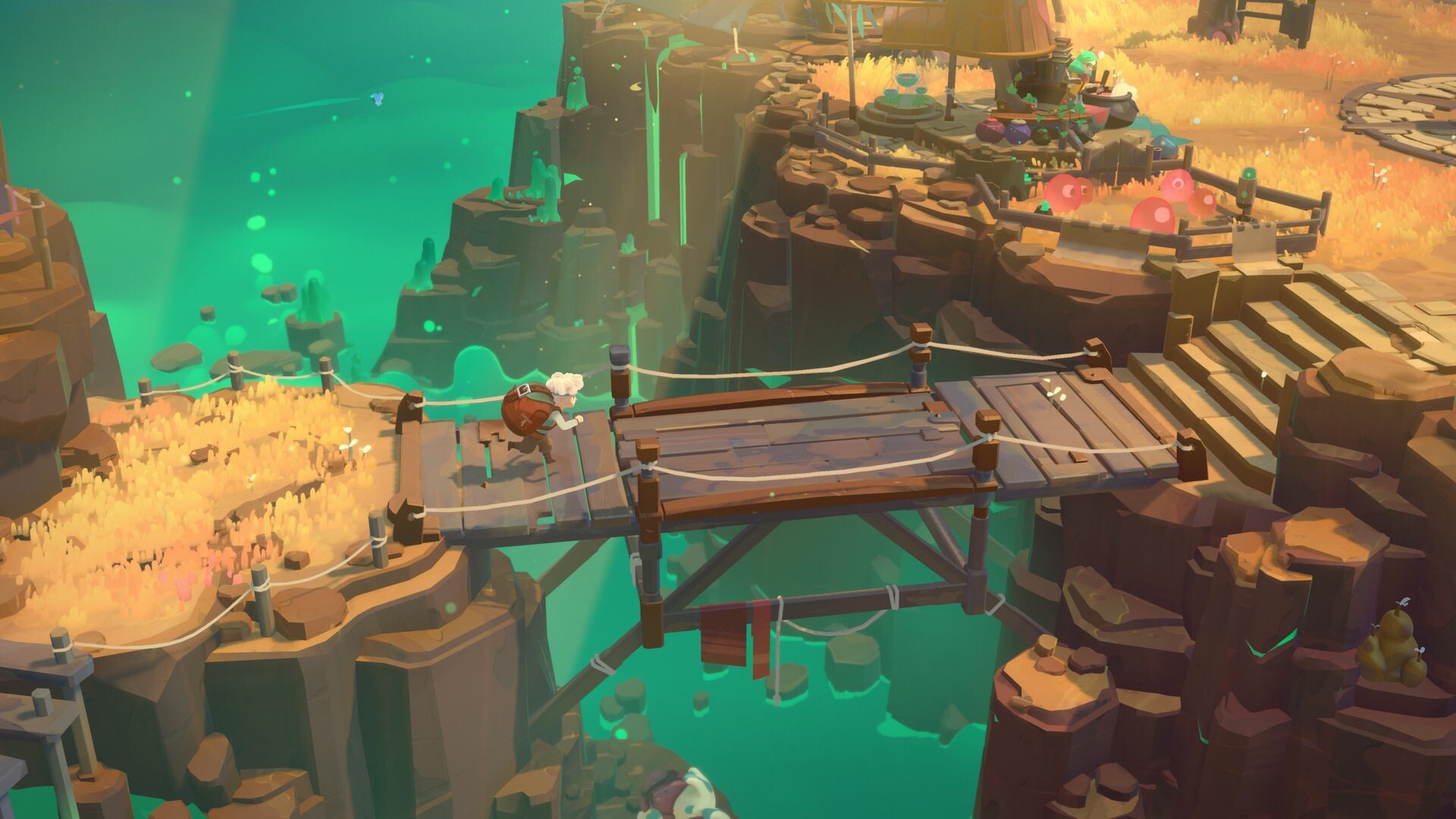
Will finds himself in Tresna, a village that needs a future, with another shop to build and dangerous places full of things to sell. Moonlighter 2: The Endless Vault makes the trip out and the return to the counter feel like two halves of the same adventure.
Dungeon runs ask you to judge risk, manage the loot you carry and decide when you have enough. Back in the shop, pricing and customers turn those finds into the money needed for improvements. A successful day helps prepare the next expedition; a promising new item makes you curious about its value.
It tops this list because the business gives the action a clear purpose and the action keeps the business interesting. Even a familiar shop routine feels different when you remember what it took to bring the stock home. Play it when you want both sides to matter.
Where to begin
Try Moonlighter 2 when you want adventure and retail to feed each other, Potion Craft when making the stock sounds best, or Supermarket Simulator for a hands-on everyday routine. Our Steam sandbox picks offer more spaces to make your own, while our best RPGs on PC cover other adventures built around steady progress.