ที่ดีที่สุด
5 Best Street Fighter Games of All Time, Ranked

 เพิ่ม Gaming.net ลงในแหล่งข้อมูลที่คุณต้องการบน Google
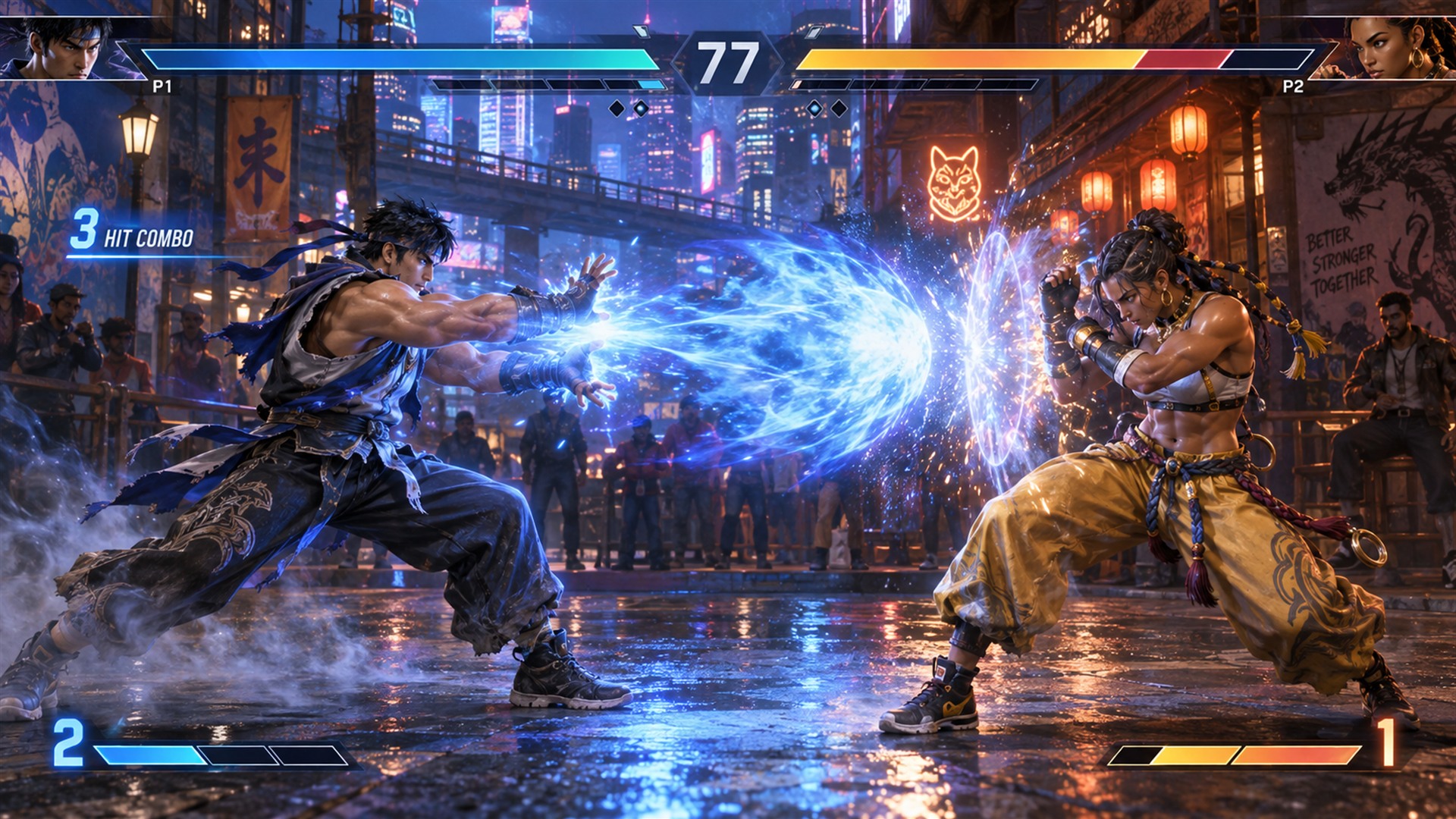
Few fighting-game series have changed the genre as often as Street Fighter. Capcom’s flagship fighter helped define arcade competition, earned its place among the best fighting-game franchises, normalized ideas such as special-move inputs and combo-driven play, and repeatedly reinvented itself without losing the tense spacing and split-second decisions at its core.
This ranking focuses on distinct, playable releases rather than counting every balance revision as a separate game. Historical importance matters, but so do mechanical depth, roster quality, accessibility, presentation, single-player value, and how enjoyable each entry remains today. We also considered whether a game introduced ideas that meaningfully changed the series instead of simply adding more characters or stages.
That approach inevitably leaves out excellent releases, including Street Fighter V: Champion Edition, the original Street Fighter II, and fan favorites from the Alpha and EX branches. The five games below stand above the rest because each represents a high point in a different era of the franchise.
How We Ranked the Best Street Fighter Games
Each entry was evaluated across five areas: the quality of its core combat, the range and identity of its roster, the strength of its modes and presentation, its influence on fighting games, and how well it can still be enjoyed now. Historical importance alone was not enough to secure a high position; the game also had to remain compelling beyond nostalgia.
We ranked definitive editions when they best represent a particular generation. That is why Super Street Fighter II Turbo stands in for the classic Street Fighter II era and Ultra Street Fighter IV represents the fourth mainline generation. With that settled, here are the five best Street Fighter games of all time.
5. Street Fighter Alpha 3
The most expressive entry in the Alpha subseries
Released in arcades in 1998, Street Fighter Alpha 3 took the anime-influenced look of the Alpha games and paired it with one of the series’ most flexible fighting systems. Its three selectable styles—X-Ism, A-Ism, and V-Ism—change fundamentals such as air blocking, meter use, damage, and access to Custom Combos. The result is not merely three super-meter options; it is a system that lets the same fighter adopt meaningfully different priorities before the first round begins.
V-Ism’s Custom Combos give advanced players enormous freedom, while A-Ism offers the most familiar all-round rule set. X-Ism strips away some modern mechanics in exchange for a harder-hitting, classic-inspired style. That flexibility combines with a broad roster containing returning World Warriors, Alpha regulars, and distinctive additions. The audiovisual presentation also remains a highlight: large character sprites, energetic stages, dramatic announcer calls, and a soundtrack that gives the game its own identity rather than imitating Street Fighter II.
Console releases made the package even stronger. World Tour added a progression-driven single-player mode in which players could develop a fighter while moving through challenges, and the expanded home rosters became a major part of Alpha 3’s appeal. The updated arcade version remains accessible today in our Capcom Fighting Collection 2 review, while Capcom’s official collection listing confirms Street Fighter Alpha 3 Upper among its eight included games. Its weaknesses are equally clear: balance varies across characters and Isms, V-Ism can dominate high-level discussion, and the number of interacting systems can overwhelm a newcomer. Even so, no other Alpha entry offers the same combination of personality, experimentation, and replay value.
4. Ultra Street Fighter IV
A deep roster and a battle system refined over years
Ultra Street Fighter IV, released in 2014, is the final and most feature-rich form of the game that revived the series after a long mainline hiatus. Its combat is built around Focus Attacks, which can absorb a hit, crumple an opponent when charged, or be cancelled into a dash. That mechanic connects offense, defense, movement, and meter management, giving players ways to extend combos, escape pressure, and threaten a reversal without turning every interaction into a simple guess.
Ultra expanded that foundation with Red Focus, delayed wake-up options, balance revisions, additional stages, and five more fighters. Its 44-character roster spans straightforward shoto archetypes, grapplers, charge characters, stance-driven specialists, and highly technical picks such as C. Viper and Gen. Matchups can therefore feel radically different: a patient fireball contest in one round may be followed by relentless close-range pressure or a battle against long-reaching normals in the next.
The final game carries the benefits and baggage of years of iteration. It has tremendous matchup depth, a clear visual language, and one of the richest competitive histories in the franchise. At the same time, one-frame links, option selects, vortex-heavy offense, and an enormous knowledge burden make it less welcoming than Street Fighter 6; our Street Fighter 6 beginner tips show how much more deliberately the newer game teaches its systems. Ultra is best for players who enjoy lab work and long-term character mastery. Its systems are demanding, but they create the feeling that there is always another matchup detail or conversion to learn. For the release specifics, Capcom’s official Ultra Street Fighter IV listing documents its five added characters, six stages, and rebalanced gameplay.
3. Super Street Fighter II Turbo
The classic that still explains why Street Fighter works
Super Street Fighter II Turbo arrived in 1994 and sharpened the foundation laid by Street Fighter II with faster play, Super Combos, air recovery, and the secret debut of Akuma. Its rules are lean by modern standards, making every fireball, anti-air, throw, and step into an opponent’s range easy to understand. The brilliance is that this clarity never makes the game shallow. Small decisions accumulate until one player controls the screen and forces the other into a dangerous risk.
The cast embodies fighting-game archetypes in unusually pure form. Ryu and Ken teach the fireball-and-uppercut relationship, Zangief turns every advance into a high-stakes negotiation, Dhalsim controls space with extreme reach, and characters such as Chun-Li and Vega test movement and patience. Because there are fewer universal defensive mechanics than in later games, positioning matters constantly. A poorly placed jump can lose half a life bar, while a correctly timed normal can reset the entire pace of a round.
Its age is impossible to ignore. Reversal timing is strict, inputs can feel unforgiving, damage is explosive, and several matchups are notoriously uneven. Different ports also vary in accuracy, speed, and online features, so the version matters. Yet the central contest of spacing, timing, pattern recognition, and adaptation has barely aged. Super Turbo remains both a historical landmark and a serious competitive game—a compact demonstration of why Street Fighter remains one of gaming’s defining fighting franchises. Capcom itself calls Super Turbo the definitive version of Street Fighter II on its Street Fighter RVN6ACK campaign page.
2. Street Fighter III: Third Strike
Peerless animation and the most daring defensive mechanic in the series
Released in arcades in 1999, Street Fighter III: Third Strike is built around parrying. Tapping toward an incoming high or mid attack—or down against a low attack—at the right instant avoids chip damage and most block stun, potentially reversing the momentum of a round. That single mechanic makes defense active and expressive. It also changes the meaning of familiar situations: a normally safe projectile, jump-in, or super can become an opportunity for a confident defender.
Parrying would not matter as much without the game’s exceptional movement and animation. Characters shift their weight, recoil, and transition between attacks with a fluidity that still looks remarkable. The roster also stepped away from many familiar World Warriors in favor of newcomers such as Makoto, Dudley, Ibuki, and Urien. Each has a strong silhouette and a sharply defined game plan, while the selectable Super Art system asks players to commit to one major resource option for the match.
Third Strike has real competitive flaws. Its character balance is top-heavy, the parry system demands practice, and new players may struggle to understand why apparently sound offense keeps being challenged. Those barriers are also tied to its appeal. The game gives skilled players unusual control over defensive risk, producing dramatic reversals without relying on cinematic interruption. It also tops our ranking of the best multiplayer fighting games of all time, and Capcom’s official Street Fighter 30th Anniversary Collection listing identifies Third Strike as one of the collection’s tournament-enabled titles. Its hand-drawn art, jazz-and-hip-hop-influenced soundtrack, and uncompromising mechanics make it the most distinctive Street Fighter ever created.
1. Street Fighter 6
The strongest balance of depth, accessibility, and ways to play
Street Fighter 6, released in 2023, earns the top spot by making a highly technical fighting game easier to enter without flattening what experts love. Its Drive system powers parries, rushes, reversals, armored attacks, and enhanced special moves from one shared resource. Because the gauge is visible from the start of every round, players are constantly making readable decisions about pressure, defense, positioning, and whether an immediate advantage is worth the risk of burnout.
Drive Impact gives newcomers a dramatic answer to predictable offense, but experienced players can counter it on reaction or build strategies around the threat. Drive Rush creates explosive movement and combo routes, while Drive Parry provides a universal defensive tool without simply copying Third Strike’s system. Classic controls preserve the traditional six-button layout and motion inputs. Modern controls reduce the execution barrier and make the strategic layer accessible earlier, though their streamlined command scheme carries its own tradeoffs.
The surrounding package is unusually complete. Fighting Ground covers arcade, training, local play, and the traditional competitive modes. Battle Hub presents online matches as a social arcade, and World Tour turns mechanical lessons into an exploratory single-player campaign. Detailed tutorials and character guides help players understand not only which buttons to press, but why a tool works. Strong rollback-based online play makes serious matches practical across distance, helping it earn a place among the best fighting games on PlayStation 5. Capcom’s official Street Fighter 6 site provides the current roster, modes, and update information. Earlier entries may be more influential or dominate a particular niche, but Street Fighter 6 is the best overall expression of the series because it serves first-time players, solo players, and tournament competitors without treating any group as an afterthought.
Which Street Fighter Game Should You Play First?
For most newcomers, Street Fighter 6 is the clear starting point. It has the best teaching tools, the broadest selection of modes, active online matchmaking, and control options that let players learn strategy before they have mastered every motion input. Players who want to understand the series’ foundation should try Super Street Fighter II Turbo, while those attracted to demanding defensive play and hand-drawn animation should choose Third Strike.
Ultra Street Fighter IV is the best fit for players who want a huge roster and enjoy studying complex matchups. Alpha 3 is ideal for anyone who values fast pacing, colorful presentation, and the freedom to alter a character through selectable systems. None is a poor choice—the right entry depends on whether accessibility, historical importance, expressive systems, or competitive depth matters most to you. If you finish this ranking wanting a different style of competition, continue with our picks for the best fighting games like Street Fighter 6.
FAQs
Which Street Fighter game is best for a beginner?
Street Fighter 6 is the easiest starting point. Its tutorials are extensive, Modern controls reduce the initial input barrier, and World Tour introduces core concepts in a lower-pressure environment.
Why is the original Street Fighter II not listed separately?
Street Fighter II is one of the most important fighting games ever made, but this ranking treats Super Street Fighter II Turbo as the definitive classic-era version. A ranking based purely on historical influence could reasonably list both.
Is Third Strike better than Street Fighter 6?
For animation, parry-driven play, and arcade-era identity, many fans will prefer Third Strike. Street Fighter 6 ranks higher here because it combines competitive depth with better onboarding, online infrastructure, and a broader set of modes.
Which Street Fighter game has the biggest roster?
Among the five games ranked here, Ultra Street Fighter IV has the largest standard playable roster, with 44 fighters. A larger roster does not automatically make a game better, but Ultra uses that breadth to support an exceptional range of play styles and matchups.
Can you still enjoy the older Street Fighter games?
Yes. Super Turbo, Alpha 3, and Third Strike remain mechanically distinctive rather than feeling like incomplete versions of a modern sequel. The main challenge is choosing a faithful release and finding opponents at a similar skill level, since ports and online populations vary.